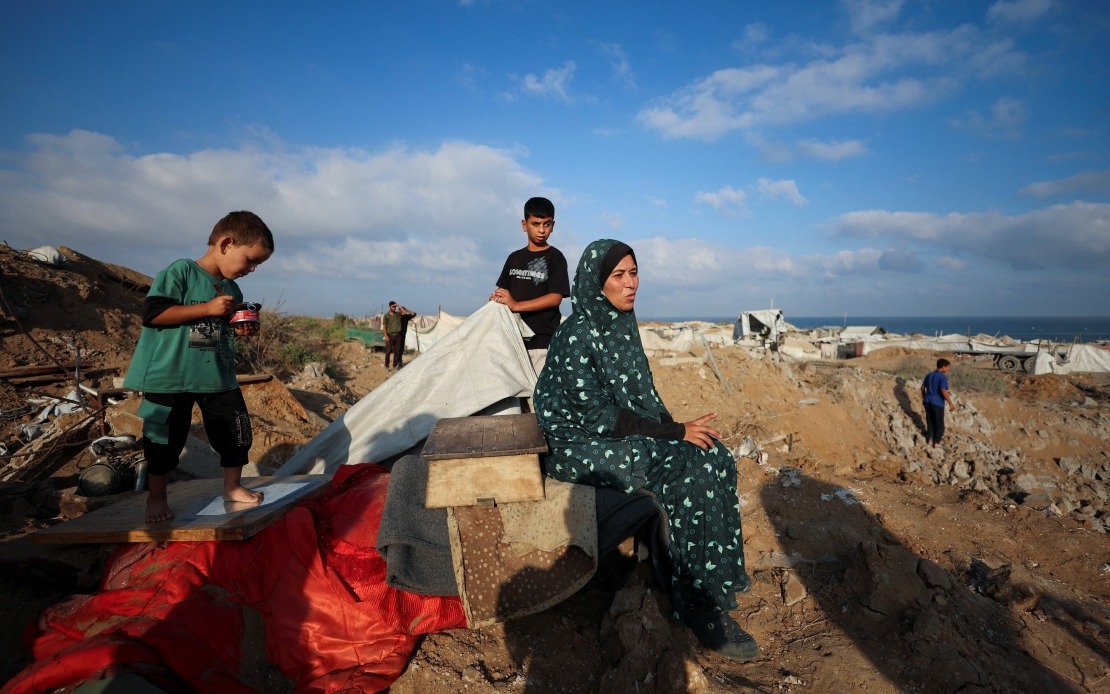
An estimated 1.4 million residents of Gaza are projected to experience severe food insecurity through the remainder of 2026, marking a significant deterioration from the 1.2 million recorded between mid-April and June, according to a fresh analysis released by the Integrated Food Security Phase Classification (IPC) on Thursday. The stark projections underscore the fragility of humanitarian gains achieved since the October 2025 ceasefire, revealing an economy still grappling with widespread destitution and aid dependency across all five governorates.
The newly released IPC assessment paints a dire picture of the territory's food security trajectory. Around 67 per cent of Gaza's population, representing nearly two-thirds, is projected to slip into crisis conditions (Phase 3) or deteriorate further, while some 212,000 individuals will remain trapped in the emergency phase (Phase 4)—the classification reserved for the most severe hunger situations. For Malaysian observers monitoring regional humanitarian crises, the scale of this deprivation rivals the most catastrophic food emergencies documented globally in recent years, signalling the enormous challenge facing international relief organisations attempting to stabilise the territory.
The ceasefire agreement reached in October 2025 did catalyse meaningful improvements in food distribution across Gaza. Humanitarian partners managed to deliver assistance to approximately 1.49 million people during May alone, enabling temporary relief for many households. Yet the IPC analysis emphasises repeatedly that these gains remain precarious, contingent upon sustained external support that increasingly appears uncertain. The temporary reprieve masks deeper structural collapse: 83 per cent of households report having no income whatsoever, transforming the majority population into permanent dependents of international charity.
The underlying economic devastation extends beyond mere income loss. Livelihoods have effectively ceased functioning across the territory, with traditional employment, commerce, and agriculture rendered inoperable by ongoing instability and infrastructure damage. Food aid rations, though expanded, remain nutritionally inadequate to meet minimum dietary standards. Families surviving on distributed provisions face chronic micronutrient deficiencies and rely entirely on what external organisations provide, creating a population vulnerable to any disruption in supply chains or funding commitments.
Funding constraints represent an immediate and intensifying threat to food security improvements. Humanitarian assistance has experienced marked decline since February 2026, directly correlated with tightening donor budgets and operational uncertainties affecting international aid organisations. This funding squeeze arrives precisely when the territory would benefit most from sustained investment in rebuilding livelihoods and economic capacity. The timing underscores a familiar pattern in global humanitarian crises: initial emergency response generates donor fatigue, leading to premature withdrawal of support before conditions stabilise sufficiently for populations to sustain themselves independently.
The counterfactual scenario painted by the IPC illustrates starkly what humanitarian assistance currently prevents. Should food aid cease entirely, the analysis projects approximately 1.9 million people—roughly 90 per cent of Gaza's entire population—would face acute food insecurity through December 2026. This figure demonstrates the absolute dependence the territory has developed on international handouts and suggests that any attempt to transition Gaza toward self-sufficiency without first rebuilding productive capacity would precipitate catastrophic hunger on a scale affecting nearly the entire population.
Malnutrition among vulnerable groups constitutes a secondary crisis compounding food insecurity. The IPC projects that by April 2027, some 74,200 children under five will require therapeutic treatment for acute malnutrition, including 11,432 cases classified as severe. Early childhood malnutrition causes irreversible developmental damage, stunting physical growth and cognitive development during critical neurological formation periods. These projections, if realised, would represent a scarring of an entire generation's potential, with implications extending decades into Gaza's future demographic and economic capacity.
Pregnant and breastfeeding women represent another priority group requiring urgent intervention. An estimated 24,600 such women need immediate nutritional support to maintain their own health and ensure adequate milk production for infants. Malnutrition during pregnancy and lactation perpetuates cycles of poor child health outcomes, transmitting nutritional deficits across generations. The concentration of vulnerable populations—children, pregnant women, and the infirm—emphasises that Gaza's hunger crisis is not distributed equally but falls disproportionately on those least capable of managing deprivation.
The IPC's recommendations centre on three pillars deemed essential to preventing reversal of progress. First, sustained and predictable humanitarian access must be maintained, requiring donor commitment beyond current funding trajectories and assurances from authorities permitting unobstructed delivery of aid. Second, nutrition programmes must be expanded substantially beyond current scope, moving beyond basic caloric sufficiency toward addressing specific micronutrient deficiencies and treating acute malnutrition cases therapeutically. Third, and most significantly, a permanent end to hostilities offers the only pathway enabling local economic reconstruction and gradual transition away from aid dependency.
For Malaysian policymakers and observers, Gaza's deteriorating food security carries regional implications. It exemplifies how protracted conflict, even after formal ceasefires, creates humanitarian emergencies requiring indefinite international engagement. Southeast Asian nations potentially called upon to contribute aid through multilateral mechanisms should recognise that short-term assistance, while necessary and morally imperative, cannot substitute for durable political settlement enabling reconstruction. The territory's current trajectory suggests that without fundamental changes to underlying political conditions and significant international investment in rebuilding productive capacity, Gaza will remain a site of humanitarian crisis extending years into the future.
The assessment ultimately reflects the limits of humanitarian response divorced from political solutions. Aid organisations can keep populations alive and prevent mass starvation, as current operations demonstrate, but cannot restore livelihoods, rebuild institutions, or create opportunities for self-sufficiency without enabling conditions created through lasting peace. Gaza's food security thus hinges not primarily on humanitarian logistics or donor generosity, but on achieving the comprehensive political resolution and sustained commitment to reconstruction that transforming acute emergency into manageable development challenge requires.

