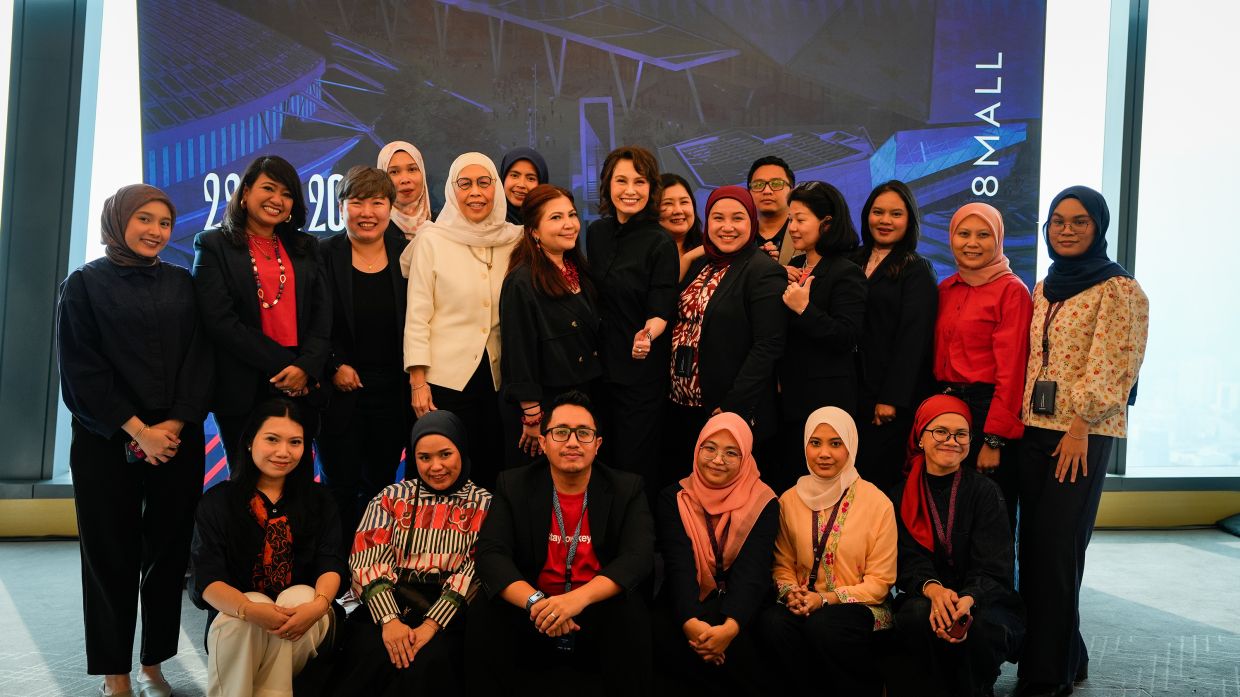
The developer of 118 Mall brought together more than 200 retailers at Park Hyatt Kuala Lumpur this week, marking the first major assembly of commercial partners for the anticipated shopping centre slated to commence operations in November 2026. PNB Merdeka Ventures Sdn Bhd organised the gathering to align retail stakeholders on the mall's strategic positioning, development progress, and the synergies expected from its integration within the broader Merdeka 118 mixed-use precinct in Kuala Lumpur's central district.
The retail cohort represents a cross-section of the consumer marketplace, spanning premium fashion brands including adidas, ALDO, Converse, Guess and Lacoste, alongside F&B concepts, lifestyle retailers, and service providers. Among the confirmed tenants are Village Grocer, Makanism Foodhall, Benjamin Barker, CHAGEE Signature, Best Denki, BookXcess and Babyshop, demonstrating a deliberate balance between international players and homegrown operators. The inclusion of the Malaysian Artisan District brands signals the developer's commitment to providing a platform for local entrepreneurs alongside multinational retailers, a strategy that increasingly resonates with consumers seeking authentic regional products.
According to Datuk Ir. Ts. Izwan Ibrahim, chief executive officer of PNB Merdeka Ventures, the mall's competitive advantage derives not from standalone retail offerings alone, but from its positioning within an integrated ecosystem combining hospitality, tourism, heritage attractions and corporate facilities. This mixed-use framework is designed to generate sustained traffic flows beyond traditional shopping patterns, drawing international visitors to luxury hotels, business professionals utilising office spaces, cultural tourists exploring heritage zones, and local commuters. Such an approach mirrors successful developments in major Asian cities, where retail venues anchored within comprehensive precincts demonstrate superior performance metrics compared to conventional shopping centres.
The developer projects that 118 Mall will welcome approximately 22 million visitors during its inaugural year of operations, a projection that reflects confidence in the Merdeka 118 precinct's ability to attract diverse demographic segments. This figure suggests daily foot traffic averaging around 60,000 visitors, positioning the centre among Malaysia's highest-volume retail destinations. For context, such visitation levels would place 118 Mall in the upper tier of Southeast Asian shopping venues, comparable to established flagship malls in Singapore and Bangkok, though this will ultimately depend on execution and market conditions upon launch.
Sue Wang, head of retail for 118 Mall, detailed plans for more than 300 retail outlets spanning fashion, dining, entertainment and speciality services. The scale of the offering indicates a comprehensive retail experience designed to extend dwell time and maximise transaction opportunities across multiple categories. The deliberate integration of the Malaysian Artisan District within this broader portfolio reflects contemporary retail trends emphasizing experiential shopping and cultural authenticity, particularly among affluent domestic and international consumers increasingly seeking distinctive local narratives alongside established global brands.
Developers and retail consultants recognise that the success of premium shopping destinations increasingly depends on creating environments that transcend traditional point-of-sale transactions. 118 Mall's strategy of embedding cultural and heritage dimensions within a retail framework addresses this evolution, positioning the centre as a destination experience rather than merely a commercial venue. The Merdeka 118 precinct's heritage narrative, combined with contemporary retail and hospitality offerings, creates a distinctive market positioning that differentiates it from competing developments across the Klang Valley and beyond.
Retailers attending the gathering were briefed extensively on marketing initiatives and brand activation opportunities, including access to digital display networks and dedicated event spaces within the mall. These infrastructure investments enable tenants to execute sophisticated promotional campaigns extending beyond traditional in-store retail, supporting brand building across physical and digital touchpoints. The provision of such facilities reflects modern retail requirements, where experiential marketing and integrated omnichannel strategies have become essential for competitive differentiation.
The seven-storey 118 Mall occupies a strategic location immediately adjacent to Merdeka 118, the iconic mixed-use development that has become a landmark fixture in Kuala Lumpur's evolving skyline. This proximity creates operational synergies enabling seamless integration between accommodation, retail, dining and corporate functions. Visitors to Merdeka 118's hotel or office components gain immediate access to comprehensive retail and leisure amenities, while shopping visitors benefit from proximity to dining and hospitality options, creating a self-reinforcing cycle of cross-usage across the precinct.
For Malaysian retailers, particularly regional chains and independent operators, 118 Mall represents a significant opportunity to access premium footfall and position brands alongside international counterparts in a high-profile setting. The deliberate curation of tenancy, balancing global brands with local offerings, suggests a development strategy cognisant of local consumer preferences for brand diversity and cultural relevance. The Malaysian retail sector, increasingly competitive and influenced by e-commerce expansion, benefits from flagship physical locations that attract tourist spending and establish brand legitimacy in domestic markets.
The November 2026 opening timeline positions 118 Mall to capitalise on post-pandemic tourism recovery and sustained domestic consumption patterns. By that point, Merdeka 118's hotel components will likely be operational, generating regular guest volumes to populate the retail centre. The coordination between accommodation opening and retail launch reflects sophisticated precinct planning, ensuring that retail operations benefit from established traffic-generation mechanisms rather than competing for attention independently.
Looking forward, the success of 118 Mall will serve as a benchmark for mixed-use retail development strategies across Malaysia and the broader Southeast Asian region. As traditional shopping centre models face structural headwinds from e-commerce competition and changing consumer behaviour, venues that successfully integrate retail within comprehensive precinct ecosystems demonstrate resilience and revenue diversification. The developer's confidence in projecting 22 million annual visitors suggests high expectations, though such targets will ultimately depend on execution quality, tenant performance, and broader economic conditions prevailing from late 2026 onwards.

