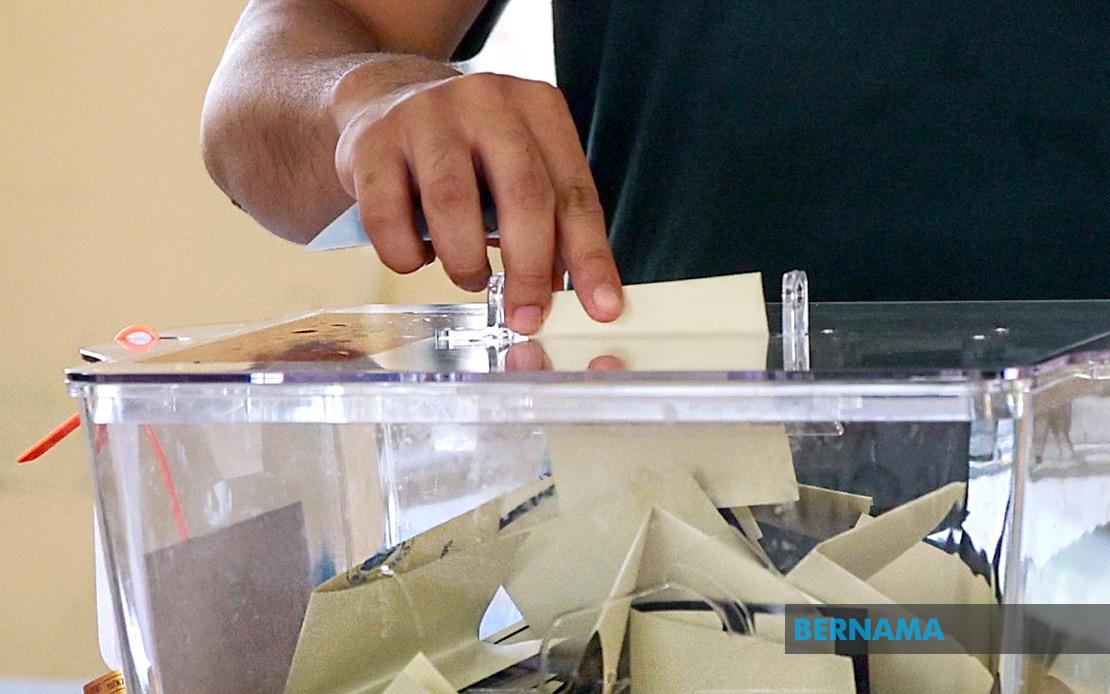
The 16th Johor state election concluded with a bittersweet moment for Rahmat Shukor, a 57-year-old from Sri Medan in Batu Pahat, whose determined journey to the polls ended in frustration when he arrived at SJK (C) Foon Yew 4 in Johor Bahru just one minute after voting had officially closed. Despite travelling non-stop across 120 kilometres from his mother's house, Rahmat found himself unable to participate in the democratic process due to an unexpected traffic jam that cost him dearly in an election where every vote matters.
Rahmat's predicament began when he decided to remain at his late mother's residence in Batu Pahat the night before the election. Having worked extensively in plantation and contract labour that day, exhaustion had overtaken him, prompting him to postpone his return to Johor Bahru until polling day itself. The decision, which seemed reasonable at the time, would ultimately prove consequential. Meanwhile, the rest of his family, including his wife, had already returned to the city on Friday and successfully cast their votes without complication, leaving Rahmat as the sole family member unable to fulfil his civic duty.
The journey from Batu Pahat to the polling centre should have been straightforward, but unexpected road conditions transformed a routine drive into an exhausting race against time. Severe traffic congestion materialised unexpectedly along the main route, beginning at the Simpang Renggam Rest and Recreation Area (R&R) and extending toward Sedenak. Attempting to salvage his mission, Rahmat navigated alternative routes away from the congested Skudai corridor, hoping to circumvent the delays that were consuming precious minutes. His efforts, however, proved insufficient to overcome the mounting traffic obstacles that appeared with each attempted detour.
When Rahmat finally arrived at SJK (C) Foon Yew 4, the polling centre's gates had already closed and voting officials were concluding their operations. The election had officially ended at exactly 6 pm, and he had crossed the threshold mere moments too late to make a difference. Speaking to Bernama outside the polling centre that evening, Rahmat was visibly distressed but composed in recounting his experience. He produced photographic evidence and documentation of the traffic jam that had delayed him, providing concrete proof of the circumstances beyond his control. "I came all the way from Batu Pahat, not from here. The roads were congested. I have photos, I informed them, and I have proof that we were caught in the traffic jam," he explained, his tone reflecting both resignation and mild frustration at the situation.
Rahmat's case highlights a tension inherent in democratic participation—the rigid adherence to electoral timelines that, while necessary for election integrity, can inadvertently disenfranchise voters who face genuine logistical obstacles. The 60-second margin between his arrival and the closure of the polling centre represents the razor-thin difference between exercising fundamental democratic rights and being excluded from the ballot box. For many observers, his situation raises questions about whether polling centres, particularly in areas with known traffic vulnerabilities, might benefit from additional contingency measures or communication systems to notify voters of potential delays.
Despite his disappointment, Rahmat's reaction demonstrated a maturity regarding the democratic process that many might lack in similar circumstances. Rather than escalating complaints or challenging the outcome, he accepted the situation and expressed hope that the broader electoral process would proceed smoothly and fairly. His dignified response, even in evident frustration, underscores the commitment many Malaysians hold toward their electoral system, accepting its rules even when those rules work against them personally. The incident offers a sobering reminder that voting is not merely a right but also a responsibility requiring careful planning and accounting for potential delays.
The 16th Johor state election saw all 1,076 polling centres across the state close simultaneously at 6 pm, ensuring uniform closure times throughout the exercise. This standardised approach, while essential for electoral oversight and preventing procedural inconsistencies, created the exact scenario that Rahmat encountered. The logistics of managing simultaneous closures across such a large state and such a distributed network of voting facilities leaves little room for accommodation of last-minute arrivals, regardless of the circumstances that caused delays.
Rahmat's experience resonates particularly in Malaysian context, where voting frequently requires citizens to travel considerable distances. Rural voters, workers in dispersed locations, and citizens balancing multiple obligations often face similar challenges in reaching polling centres punctually. His 120-kilometre journey, while significant, is not unusual for Malaysians living in peripheral areas or maintaining residences across different towns. The incident suggests that as electoral participation remains crucial for democratic legitimacy, addressing accessibility barriers—whether through extended voting periods, early voting options, or better traffic management on election days—deserves serious consideration from election authorities.
Furthermore, Rahmat's inability to vote while his family members successfully participated highlights disparities in voting accessibility that can emerge based on timing and circumstance. The difference between his wife's successful vote and his missed opportunity came down to scheduling decisions and traffic conditions entirely beyond typical voter control. Such variations, when multiplied across thousands of voters facing similar pressures, can theoretically influence election outcomes, particularly in closely contested seats where margins might be surprisingly narrow.
The larger implication of Rahmat's experience extends beyond his personal disappointment. It prompts reflection on how electoral systems can better accommodate voters while maintaining security and integrity. Malaysia's election authorities might consider whether additional measures—such as pre-election public announcements regarding anticipated traffic patterns on polling day, or designated voting channels for those detained by documented emergencies—could enhance participation without compromising the fairness that requires everyone to vote within designated windows.
Rahmat's 120-kilometre journey, though ultimately unsuccessful, embodied the determination that democratic participation ideally requires. His documented evidence of traffic congestion and his transparent communication with polling officials demonstrated good faith and serious intent. That such commitment could still result in disenfranchisement underscores that voting accessibility remains an ongoing challenge within Malaysia's electoral framework. As future elections approach, his story serves as a poignant case study in balancing the strict operational requirements of electoral administration with the practical realities facing voters attempting to exercise their democratic rights.

