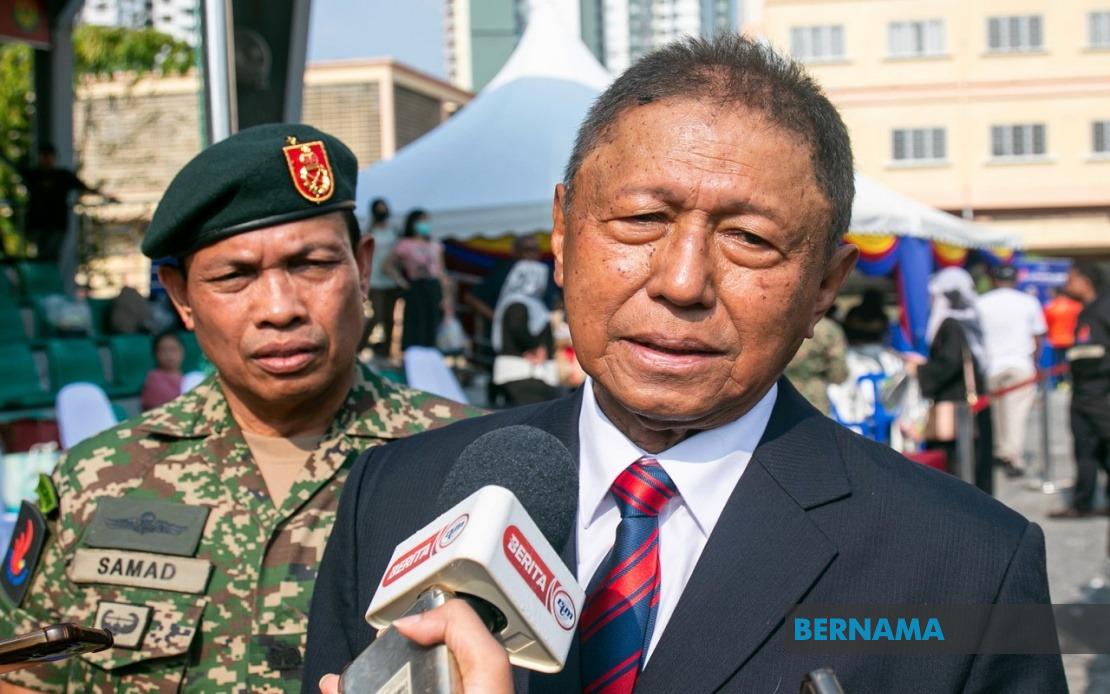
The National Service Training Council has confirmed that 200 graduates of the revamped National Service Training Programme will join the National Day parade in Putrajaya on August 31, in what represents a significant milestone for the reimagined scheme. General (Rtd) Tan Sri Dr Abdul Aziz Zainal, who heads the council, announced that these carefully selected participants will commence intensive rehearsals beginning tomorrow in the federal capital to ensure a polished performance during the nation's primary civic celebration.
This participation carries particular symbolic weight, as it marks the first occasion on which PLKN 3.0 trainees will march in formation before the Yang di-Pertuan Agong, the Prime Minister, the Cabinet, and assembled members of the public. The decision to include these young citizens in such a prominent national ceremony underscores the government's commitment to elevating the profile of the reinvigorated scheme and demonstrating the tangible outcomes of the training regimen. By positioning these graduates prominently within Malaysia's most significant annual patriotic observance, authorities seek to highlight the character development and civic values instilled during their participation.
The timing of this announcement coincides with the completion of PLKN 3.0 Series 3/2026, which concluded today with the passing out parade at the National Service Training Branch headquarters located at the 515 Territorial Army Camp in Kuala Lumpur. A total of 795 trainees have successfully graduated from this training cycle, which commenced on July 11 and involved three distinct training facilities across the nation. The geographic distribution reflects the programme's expanding reach: Camp 504 AW in Bukit Keteri, Perlis hosted 106 female trainees, while Camp 505 AW in Pekan, Pahang accommodated 442 male participants, and Camp 515 AW in the federal capital trained 247 female trainees.
Recognition of outstanding achievement within this cohort highlights the diverse regional representation and competitive standards maintained throughout the programme. An'nur Najiha Muhammad, an 18-year-old from Ipoh in Perak, earned top honours at the Perlis facility, while Muhammad Firdaus Muhammad Said, also 18 and hailing from Kuantan, distinguished himself at the Pahang camp. Cheyenne Alessandra Michael, the same age and based in Kuala Lumpur, emerged as the leading trainee at the federal territory location. These selections demonstrate the programme's ability to identify and develop leadership potential among Malaysia's younger generation across multiple states.
Looking beyond the current cycle, authorities have announced ambitious expansion plans for PLKN 3.0 Series 4/2026. General Abdul Aziz disclosed that the next iteration will substantially increase capacity through the addition of multiple new training centres and a strategic partnership with the Malaysian Volunteer Corps Department, known as RELA. This collaborative approach represents a pragmatic attempt to overcome previous logistical constraints while leveraging existing institutional infrastructure. With the inclusion of RELA's established training facilities alongside the current military camps, officials project that the programme will be capable of accommodating more than 1,000 trainees during the fourth series, effectively doubling previous capacity.
The geographical expansion reflects deliberate planning to ensure equitable distribution across different regions of the peninsula and beyond. Five newly established camps will operate during the forthcoming cycle, including facilities at Hutan Melintang in Perak, Sungai Durian in Kelantan, and Bukit Pinang in Kedah. Recognising the logistical challenges of establishing entirely new military infrastructure, the authorities have designated two Public Training Institute centres as alternative venues, located in Sungai Petani, Kedah and Tuaran, Sabah respectively. This diversification strategy suggests that the government has prioritised accessibility and regional representation, potentially addressing historical concerns about the concentration of training facilities in particular areas.
The augmentation of human resources will prove equally critical to the successful expansion. General Abdul Aziz confirmed that instructor recruitment will be substantially accelerated to maintain training quality and consistency across the enlarged network of facilities. The combination of additional trainers and the utilisation of RELA's existing personnel infrastructure indicates a calculated investment in programme sustainability. By distributing training responsibilities across both military and civilian volunteer corps channels, the approach reduces the burden on any single institution while tapping into diverse expertise and perspectives within Malaysia's security and civic organisations.
Testimonials from participants underscore the programme's transformative impact on individual participants. Cheyenne Alessandra Michael, one of the top performers from the latest cohort, described her voluntary participation as a deliberate choice driven by her interest in pursuing a military career. Her 45-day training experience at the Watah Territorial Army camp fundamentally altered her perspective on national identity and intergenerational responsibility. The daily exposure to professional soldiers and immersion within a military environment crystallised her understanding of the sacrifices inherent in national defence and independence. Her reflection on becoming more patriotic through direct exposure to military culture and discipline suggests that the programme's pedagogical approach succeeds in moving beyond classroom instruction to embodied learning within authentic institutional contexts.
Beyond career aspirations, Cheyenne emphasised that her participation cultivated profound gratitude for the historical achievements of Malaysia's armed forces and recognition of the current younger generation's obligation to sustain national peace and stability. This perspective aligns closely with the stated objectives of the revamped programme, which emphasises not merely physical fitness or military skill acquisition but the inculcation of national values and civic consciousness. Her articulation of expanded understanding regarding both historical gratitude and future responsibility indicates that the experiential dimensions of the training—living alongside peers from different backgrounds, observing professional military operations, and engaging in collective discipline—produce psychological and attitudinal shifts difficult to achieve through conventional educational channels alone.
The expansion of PLKN 3.0 reflects broader policy considerations regarding youth engagement, national cohesion, and the cultivation of civic identity among Malaysian citizens. By increasing capacity substantially and distributing facilities across geographically diverse locations, the government demonstrates commitment to reaching young Malaysians regardless of residential location or socioeconomic background. The partnership with RELA suggests recognition that national service objectives extend beyond military preparation to encompass civilian volunteer corps infrastructure and values. For Southeast Asian observers, Malaysia's evolving approach to mandatory national service presents an instructive case study in balancing patriotic education with practical logistical challenges and resource constraints.
The projection that PLKN 3.0 Series 4/2026 will exceed 1,000 participants represents substantial growth from current throughput levels, positioning the programme as a significant institution in Malaysian youth development. Should the planned expansion proceed successfully, the scheme could eventually become a common experience for many young Malaysians, transforming its cultural significance from novelty to normative rite of passage. The public visibility being accorded to the current cohort through National Day participation may serve instrumental purposes in promoting the programme's prestige and encouraging voluntary participation among eligible young citizens, potentially facilitating smoother implementation of future expansions.

