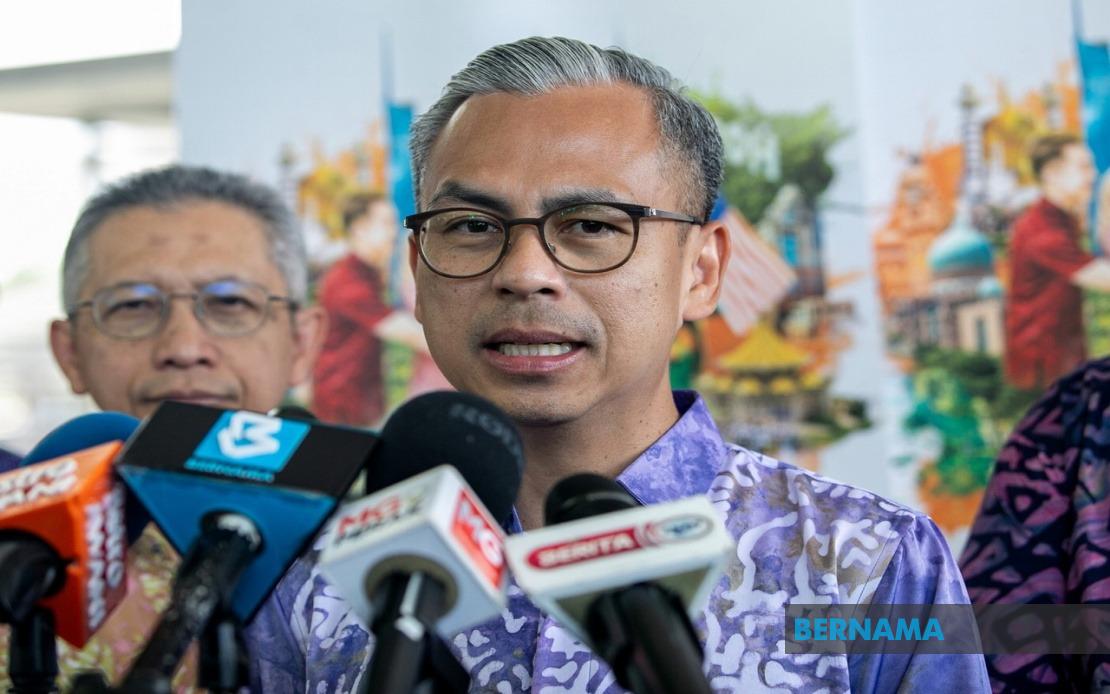
Communications Minister Datuk Seri Fahmi Fadzil has articulated the government's vision through the official theme for 2026 National Day and Malaysia Day celebrations, which places emphasis on ensuring that economic progress and national development benefit all Malaysians equitably. The chosen theme, 'Malaysia MADANI: Kesejahteraan Dinikmati', translates the MADANI administration's broader policy framework into a concise statement of intent during a campaign launch held at the Sultan Azlan Shah Ministry of Health Training Institute in Tanjung Rambutan on July 19. This announcement comes as the government seeks to reinforce its commitment to inclusive governance ahead of the nation's significant patriotic observances next year.
The minister's interpretation of the theme extends considerably beyond conventional metrics of economic performance, positioning shared prosperity as a multidimensional concept that encompasses tangible improvements in living standards, universal access to opportunities, and fair allocation of development gains across society. Fahmi emphasised that the MADANI Government consciously rejects any developmental model that leaves segments of the population marginalised or excluded based on demographic characteristics such as ethnicity, faith, geographic location, or socioeconomic circumstances. This framing addresses a longstanding concern in Malaysian politics regarding unequal distribution of resources and opportunities, particularly between urban and rural areas and among different communities.
Prime Minister Datuk Seri Anwar Ibrahim officiated the campaign launch, underscoring the executive's commitment to the stated principles. The presence of National Unity Minister Datuk Aaron Ago Dagang and Perak Menteri Besar Datuk Seri Saarani Mohamad further demonstrated the cross-portfolio nature of the initiative, reflecting recognition that achieving inclusive prosperity requires coordinated effort across multiple government departments and state administrations. The choice of Ipoh as the venue for this announcement carries symbolic weight, as the state capital represents Malaysia's economic diversification beyond its traditional resource-extraction base.
Fahmi articulated the government's understanding that Malaysia's strength stems fundamentally from its ethnic, religious, and cultural diversity, positioning this pluralism not merely as a demographic fact but as a strategic asset requiring active stewardship. The minister framed unity and social harmony as outcomes requiring deliberate effort and shared commitment across all communities, rather than inevitable or self-sustaining conditions. This characterisation acknowledges underlying tensions that periodically surface in Malaysian public discourse around resource allocation, representation, and identity issues. By emphasising collective responsibility for maintaining this harmony, the government signals its expectation that national unity transcends partisan political boundaries.
The 2026 celebrations will incorporate several programmatic elements designed to translate the thematic vision into tangible community engagement. The 'One House, One Jalur Gemilang' campaign represents a grassroots mobilisation strategy intended to foster patriotic sentiment at the household level, while the Kembara Merdeka Jalur Gemilang convoy programme will physically transport the national message across geographic regions. These initiatives suggest the government recognises that themes and policy frameworks require complementary grassroots activation to achieve their intended psychological and social effects. Such programmes also provide platforms for citizens to express their national identity and participate actively in official commemorations.
Information dissemination regarding celebratory activities will occur through the Merdeka 360 portal and official social media channels maintained by the Information Department, reflecting the government's investment in digital communication infrastructure. This approach acknowledges the prominence of online platforms in shaping public discourse and information consumption patterns among Malaysian populations of varying ages and education levels. The multi-channel distribution strategy ensures accessibility while also enabling the government to monitor public response and engagement metrics in real time.
For Malaysian and Southeast Asian observers, this thematic articulation carries significance beyond ceremonial proclamation. The MADANI framework, introduced following the 2022 general election, represents the government's attempt to establish a governance philosophy distinguishing its administration from predecessors. By anchoring the nation's celebratory messaging to shared prosperity and inclusive development, the government signals its policy priorities and invites public accountability against these stated principles. Critics and observers will likely assess whether subsequent government decisions and budget allocations genuinely reflect this commitment or remain primarily rhetorical.
The regional context further illuminates Malaysia's positioning within Southeast Asia. As neighbouring nations grapple with varying degrees of economic disparity and social cohesion challenges, Malaysia's explicit commitment to inclusive development messaging may influence regional discourse around governance best practices and development models. The emphasis on ensuring that no community feels abandoned by national progress addresses challenges faced across the region, where uneven geographic development and inter-communal tensions periodically create political instability.
The National Day celebrations themselves serve functions beyond ceremonial observance in the Malaysian political calendar. These events provide platforms for the government to communicate its vision, assess public sentiment, and reinforce national narratives that bind citizens together. The 2026 celebrations, framed around shared prosperity and inclusive development, will offer the MADANI administration an opportunity to demonstrate policy progress toward these objectives while rallying public support for its broader governance agenda moving into the latter half of its term.

