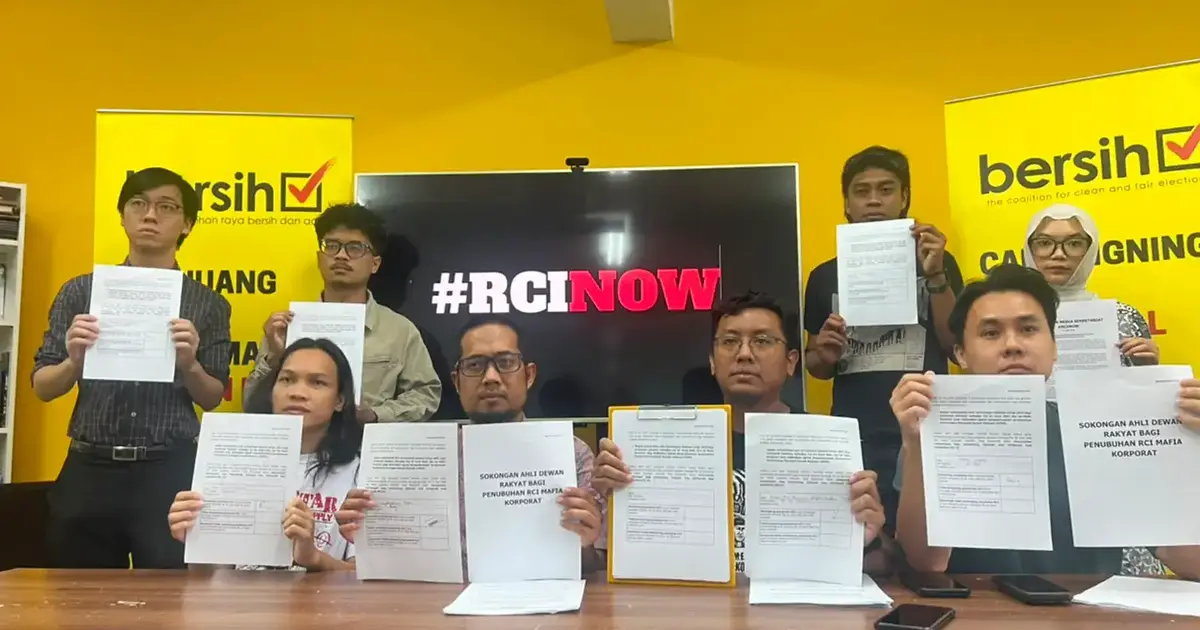
A cross-party coalition of 34 Members of Parliament has reportedly indicated support for establishing a royal commission of inquiry to investigate what electoral watchdog Bersih characterises as organised corporate misconduct and mafia-style networks, according to the citizen movement's latest announcement. The backing spans multiple parliamentary factions including PKR, PAS, DAP and Umno, suggesting the proposal has resonated beyond traditional ideological divides in the Dewan Rakyat.
Bersih's assertion that such substantial parliamentary interest exists reflects growing scrutiny of corporate governance issues and alleged systemic abuse of market power by well-connected business groups. The proposal for an RCI specifically targets what observers describe as coordinated wrongdoing by corporate entities that allegedly operate with political protection and exploit monopolistic positions to the detriment of smaller competitors and public interest. This framing positions the inquiry as a governance accountability measure rather than a purely partisan undertaking.
The involvement of representatives from PKR and DAP, traditionally aligned with reformist agendas, alongside PAS and Umno parliamentarians suggests that concerns about corporate malfeasance transcend the government-opposition dynamic. Such multi-party interest may indicate that backbenchers and minority voices across the political spectrum share apprehension about concentrated economic power and the perception that certain conglomerates operate outside normal regulatory constraints. The breadth of support could strengthen any eventual formal proposal for an RCI.
For Malaysian readers and investors, an RCI into corporate mafia operations would potentially expose mechanisms through which large conglomerates allegedly acquire preferential treatment, manipulate public procurement processes, or engage in anti-competitive practices. Such an inquiry could become consequential for corporate Malaysia's international standing and domestic market dynamics. Companies with questionable governance links would face heightened reputational risk, while enforcement agencies might receive expanded investigative mandates and resources.
Historically, Malaysia has launched royal commissions on various governance matters, though the implementation and public impact of findings vary substantially. An RCI focused on corporate networks would likely examine shareholding structures, board interlocks, political financing relationships, and contract award patterns. The inquiry's scope would determine whether it functions as comprehensive accountability mechanism or more limited fact-finding exercise. International observers often view such commissions through the lens of institutional independence and investigative rigour.
The electoral watchdog's disclosure of parliamentary backing represents part of broader civil society pressure for institutional checks on corporate power. Bersih itself has historically focused on electoral integrity and democratic processes, but expanding its scope to corporate governance reflects evolving understanding that electoral democracy and economic governance remain intertwined. Political financing and corporate influence over regulatory bodies constitute overlapping concerns that shape democratic quality.
From a Southeast Asian perspective, Malaysia's corporate governance landscape affects regional investment patterns and investor confidence across ASEAN. Perception of monopolistic practices or regulatory capture in one market influences multinational corporate behaviour across the region. Transparent investigation into alleged mafia-style operations could reassure foreign investors that Malaysia maintains functional oversight mechanisms, or conversely, might reveal structural weaknesses that concern international capital markets.
The specific composition of the alleged corporate networks remains unclear from Bersih's statement, though historical discourse on this topic frequently references large conglomerates with decades-long market dominance, government contracts concentration, and documented anti-competitive behaviour. An RCI would require defining which entities and practices constitute "corporate mafia" conduct, distinguishing aggressive capitalism from genuinely criminal conspiracy, and establishing investigative methodologies for complex financial arrangements.
For consumers and small-to-medium enterprises, an RCI potentially could improve market competitiveness by curbing exclusionary practices that prevent new entrants from establishing viable operations. SMEs particularly have articulated grievances regarding preferential treatment received by major corporate groups in supply chains, government procurement processes, and access to critical infrastructure. Evidence of systematic disadvantage might justify policy reforms in procurement frameworks and competition enforcement.
The practical utility of an RCI depends substantially on whether subsequent governments implement findings and recommendations. Previous inquiries have occasionally gathered dust after concluding without tangible policy change. Political will to prosecute powerful corporate figures and restructure beneficial business arrangements typically faces resistance from constituencies benefiting from existing arrangements. Credible implementation mechanisms would therefore distinguish a genuinely transformative investigation from performative accountability.
Government response to Bersih's announcement will indicate the administration's stance toward corporate governance scrutiny. Rapid establishment of an RCI signals commitment to addressing corporate malfeasance, while resistance or delay might suggest political sensitivity around investigating particular business networks or concern about investigation scope creep affecting mainstream business operations. The Prime Minister's office position on the proposal carries particular weight in determining whether parliamentary support translates into executive action.
Momentum for corporate accountability measures has strengthened globally following high-profile scandals, regulatory failures, and populist backlash against perceived inequality stemming from concentrated economic power. Malaysia's positioning on this issue affects its competitiveness for the category of investors prioritising governance quality and regulatory transparency. An RCI, if conducted with integrity and executed with meaningful consequences, could enhance institutional credibility and reinforce market confidence in regulatory systems.

