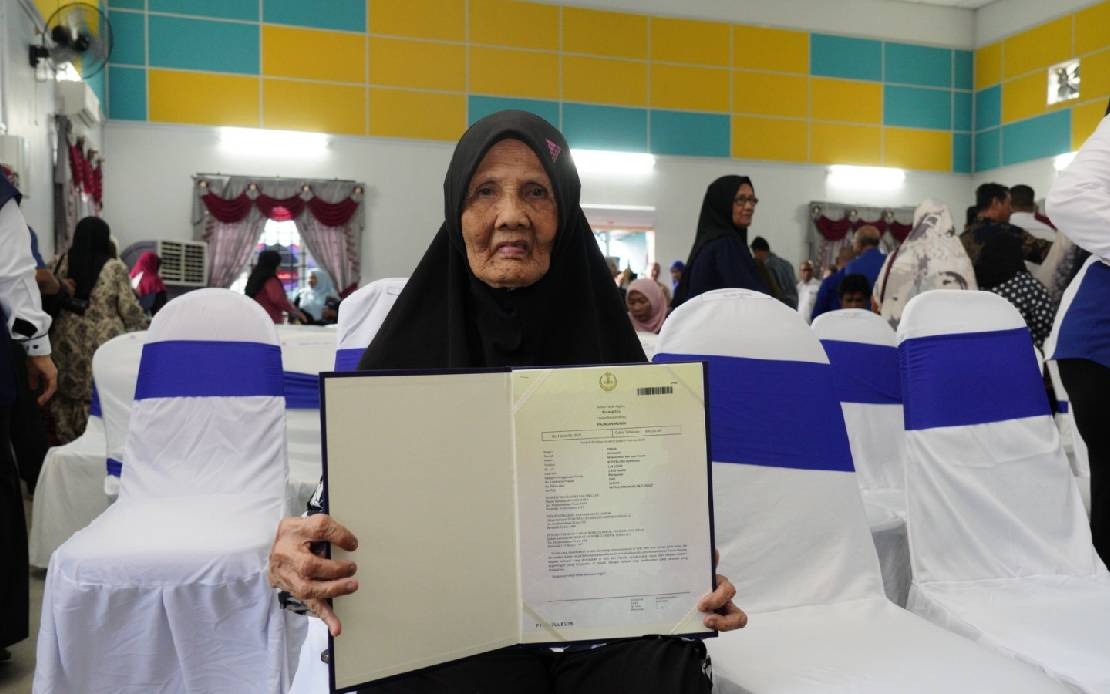
Forty-seven rural families in Perak have crossed a significant milestone with the formal handover of land ownership grants at a ceremony in Seri Gala, marking another achievement for Malaysia's Federal Land Consolidation and Rehabilitation Authority (FELCRA) in its long-running effort to uplift countryside communities. The grants, presented during the inauguration of the FELCRA Berhad Seri Gala Area Village Rearrangement Programme (PPSK) Grand Hall, represent more than paperwork—they embody a deliberate policy to anchor economic security in the hands of rural dwellers through legitimate asset ownership that can be passed to future generations.
State leadership in Perak views the development model as one of the country's most proven rural transformation templates. Menteri Besar Datuk Seri Saarani Mohamad highlighted how the FELCRA Consolidation and Rehabilitation (P&P) Programme goes beyond merely clearing jungle or redistributing plots; it fundamentally restructures how rural communities perceive their economic potential. By converting previously underutilised land into productive agricultural holdings, the scheme has demonstrated its capacity to generate employment, catalyse small business formation, and restore grassroots confidence that countryside living offers genuine opportunity rather than inevitable stagnation or urban migration.
The philosophical underpinning of this approach reflects a maturing understanding within Malaysian governance circles. Rather than viewing land grants as mere administrative handovers, state officials frame them as dignity-conferring transactions that establish economic foundations for participant families. This framing matters because it positions rural development not as patronage or subsidy, but as the restoration of productive asset ownership—a distinction that resonates with participants' sense of legitimate stake-holding in the economy and their futures.
Nationally, FELCRA Berhad operates across nearly 32,000 hectares involving almost 20,000 participants spread across multiple states. Perak has emerged as the second-largest operational region after Pahang, reflecting the intensity of consolidation and development work undertaken in the state over recent years. This scale indicates sustained commitment from federal and state authorities to the model, alongside evidence that participating communities are accepting the offer of structured agricultural development on consolidated plots rather than pursuing alternative livelihood strategies.
The framework embraces what might be termed comprehensive rural development—a concept that gained formal emphasis during Malaysia's World Rural Development Day 2026 observances in Jengka, Pahang, when Deputy Prime Minister and Rural Development Minister Datuk Seri Dr Ahmad Zahid Hamidi articulated a broader vision. Rather than reducing rural progress to roads, electricity, and water infrastructure, contemporary policy acknowledges that sustainable countryside advancement requires simultaneous investment in human capital, community economic resilience, entrepreneurial skills, household welfare systems, and crucially, the autonomy of rural populations to shape their own developmental paths.
For Perak specifically, the Seri Gala handover ceremony reflects the state government's prioritisation of land security as foundational to rural transformation. When 47 families receive formal ownership documentation, they gain collateral for credit access, inheritance clarity, and psychological ownership of their productive futures. These families can now plan medium-term investments in soil improvement, seedlings, equipment, or value-added processing with greater confidence that their efforts will benefit themselves rather than absentee owners or state schemes subject to policy reversal.
The PPSK model itself represents evolved thinking about how to restructure fragmented rural holdings into economically viable units. Rather than leaving smallholders scattered across tiny plots with minimal mechanisation potential, consolidation creates parcels of sufficient size to justify collective infrastructure investment and to attract extension services and buyer interest. This systematic approach to land reorganisation distinguishes contemporary FELCRA work from earlier, more ad-hoc settlement schemes that sometimes left participants isolated and undersupported.
From a Malaysian development policy perspective, the Seri Gala achievement gains significance when considered alongside competing rural narratives. While some discourse emphasises rural-to-urban migration as inevitable modernisation, this scheme demonstrates that structured, capital-intensive rural development can retain and build productive communities in countryside locations. The presence of state-level officials, FELCRA leadership, and community representatives at the grant ceremony signals political conviction that the model deserves continued investment rather than benign neglect.
The economic sustainability angle merits particular attention. FELCRA's claim that the P&P Programme generates continuous benefits rests on market-linked production that creates returns exceeding subsistence thresholds. If participants can reliably harvest and sell commodities at prices covering costs plus reasonable margins, then asset ownership gains real meaning. However, this depends on reliable input access, output markets, and extension support—factors that require ongoing institutional commitment beyond the moment of grant handover.
Regionally, Malaysia's FELCRA model has attracted interest from other Southeast Asian governments struggling with rural poverty and agricultural modernisation. The Perak achievement offers concrete evidence that structured land consolidation combined with participant ownership can work at scale. Nevertheless, replication requires patient institutional capacity-building and willingness to tolerate programme costs during transition periods before participants achieve full productive capacity.
Looking ahead, the symbolic value of the Seri Gala ceremony extends beyond the 47 participating families to signal government resolve that rural transformation remains a developmental priority despite competing urban-focused pressures. As Malaysia navigates post-pandemic economic recovery and strives to maintain inclusive growth rhetoric, rural schemes like FELCRA provide tangible demonstration that countryside populations retain meaningful opportunity to build household prosperity through legitimate land ownership and productive agricultural engagement, rather than accepting marginalisation or permanent dependency on transfer payments.

