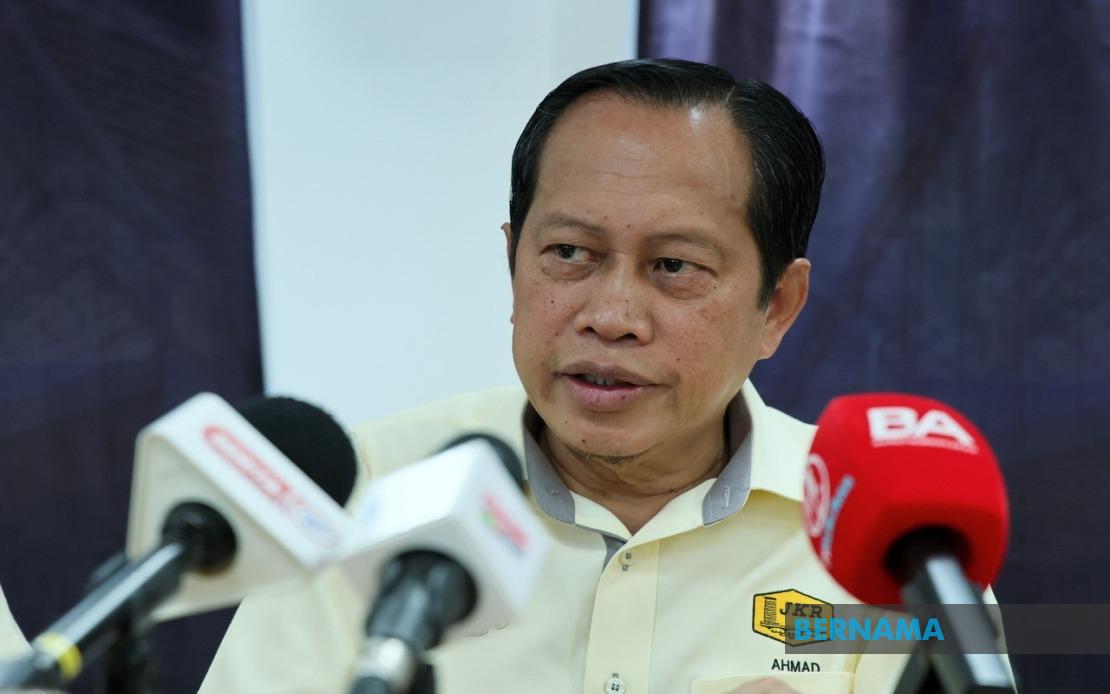
The Malaysian government is accelerating a nationwide construction programme to expand educational infrastructure, with 524 additional classroom projects totalling RM668 million currently in progress across the country. Deputy Works Minister Datuk Seri Dr Ahmad Maslan disclosed the ambitious initiative during a visit to Terengganu, where he oversaw the formal handover of the first completed facility to the Education Ministry. The undertaking underscores mounting pressure on the school system to accommodate the projected Year One cohort entering secondary education in the 2027 academic year, a demographic bulge that has prompted comprehensive capital planning across federal and state governments.
Of the 524 projects initiated, 517 have received formal approval through Letters of Acceptance from the relevant authorities, representing a 98.7 per cent approval rate that reflects substantial government commitment. Three facilities have already been delivered, surpassing their scheduled timelines—a development that suggests the construction methodology employed may prove more efficient than conventional building approaches. The first handover, formalised at Sekolah Menengah Kebangsaan Tok Jembal in Terengganu with Education Minister Fadhlina Sidek in attendance, signals the programme's transition from planning and procurement phases into tangible delivery. This early completion carries symbolic significance, indicating that streamlined project management protocols are functional and yielding results.
The construction strategy embraces modular design and the Industrialised Building System, departing from conventional on-site assembly methods that typically encounter delays and cost overruns. Modular construction, where components are manufactured in controlled factory environments before transport and assembly at school sites, promises faster project cycles and superior quality control. This approach is particularly valuable in a distributed programme spanning diverse geographic zones with varying climatic conditions and supply chain complexities. The Industrialised Building System's standardised procedures enable parallel construction across multiple sites, theoretically accelerating the overall programme timeline while reducing expenses and environmental waste.
The 524 projects will serve 459 schools nationwide, creating 1,780 individual classrooms distributed across two distinct educational streams. The majority—1,255 classrooms—are designed as conventional learning spaces for mainstream secondary students. The remaining 525 classrooms form part of the Special Education Integration Programme (PPKI), reflecting government recognition that inclusive education requires dedicated infrastructure and specialised spaces alongside mainstream facilities. This dual allocation demonstrates a comprehensive approach to educational expansion that addresses both demographic growth and the needs of students with learning differences or disabilities.
Geographic distribution reveals significant variation in project allocation, with Selangor commanding the largest concentration at 143 initiatives, all fully approved. Kedah ranks second with 93 projects, though only 92 have received formal approval, suggesting marginal administrative delays that likely reflect local bureaucratic processes. Johor, Malaysia's second-largest state by population, counts 47 projects with 45 approved, indicating that approval and delivery pacing differ across jurisdictions. Terengganu and Penang have secured full approval for their respective 45 and 30 projects, while Perak lags slightly with 22 total projects and only 18 receiving Letters of Acceptance, hinting at either lower demand pressures or protracted approval procedures in that state.
The distribution across smaller states and territories reflects strategic planning aligned with demographic forecasts and existing infrastructure gaps. Pahang and Melaka, both accommodating significant student populations, feature 50 and 69 projects respectively, all approved. Kelantan, Perlis, Labuan, Kuala Lumpur, and Negeri Sembilan collectively account for 25 projects distributed according to regional population centres and projected enrolment surges. Even thinly populated Labuan receives three projects, indicating that the programme applies uniform standards across all federal territories and states regardless of size, ensuring no jurisdiction faces educational access constraints.
The RM668 million financial commitment represents a substantial injection into Malaysia's educational capital stock, reflecting recognition that demographic momentum demands proactive infrastructure investment. This expenditure level suggests average project costs of approximately RM1.27 million per facility, a figure consistent with modular school construction benchmarks in the region. The funding allocation arrived during a period of fiscal consolidation, implying that education infrastructure retained budgetary priority despite competing demands from healthcare, transportation, and urban development portfolios. The government's willingness to authorise such capital deployment signals confidence that Year One intake projections warrant long-term physical capacity expansion rather than temporary measures such as split-session schooling or portable classrooms.
The programme's staging for completion ahead of the 2027 intake cycle allows approximately two years for the remaining 521 projects to reach operational status. This timeline is demanding but achievable given parallel construction across 459 schools and demonstrated early progress. However, the schedule permits minimal contingency for supply chain disruptions, labour shortages, or approval delays that customarily plague large-scale infrastructure programmes. The December 2026 deadline before the 2027 academic year intake creates pressure on project teams to maintain momentum, particularly in states where approval processes remain incomplete or where site preparation delays have emerged.
The initiative also carries implications for Malaysia's construction industry and manufacturing capacity. Mobilising modular building production across multiple suppliers requires standardised specifications, quality assurance protocols, and logistics coordination at unprecedented scale within the school construction sector. Local modular building manufacturers will benefit from sustained demand over the next 24 months, potentially spurring capacity expansion and workforce development in prefabrication facilities. Conversely, construction companies familiar exclusively with conventional methods may encounter reduced opportunities unless they adapt to modular project requirements, potentially triggering sector restructuring and skills transition challenges.
From a pedagogical perspective, the new facilities present an opportunity to embed modern learning environments into infrastructure standards. Modular systems allow flexibility for open-plan spaces, collaborative zones, and technology integration that conventional classroom designs often cannot accommodate. The inclusion of 525 PPKI classrooms signals intent to establish inclusive educational environments where students with varied abilities learn alongside peers in integrated settings, provided supporting infrastructure exists from inception rather than through retrofitting. However, such integration only succeeds when accompanied by teacher training, specialist resources, and administrative systems aligned with inclusive philosophy.
The announcement underscores confidence that Malaysia's education system will accommodate projected demographic growth through capital expansion rather than policy adjustments such as reduced cohort sizes or extended intake periods. This supply-side approach assumes consistent enrolment trends, stable fertility rates, and that families will continue directing children through the formal secondary education system at historical rates. Should these assumptions prove incorrect—whether through lower-than-expected birth cohorts, increased private schooling participation, or international migration—Malaysia could face underutilised infrastructure and associated maintenance costs. Conversely, if demand exceeds projections, capacity constraints will resurface rapidly, potentially necessitating further emergency expansion.
The programme demonstrates government commitment to long-term educational infrastructure planning and execution of large-scale capital projects through centralised coordination. Success in delivering 521 additional projects within two years while maintaining quality standards and budget discipline would establish a replicable model for future infrastructure expansion. However, the critical test lies ahead: whether Terengganu's early completion represents sustainable programme performance or an isolated achievement. Tracking completion rates by state, project timing adherence, and cost management against budgeted figures will reveal whether modular construction and industrialised building systems deliver promised efficiencies or face implementation challenges common to infrastructure programmes throughout Southeast Asia.

