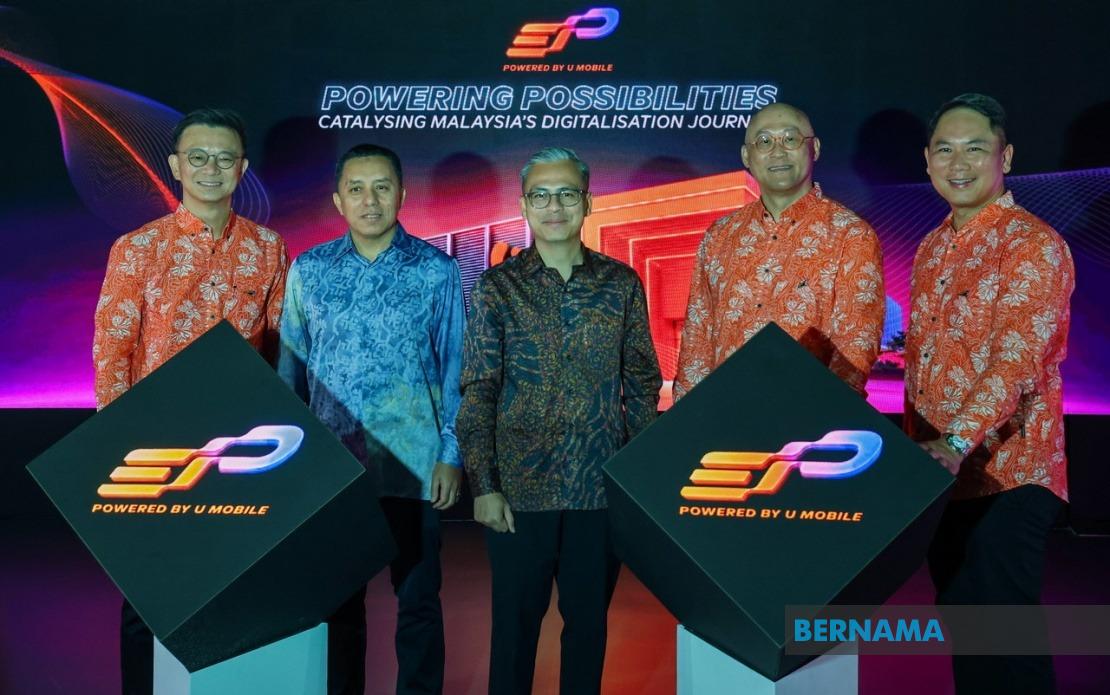
Malaysia's digital transformation agenda received a significant boost on August 6 when Communications Minister Datuk Seri Fahmi Fadzil articulated an ambitious vision for 5G Advanced technology across the nation's economy. Speaking at the launch of the U Mobile Enterprise Innovation Platform Hub in Kuala Lumpur, Fahmi underscored the transformative capacity of Ultra 5G networks, which represent the latest evolution in fifth-generation mobile technology, to drive meaningful change across multiple sectors that form the backbone of Malaysia's economic growth.
The minister's optimism reflects the technical capabilities embedded within 5G Advanced infrastructure. The technology operates on a 5G Standalone architecture, delivering enterprise-grade connectivity characterised by ultra-low latency—a critical feature enabling real-time data transmission essential for advanced applications. Beyond speed, the system incorporates network slicing functionality, which allows operators to create isolated virtual networks tailored to specific applications or industries. These networks offer double the capacity of preceding 5G iterations and are fortified with AI-powered security mechanisms, addressing concerns about data integrity and cybersecurity that have long preoccupied enterprise decision-makers across the region.
In agriculture, one of Malaysia's cornerstone industries, Ultra 5G's integration with robotics and artificial intelligence presents compelling productivity gains. Fahmi identified oil palm plantations as a sector where the technology could meaningfully enhance operational efficiency. The low latency characteristics of 5G Advanced enable remote monitoring and autonomous operation of agricultural equipment, while AI-driven analytics can optimise harvesting patterns, predict crop yield variations, and streamline resource allocation. For an industry facing persistent labour challenges and environmental scrutiny, such technological advancement could prove transformative in maintaining global competitiveness while addressing sustainability objectives.
The healthcare sector stands to benefit substantially from 5G Advanced deployment. Fahmi specifically referenced the potential to alleviate workload burdens on nursing staff within hospital wards, a concern of particular relevance as Malaysia's healthcare system grapples with demographic shifts and rising patient volumes. Ultra 5G's ultra-low latency enables real-time remote patient monitoring, facilitates telemedicine applications with minimal transmission delays, and supports autonomous robotic systems for medication delivery and routine ward tasks. Such applications become especially significant for rural and underserved communities, where connectivity constraints have historically limited access to specialised medical services.
Retail and consumer-facing enterprises represent another promising application domain. The data analytics capabilities inherent in 5G Advanced networks provide retailers with unprecedented visibility into inventory dynamics and consumer behavioural patterns. By leveraging network slicing and AI analytics simultaneously across multiple store locations, retailers can dynamically adjust stock distributions, predict demand fluctuations with greater accuracy, and personalise customer experiences in real time. For Malaysian retailers competing in an increasingly digitalised market, such capabilities offer tangible competitive advantages, particularly as e-commerce integration and omnichannel strategies become table-stakes requirements.
Beyond civilian economic applications, Fahmi highlighted the strategic implications of 5G Advanced for national security infrastructure. The minister indicated that drone operations powered by 5G connectivity are already operational in select locations for monitoring purposes, with particular emphasis on border surveillance applications. Drones equipped with sophisticated sensors and operating over 5G networks can cover vast geographical areas with minimal human intervention, providing continuous situational awareness across Malaysia's maritime and terrestrial boundaries. This capability addresses a perennial challenge for smaller security forces tasked with monitoring extensive border regions.
The regulatory framework governing such deployments received attention from Fahmi, who emphasised that relevant agencies including the Malaysian Border Control and Protection Agency (AKPS) and the Royal Malaysia Police (PDRM) should conduct suitability assessments before broader implementation. This measured approach reflects recognition that technological deployment must align with operational requirements, training capabilities, and strategic priorities of security agencies. The minister's acknowledgment that appropriate authorities should evaluate implementation specifics suggests a cautious but receptive stance toward innovation within the security sector.
Infrastructure development represents a prerequisite for realising these transformative benefits. Fahmi indicated that the Malaysian Communications and Multimedia Commission (MCMC) maintains readiness to collaborate with relevant ministries, particularly the Home Ministry, to expand internet coverage in border regions. This commitment addresses a significant infrastructure gap that has historically constrained technology adoption in peripheral areas. Enhanced connectivity in border zones would not only support surveillance applications but also facilitate broader economic development and government service delivery in communities that have experienced relative digital marginalisation.
The inter-agency coordination framework that Fahmi outlined—involving MCMC, the Home Ministry, AKPS, and PDRM—reflects the systemic approach required for technology adoption at scale. Such coordination becomes increasingly important as 5G Advanced deployments move from pilot projects to operational systems. The success of this framework will likely influence Malaysia's broader digital transformation trajectory and may serve as a template for other advanced technology implementations across government and industry.
For Malaysia's positioning within the Southeast Asian digital ecosystem, early adoption of 5G Advanced carries strategic significance. The region's rapid digitalisation, driven by increasing smartphone penetration and e-commerce growth, creates immediate demand for the enhanced capacity and reduced latency that Ultra 5G networks provide. Malaysian telecommunications providers and enterprises that successfully deploy 5G Advanced technologies could establish competitive advantages within regional markets, positioning the country as a centre of digital excellence and attracting multinational investments in technology-intensive sectors.
The economic implications of widespread 5G Advanced adoption extend beyond immediate productivity gains. Enhanced connectivity attracts foreign direct investment in knowledge-intensive industries, supports the growth of digital startups and innovation clusters, and creates employment opportunities in technology deployment, maintenance, and development. For policymakers, the minister's articulation of these benefits underscores the importance of sustained investment in digital infrastructure as a foundational economic priority.
The pathway from current pilot deployments to scaled implementation will require sustained commitment from telecommunications providers, enterprise customers, and government regulators. Fahmi's public advocacy for 5G Advanced suggests political will to support this transition, though execution will depend on coordinated efforts across multiple stakeholder groups. The launch of the U Mobile Enterprise Innovation Platform Hub represents a tangible step in this direction, providing infrastructure through which businesses can experiment with 5G Advanced applications and develop operational expertise before broader deployment.

