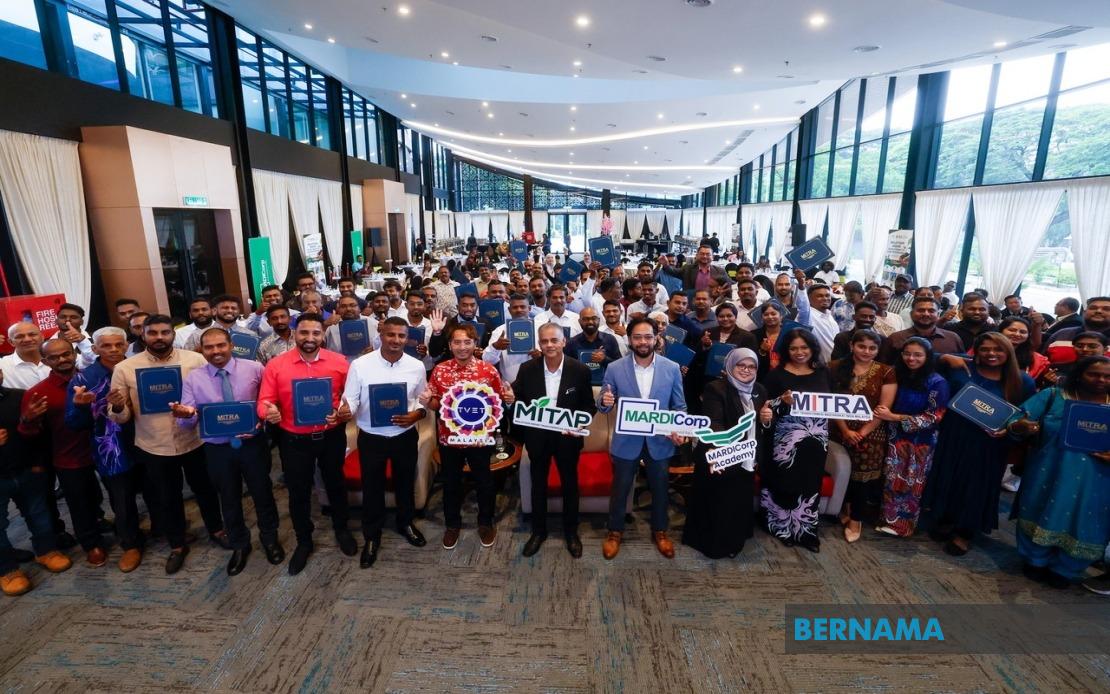
The Malaysian Indian Community Transformation Unit (MITRA) has completed its first round of grant distributions, directing RM30,000 to each of 68 young individuals seeking to launch agricultural enterprises. The funds were disbursed through the Malaysian Indian Transformative Agri Programme (MITAP) during a ceremony held in Putrajaya today, marking a significant step in broadening participation from India-origin communities in Malaysia's agricultural sector.
MITAP operates as a joint initiative between MITRA and MARDICorp, anchored within the broader Indian Community Socioeconomic Development Programme. The scheme targets capacity building and skills enhancement for younger members of the Malaysian Indian diaspora, addressing a historical underrepresentation in farming and agribusiness ownership among this demographic group. By directing capital directly to individuals rather than established companies, the programme seeks to lower barriers to entry for first-time entrepreneurs.
According to K. Raveendran Nair, the director-general of MITRA, the initiative encompasses two complementary streams. The QuickWin MITRA component provides immediate financial support—the RM30,000 grants now distributed—while the Young Agropreneur Programme (PUM) offers structured training spanning ten months. Eight participants have already completed the formal training component, positioning them to scale their operations with enhanced knowledge of modern farming practices and business management.
The agricultural focus areas eligible for grant support are deliberately diverse, reflecting both traditional and contemporary farming methodologies. Recipients may direct their funding toward food crop production, dairy cattle management, beekeeping operations, oyster mushroom cultivation, freshwater fish farming, or food processing technology ventures. This sectoral variety allows entrepreneurs to pursue paths aligned with their existing expertise, local environmental conditions, and market demand within their communities.
MARDICorp, the Malaysian Agricultural Research and Development Institute's commercial arm, plays a crucial support role extending beyond the initial grant distribution. Managing director Mohamad Zamir Ghazali indicated that the corporation will provide ongoing mentorship to MITAP beneficiaries, particularly in areas where many first-time agropreneurs face difficulties: product marketing, value-added downstream development, and adoption of emerging agricultural technologies. This post-grant engagement framework distinguishes the scheme from simple subsidy programmes, emphasising sustained capacity development.
A networking dimension underpins the programme's structure. Ghazali highlighted that bringing MITAP participants together creates a community of practice, fostering peer learning and mutual support while ensuring these entrepreneurs remain integrated within government monitoring and support systems. Several beneficiaries have already joined sectoral associations relevant to their chosen activities, a development that facilitates collective bargaining for inputs, knowledge sharing about regulatory compliance, and collaborative marketing initiatives that individual small operators might struggle to execute alone.
The timing and targeting of this initiative reflects broader Malaysian policy concerns. Agriculture remains a sector where youth participation has declined across most demographic groups, with younger Malaysians gravitating toward urban service employment. By coupling financial support with intensive training and ongoing mentorship, MITRA addresses multiple barriers simultaneously. The programme acknowledges that capital scarcity alone does not explain why younger Indian Malaysians are underrepresented in farming; knowledge gaps, weak market access, and weak networks also inhibit entry and persistence.
For Malaysia's broader agricultural development objectives, expanding participation from community groups historically outside mainstream farming carries significant implications. Indian-origin Malaysians represent approximately nine percent of the national population, yet their contribution to agricultural output and entrepreneurship has remained disproportionately small. Unlocking this human capital reserve could address labour shortages in specific farming subsectors while simultaneously reducing economic inequality within the Indian community itself.
The RM30,000 grant level represents a calibrated intervention. Sufficient to purchase livestock or cultivation equipment, establish processing facilities, or cover initial operational costs, the amount falls below the threshold requiring large collateral from beneficiaries—a critical consideration for first-time entrepreneurs typically lacking substantial asset bases. Yet the sum is modest enough that recipients must demonstrate business viability and make intelligent deployment decisions rather than treating grants as general welfare transfers.
Emerging trends in Malaysian agriculture—rising consumer demand for locally produced dairy products, growing urban interest in honey and specialty mushrooms, and government support for integrated fish farming—create genuine commercial opportunity for new entrants willing to adopt improved techniques. MITAP participants entering these segments enjoy expanding markets unavailable to earlier generations of farmers. The programme thus aligns supply-side support with genuine demand signals, improving the likelihood of participant viability and long-term persistence.
For regional observers, MITAP's model offers insights into inclusive agricultural development. Rather than assuming passive support role, ethnic community organisations (MITRA) partner with technical agencies (MARDICorp) and government funding channels to create targeted, intensive programmes addressing specific participation gaps. The combination of capital, training, mentorship, and network access presents a more comprehensive development intervention than conventional subsidy schemes.
The programme faces natural scrutiny regarding participant success rates and long-term viability. Initial grant distribution represents merely the beginning; the substantive test arrives over coming seasons as MITAP beneficiaries navigate market volatility, pest management, supply chain challenges, and competitive pressures. MARDICorp's continued engagement will prove critical during this consolidation phase, determining whether early-stage enthusiasm translates into sustainable enterprises.

