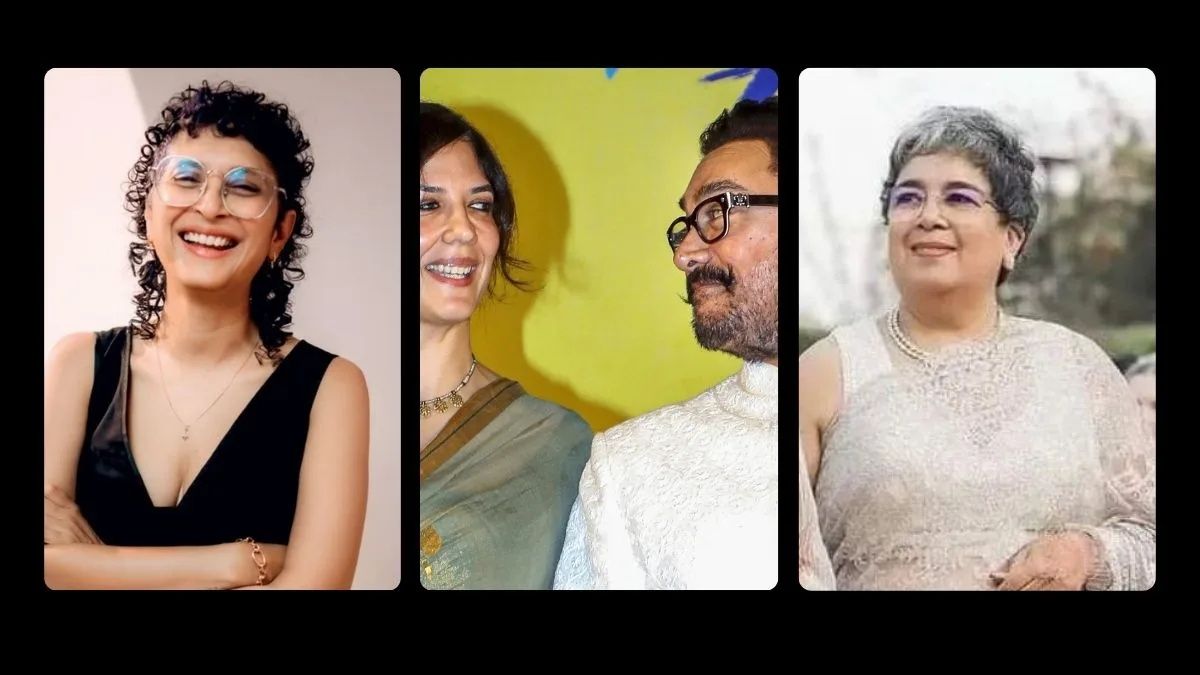
Bollywood's acclaimed actor Aamir Khan has publicly refuted allegations that emerged after his recent marriage to longtime acquaintance Gauri Spratt, pushing back against claims that framed him as a promoter of what critics term 'love jihad'. The 60-year-old actor addressed the controversy in a detailed interview, emphasizing that his family has consistently valued pluralism and religious acceptance across generations.
The actor's response centres on a central assertion: none of the interfaith unions within his extended family have involved any partner abandoning their faith. Khan pointed out that his own sisters have married Hindu men, while his daughter is also married to someone from the Hindu community. He highlighted that his cousin, filmmaker Mansoor Khan, is wedded to a Christian woman, demonstrating a pattern of religious diversity that spans multiple family branches without any pressure for conversion.
Examining his own marital history, Khan clarified the circumstances of each union. His first marriage to Reena Dutta, which commenced in 1986, lasted until their 2002 divorce. Following that separation, Khan married filmmaker Kiran Rao in 2005, a partnership that produced a son before they announced their split in 2021. The actor emphasized that neither Reena Dutta nor Kiran Rao underwent any religious transformation during their respective marriages to him. His current wife, Gauri Spratt, similarly has not changed her faith; Khan noted that she is a Christian who maintains a relaxed approach to religious practice.
All three marriages were solemnized as civil unions rather than religious ceremonies, a detail Khan underscored to demonstrate his family's secular approach to matrimony. This distinction carries weight in India's ongoing social debate, where accusations of 'love jihad'—a contentious term employed by critics to suggest coordinated conversion through marriage—have become increasingly weaponized in political discourse. By clarifying that his marriages followed civil law, Khan positions his unions outside the framework that critics employ to make their allegations.
The actor's relationship with Gauri Spratt followed an unconventional trajectory. The two had known each other for approximately 25 years before circumstances brought them together again roughly two years ago in Bengaluru through his cousin Nuzhat Khan. Their reconnection blossomed gradually into romance, with the couple dating for over two years before deciding to formalize their relationship. Khan officially married Spratt on July 5 at his Mumbai residence, concluding a courtship period considerably longer than many high-profile celebrity unions.
Khan first introduced Gauri publicly during celebrations marking his 60th birthday in March of the previous year, when he presented her to assembled media representatives. This deliberate introduction signalled the seriousness of their relationship and provided transparency to the public and press. The couple's extended courtship and Khan's openness about their relationship stand in contrast to the rushed narratives sometimes constructed by commentators employing the 'love jihad' framework.
In his response to the allegations, Khan adopted a tone suggesting frustration with what he perceives as escalating absurdity in public discourse. He remarked that life becomes "more comical as time passes," a commentary reflecting the actor's apparent bewilderment at accusations levelled against him despite his family's transparent history of interfaith acceptance without conversion pressures. This observation resonates particularly in the Malaysian context, where pluralistic societies like ours have grappled with balancing religious diversity and social cohesion.
The controversy surrounding Khan illustrates broader tensions in South Asia regarding interfaith relationships and the politicization of personal choice. The term 'love jihad' itself remains contested, with critics arguing it weaponizes legitimate interfaith relationships by suggesting malicious intent where none exists. Khan's detailed family history serves as a counter-narrative to such characterizations, demonstrating that interfaith marriage need not imply religious conversion or hidden agendas.
For Malaysian audiences, Khan's situation offers instructive parallels to ongoing discussions about religious freedom, conversion, and marriage law in our own multicultural nation. While Malaysia's legal framework differs substantially from India's, questions about how societies accommodate religious diversity through marriage, family law, and social acceptance remain fundamentally similar. Khan's emphasis on civil marriage and voluntary participation without conversion pressures reflects principles that secular democracies typically cherish.
The actor's response also highlights how public figures navigating interfaith relationships face heightened scrutiny in increasingly polarized environments. Khan's family background—grounded in secular, pluralistic values—provides context for understanding his personal choices as continuations of established family patterns rather than novel departures into controversial territory. His willingness to articulate this history transparently suggests an attempt to reframe the narrative around his marriage from one laden with suspicion to one reflecting his family's longstanding commitments.
Despite his clarifications, the persistence of such allegations against Khan underscores the challenge faced by public intellectuals and cultural figures in countering narratives once they gain traction in polarized discourse. Khan's approach—offering detailed factual corrections grounded in family history—represents a measured response that privileges transparency and documented relationships over rhetorical defensiveness. Whether such measured responses ultimately shift public perception remains an ongoing question in contemporary media landscapes across South Asia.
Ultimately, Khan's defence rests on demonstrating consistency between his current marriage and his family's historical approach to interfaith unions. By emphasizing the voluntary nature of all relationships, the absence of conversion demands, and the civil rather than religious character of his marriages, the actor constructs a narrative of personal choice unmediated by communal pressures or hidden agendas. This framing challenges the fundamental premises underlying 'love jihad' accusations, though whether such challenges penetrate polarized opinion remains uncertain.

