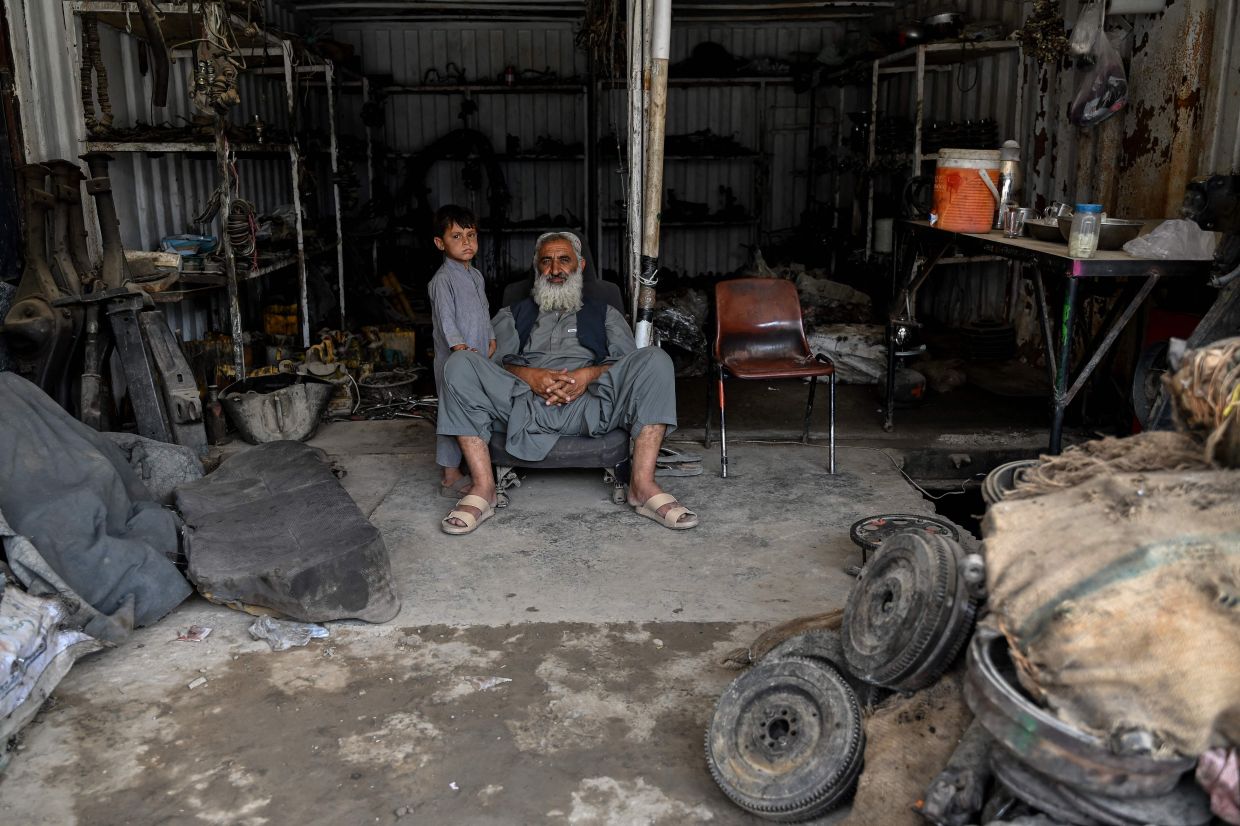
The automotive trade that once sustained thousands of workers across Afghanistan's southern Kandahar province has effectively collapsed, strangled by a combination of regional military conflicts and international shipping chaos that has made importing vehicle components prohibitively expensive or impossible. In the market town of Spin Boldak, a crossroads where Japan-manufactured parts and Middle Eastern imports converged to fuel an assembly industry and nationwide distribution network, the silence of idle machinery now dominates workshops that previously hummed with productive activity.
The first blow arrived in October when cross-border hostilities between Afghanistan and Pakistan forced the shutdown of that crucial frontier passage. The closure severed the traditional overland route through which vehicle parts from Japanese manufacturers and other distant suppliers reached Kandahar. Traders initially adapted by rerouting shipments through Iran's Bandar Abbas port, a circuitous alternative that carried its own complications but at least permitted continued commerce. According to Abdul Baqi Bina, deputy head of the Kandahar Chamber of Commerce and Investment, this workaround, though cumbersome, represented the survival of a fragile supply system.
The more devastating blow came in February when tensions in the Middle East escalated dramatically, creating what Bina characterised as a catastrophic setback for Afghanistan's already fragile economy. The resulting turmoil in international shipping, particularly around the Strait of Hormuz, disrupted one of the world's most critical maritime choke points. Shipping lines issued warnings that normalising operations through this vital corridor would require an extended recovery period, effectively freezing Afghan traders in a state of commercial paralysis.
The economic consequences proved immediate and severe. Container shipping costs exploded from approximately US$2,000 per unit to US$8,000 following the Middle East escalation, according to one importer identified as Asadullah. This four-fold increase in logistics costs rendered many shipments commercially unviable, forcing traders to abandon containers already in transit or sent back those awaiting loading. Asadullah reported having more than thirty containers stranded between Japan and the United Arab Emirates, many stuck at Dubai's Jebel Ali port, the region's dominant logistics hub, which itself became congested as shipping lines reassessed operations.
The impact radiated outward through the entire value chain. Previously, containers arrived at Spin Boldak daily in quantities that sustained two parallel economic activities: assembly workshops that manufactured complete vehicles from imported components, and spare parts distributors who supplied repair shops throughout Afghanistan. Workshop proprietors like Samiullah, who operated on a rhythm of producing five to seven vehicles per week, now sat idle with their employees still drawing wages despite zero incoming orders. The financial strain of maintaining payroll without revenue flow pushed workshop owners toward insolvency.
For importers like Masoud, the transformation from robust trade to complete stagnation occurred within weeks. His operation, which previously handled dozens or even hundreds of monthly container shipments from Japan, ground to zero after the February conflict erupted. Some containers dispatched before the crisis reached the UAE, but returning them to Japan proved economically preferable to the escalating storage fees accumulating in Middle Eastern ports. Masoud articulated the grim calculation facing traders: continuing to hold stock overseas consumed capital without generating returns, while attempting to restart the import cycle meant navigating both the elevated shipping costs and the uncertainty of whether supply corridors would stabilise.
Beyond the merchant class, casual and semi-skilled workers faced immediate precarity. Mohammad Naeem, a twenty-one-year-old crane operator employed in the logistics infrastructure surrounding the Spin Boldak market, confronted the prospect of abandoning his trade entirely if conditions did not reverse. The collapse of import volumes eliminated the daily work that once provided steady income for dozens of equipment operators, labourers, and material handlers whose employment depended entirely on the physical movement of cargo through the market.
The broader macroeconomic context rendered Afghanistan's predicament more acute. The World Bank assessed in May that Afghanistan remained acutely vulnerable to external shocks, with the nation's import-export imbalance widening to a staggering seventy percent of GDP during the 2025 fiscal year. This metric underscores how dependent the Afghan economy remains on imported goods and how limited domestic productive capacity constrains the country's ability to compensate when external channels malfunction. The automotive sector represented a microcosm of this vulnerability: unable to manufacture its own vehicles, Afghanistan relies entirely on imported components, placing it at the mercy of regional stability and global shipping efficiency.
Retailers at the market's vehicle showrooms absorbed the collapse in consumer activity. Noor Ali, proprietor of a dealership displaying an array of Japanese-assembled vehicles, reported that customer traffic had dried up entirely, with sales ceasing for an entire month. The accumulation of inventory without corresponding revenue highlighted how trade disruptions propagate from suppliers through to final consumers, who faced either unavailable vehicles or dramatically higher prices if parts became available through alternative channels.
The psychological toll of prolonged uncertainty affected traders' decision-making. Rather than gamble on shipments that might take months to arrive or cost substantially more than previous rates, many entrepreneurs suspended operations entirely, cancelling orders or instructing their suppliers to reverse shipments already dispatched. This defensive posture, rational at the individual level, collectively accelerated the market's contraction, as fewer orders meant fewer containers flowing through the system, reinforcing the perception that normal operations would not resume soon.
The fundamental challenge facing Afghanistan's automotive trade lies in the absence of any clear resolution pathway. Border hostilities with Pakistan showed no signs of imminent ceasefire, while Middle East regional tensions remained unresolved. The Strait of Hormuz, through which roughly one-third of the world's seaborne traded petroleum passes, remained a potential flashpoint where further escalation could intensify shipping chaos rather than alleviate it. For Spin Boldak's traders and workers, this meant confronting not merely a temporary disruption but the possibility of a prolonged transformation of their industry's fundamentals.
The trade community's only hope hinged on diplomatic resolution and the restoration of normal shipping through contested waterways. Noor Ali's quiet plea for an agreement to fully reopen the Strait of Hormuz reflected a broader Afghan aspiration that international actors would prioritise the restoration of global trade flows. Yet for thousands now unemployed or facing business collapse, such diplomatic hopes offered cold comfort as immediate survival took precedence over distant prospects of normalisation.

