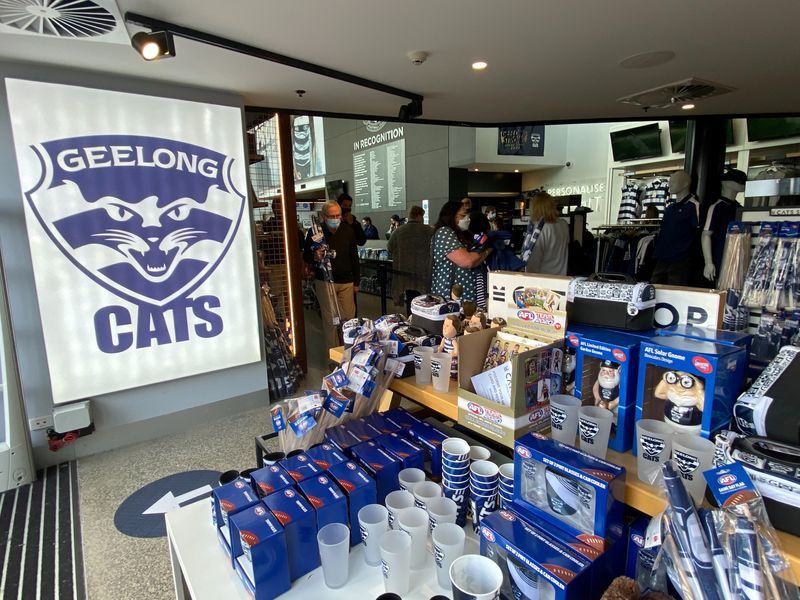
The Australian Football League has imposed a significant financial penalty on the Geelong Cats, fining the club A$140,000 (approximately $100,500) for breaching league governance rules through the handling of an undisclosed concussion waiver agreement with player Jake Kolodjashnij. The sanctions reflect growing regulatory scrutiny around player health and safety in professional Australian Rules football, a contact sport where head injuries remain a persistent occupational hazard that has increasingly attracted legal and medical attention across multiple countries.
The controversy centres on an "informed consent letter" that Geelong executed with Kolodjashnij two years prior to the penalty announcement. This document required the player to acknowledge the inherent risks of participating in elite-level Australian Rules football, particularly given his medical history. Kolodjashnij, a championship-calibre athlete, had experienced multiple concussion incidents during his playing tenure. Despite these previous head injuries, an independent medical panel affiliated with the AFL cleared him as fit to continue competing, prompting the club to extend his contract through the 2026 season. The arrangement was designed to formalize the player's understanding of and acceptance of these health hazards before continuing his professional career.
The legal and ethical complications emerged only when Melbourne's Herald Sun newspaper disclosed the agreement's existence earlier this month, sparking considerable public backlash. Prior to this media revelation, neither the AFL governing body nor the players' union possessed knowledge of the concession letter's terms. An independent investigation subsequently commissioned by the AFL Commission determined that Geelong had violated league protocols by executing an unauthorized contract modification without lodging the documentation with either the AFL or the Australian Football League Players Association (AFLPA). This procedural breach represented a significant governance failure, circumventing the oversight mechanisms established to protect athlete welfare and maintain competitive integrity.
AFL Commissioner Paul Bassat articulated the league's position in his official statement accompanying Thursday's penalty announcement, emphasizing that the investigation found no evidence suggesting the club deliberately concealed the document or attempted to deceive the AFL or AFLPA. Nevertheless, Bassat underscored that rule violations necessitate substantial consequences. He stressed that all member clubs bear responsibility for adhering to league protocols and processes explicitly designed to safeguard player interests and preserve the integrity of professional competition. This messaging underscores the AFL's intention to enforce compliance through meaningful financial sanctions rather than relying solely on institutional goodwill.
An additional layer of complexity surrounds AFL Commission chairman Craig Drummond, who served as Geelong's president when the consent letter was negotiated and executed. Drummond appropriately recused himself from participating in the review process to avoid conflicts of interest, and he issued a public apology earlier this month acknowledging mishandling of the concession letter arrangement. This institutional self-awareness regarding the problematic optics and governance implications of the situation demonstrated a measured organizational response, though critics might argue that recusal alone does not fully address concerns about potential institutional bias in how the penalty was ultimately calibrated.
Geelong's official position has emphasized that their underlying motivation throughout the process centered on providing comprehensive care and medical support to the athlete while granting him meaningful agency in determining the trajectory of his own playing career. The club's framing suggests they viewed the consent letter as an instrument for collaborative decision-making rather than as a unilateral waiver designed to shield the organization from liability. However, this characterization does not address the fundamental question of whether appropriate transparency and regulatory oversight were maintained throughout the process, and whether the procedures reflected genuine partnership with league authorities and the players' union.
Kolodjashnij has not featured in Geelong's lineup since July, and his professional status with the club remains uncertain. In a statement released three weeks ago, he indicated that he maintains good health and remains committed to fulfilling his playing obligations, while simultaneously expressing disappointment regarding the public exposure of his private medical information. The athlete's dual position—defending his fitness to play while simultaneously objecting to the breach of medical confidentiality—highlights the tension between personal autonomy in health decision-making and institutional governance requirements designed to protect vulnerable athletes from exploitative arrangements.
The AFLPA, representing players' collective interests, has made clear that Kolodjashnij remains a priority for the union's advocacy. Association boss James Gallagher issued a forceful statement on Thursday asserting that Kolodjashnij should never have faced the predicament created by the club's administrative failures. This union posture reflects broader industry concerns about power imbalances between professional sports organizations and individual athletes, particularly when health and safety determinations intersect with contractual arrangements and competitive pressures.
The Geelong case crystallizes mounting legal challenges confronting Australian Rules football regarding repetitive head trauma and cumulative concussion exposure. Over 100 former AFL players have initiated a class action lawsuit against the league and member clubs, alleging they sustained injuries and financial losses attributable to concussion-related damage incurred during their playing careers. These litigants challenge whether the professional sport's organizations exercised adequate duty of care in protecting athletes from the documented neurological consequences of repeated head impacts. The scale of legal exposure underscores why governance frameworks around concussion management and informed consent documentation have assumed heightened significance for league administrators.
League leadership has responded by maintaining that the AFL takes its protective obligations toward players seriously and will submit to accountability if wrongdoing becomes established through legal processes. The organization has committed A$25 million toward research investigating the long-term neurological impacts of concussion and head trauma accumulated during professional playing careers. This research investment aims to establish an evidence base regarding chronic traumatic encephalopathy and other neurodegenerative conditions potentially linked to repetitive head impacts, contributing to broader scientific understanding of occupational health hazards in contact sports.
For Malaysian and Southeast Asian observers, the Geelong controversy offers instructive lessons regarding governance structures in professional sports organizations and the institutional mechanisms required to balance athlete protection with organizational interests. As contact sports gain popularity throughout the region, developing robust concussion protocols and transparent regulatory frameworks becomes increasingly important. The AFL case demonstrates that financial penalties, while meaningful, represent only one element of comprehensive athlete safeguarding. Establishing clear protocols for medical documentation, ensuring independent oversight of health-related contract provisions, and empowering players' representative organizations to participate in decision-making processes all contribute to creating environments where competitive success does not compromise health security.
The incident also underscores the critical importance of media transparency in uncovering governance failures that institutional actors might prefer to manage quietly. The Herald Sun's publication of the concession letter details triggered the investigative process and public accountability mechanisms that ultimately produced the AFL's penalty. This demonstrates how independent journalism serves essential oversight functions, particularly regarding matters affecting athlete welfare in professional sports environments where organizational interests and individual health protections may diverge.
Moving forward, the AFL must ensure that the Geelong penalty serves as a cautionary signal encouraging rigorous compliance with concussion management protocols across all member clubs. The confluence of growing legal liability exposure, independent research on cumulative head trauma effects, and heightened regulatory scrutiny creates powerful incentives for organizational compliance. Whether these mechanisms prove sufficient to eliminate future governance breaches or require additional structural reforms remains an open question that will likely emerge from ongoing litigation and continued media scrutiny of player safety practices.

