The African Union's Peace and Security Council has delivered a pointed message to international players: keep out of Sudan's internal crisis. During a visit to Khartoum, the council's rotating chair Mohamed Khaled made clear that the continental body stands against external meddling in the country's affairs and explicitly opposes any attempts to create rival administrative structures that could fracture the nation further. The statement, delivered at Sudan's presidential palace following discussions with Sovereignty Council Chairman Abdel Fattah al-Burhan, underscores growing concern among African leaders that international power plays are complicating efforts to end a conflict that has already devastated the region.
The AU delegation's strong language on foreign interference carries particular weight given the complex web of international interests in Sudan's conflict. Since the armed forces and the paramilitary Rapid Support Forces descended into warfare in April 2023, various regional and global powers have jostled for influence, each with its own strategic calculations. By explicitly naming foreign interference as fuel for the conflict, the AU is signalling that African solutions must take priority over external agendas. This reflects a recurring tension in continental affairs: the continent's determination to chart its own course versus the persistent pull of global power competition.
The AU's rejection of parallel governments speaks to a specific vulnerability Sudan faces during this protracted conflict. When state institutions collapse or fragment under the strain of civil war, space opens for competing authority structures to emerge. The AU council's concern appears to be that external powers might capitalise on this chaos by backing alternative governance arrangements, further fracturing an already shattered state. For Malaysia and other nations watching African geopolitics, this concern resonates: state fragmentation creates security vacuums that can harbour extremism and destabilise entire regions, with consequences that ripple far beyond borders.
Khaled characterised the meeting as productive, suggesting that Sudan's military-led government is maintaining engagement with pan-African structures despite the conflict's intensity. The AU's emphasis on dialogue, national reconciliation, and inclusive political settlement reflects the organisation's preferred template for conflict resolution. Yet there is an inherent tension here: how to achieve genuine inclusivity when one side of the conflict controls the capital and state institutions while the other commands significant military force. The vision Khaled articulated—a constitutional system established through free and fair elections—represents the ideal outcome, but the path from today's reality to that endpoint remains murky.
Sudan's Prime Minister Kamil Idris told the delegation that Sudanese-Sudanese dialogue would commence soon, a statement that warrants scrutiny. The notion of Sudanese-led negotiations is appealing in principle, yet the RSF has historically rejected many international mediation efforts, and the military has shown limited willingness to meaningfully compromise. The phrase "begin soon" offers no timeline or concrete mechanism, leaving open the question of whether meaningful negotiations will actually materialise or whether this represents diplomatic positioning. Previous ceasefire agreements and negotiation initiatives have repeatedly unravelled, suggesting that procedural dialogue, while necessary, is far from sufficient.
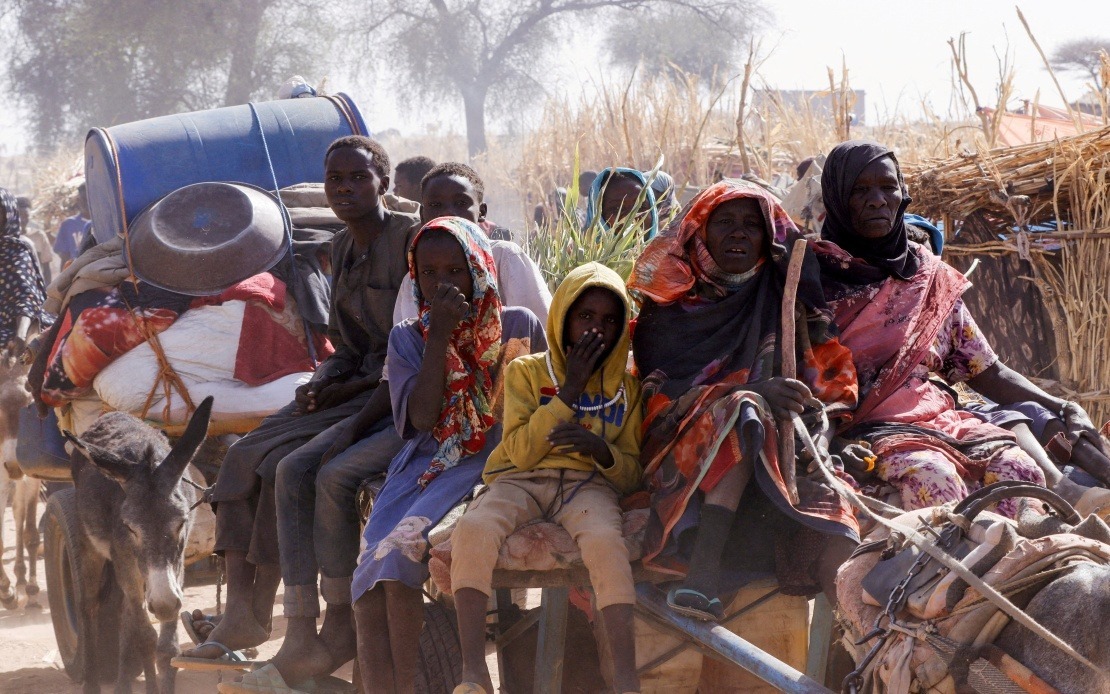
The humanitarian catastrophe underlying these political discussions cannot be overstated. The conflict has claimed tens of thousands of lives and displaced roughly 13 million people, according to United Nations estimates. This is not merely a political crisis but an unfolding humanitarian disaster of staggering proportions. Displaced populations face disease, malnutrition, and exposure, while aid access remains severely constrained. For regional neighbours and Southeast Asian countries with humanitarian commitments, the scale of this crisis creates pressure to contribute to solutions, whether through direct aid, diplomatic support, or participation in peacekeeping arrangements.
The AU's characterisation of Khartoum's government return to the capital as pivotal deserves closer examination. The military authorities have made efforts to restore governmental functions in areas under their control, a move the AU views as essential to rebuilding state capacity and delivering services. However, this framing somewhat obscures the reality that large portions of Sudan remain beyond government control, humanitarian access is patchy, and the conflict continues to rage in multiple zones. Celebrating a partial restoration of administrative normalcy risks overlooking the incomplete and contested nature of state authority across much of the country.
The AU's call for greater inclusivity and consensus-building among political forces essentially asks the military-dominated government to expand the tent and make space for civilian voices, opposition parties, and other stakeholders. This is sound advice for post-conflict governance, but it clashes with the military's demonstrated preference for control during the transitional period. The tension between security imperatives and democratic inclusion has plagued Sudan's transitions before, and there is no guarantee that the current leadership will embrace a more open approach simply because the AU has recommended it.
For Southeast Asian observers, Sudan's unfolding crisis carries strategic implications. Regional stability in Africa affects global economic patterns, migration flows, and security arrangements. Malaysia and other ASEAN nations have interests in African stability for trade, diplomatic influence, and humanitarian reasons. The AU's efforts to prevent foreign powers from weaponising Sudan's conflict and to anchor any settlement in African ownership align with broader principles of regional autonomy that ASEAN nations have long championed in their own context. Yet the AU's ability to enforce its preferences remains limited, particularly if major powers decide their interests require direct intervention.
The road ahead for Sudan hinges on whether the political momentum the AU hopes to generate translates into substantive movement toward peace. The council's delegation visit to Khartoum represents engagement, but engagement is not resolution. Genuine reconciliation would require the armed forces and the RSF to find common ground, for international powers to genuinely step back from exploitation of the conflict, and for Sudan's political class to prioritise national healing over factional advantage. Each of these conditions faces significant obstacles, suggesting that despite the AU's hopeful framing, Sudan faces a long and uncertain path toward the stable, unified state that regional and continental leaders envision.

