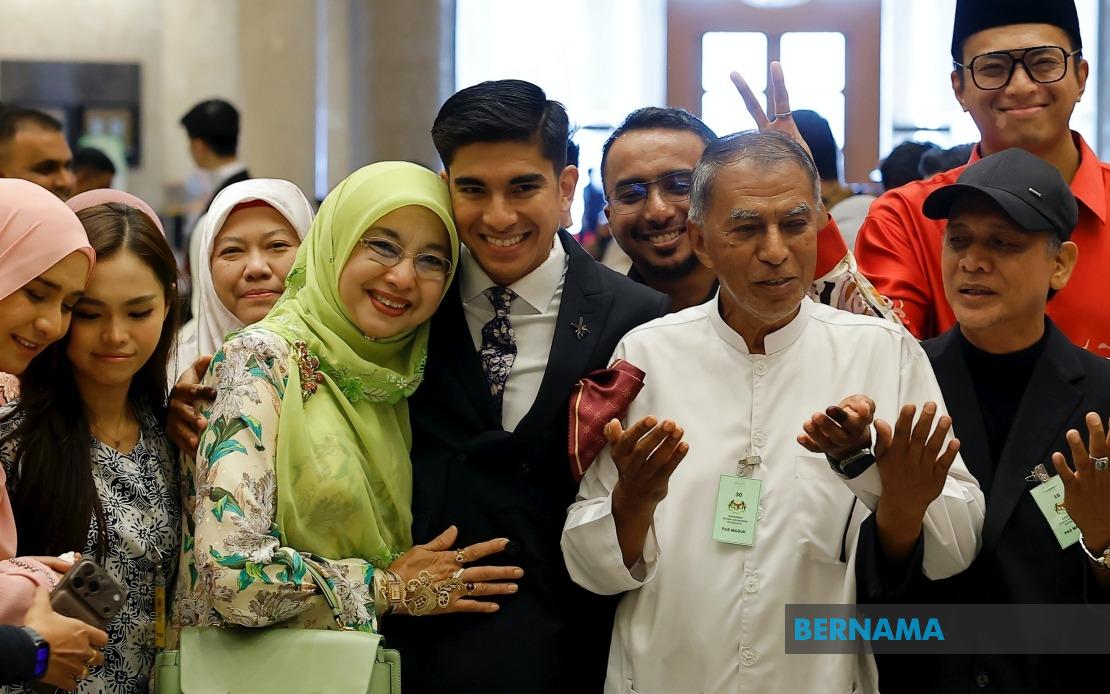
The Federal Court has delivered a decisive conclusion to one of Malaysia's most protracted political legal sagas, acquitting Muar Member of Parliament Syed Saddiq Syed Abdul Rahman of all charges following a hearing at the Palace of Justice in Putrajaya on July 13. The 33-year-old politician, who faced four counts related to criminal breach of trust, misappropriation of property, and money laundering involving funds from Angkatan Bersatu Anak Muda (Armada), the youth wing of his political party, performed a sujud syukur with his family following the announcement. The judgment marks a watershed moment in a legal proceeding that has stretched across six years, consuming considerable time and resources whilst capturing sustained public attention throughout Malaysia's recent political turbulence.
In addressing journalists immediately after the ruling, Syed Saddiq struck a reflective and philosophical tone, emphasizing his unwavering conviction that legal truth would ultimately surface and that institutional integrity would be vindicated. He characterized the extended court process as confirmation of a fundamental principle guiding his approach to the allegations—that principled conviction and moral righteousness, rather than expedient compromise, constitute the bedrock of personal and political credibility. The former youth and sports minister acknowledged that the ordeal extended far beyond his personal predicament, significantly affecting his immediate family, extended kinship networks, political allies, and the broader Malaysian political ecosystem that had continued monitoring developments throughout the litigation period.
The significance of this acquittal extends beyond individual vindication into broader questions about Malaysia's justice system and institutional credibility. Syed Saddiq explicitly framed his courtroom victory as validation of the independence and impartiality that should characterize Malaysia's judicial apparatus. His statement that institutional strength constitutes the foundation upon which national resilience rests reflects a political perspective that positions court decisions within a larger framework concerning democratic governance and rule of law. For Malaysian observers, particularly those concerned with judicial independence and the potential instrumentalization of the legal system for political purposes, the acquittal carries implications regarding how courts navigate complex cases involving prominent political figures during periods of shifting political alignments.
During his remarks to the media, Syed Saddiq reflected on the psychological and emotional dimensions of sustaining legal defense across six years whilst maintaining public responsibilities and political engagement. He articulated a viewpoint that maintaining integrity and dignity, even when circumstances appear profoundly discouraging and outcomes remain uncertain, ultimately proves more sustainable than accepting expedient resolutions that compromise principle. This sentiment resonates particularly within Malaysian political culture, where questions of leadership credibility and personal conduct occupy prominent positions in public discourse. The young politician's emphasis on trust in divine providence alongside confidence in institutional frameworks presents a narrative reconciling spiritual conviction with civic faith in systematic legal processes.
Regarding his immediate future, Syed Saddiq signaled intentions to recalibrate his engagement with active politics, at least temporarily. He indicated his desire to prioritize family obligations and personal affairs that have necessarily received diminished attention throughout the extended litigation period. Notably, he confirmed that his parents have granted approval for him to proceed with wedding plans, suggesting that personal milestones long deferred during the legal proceedings can now be pursued. However, he emphasized that his parliamentary responsibilities remain undiminished and that he maintains unbroken affiliation with his political party, MUDA, whilst considering the trajectory and timing of future political initiatives.
The politician's statement regarding his relationship with Muar constituents also deserves attention. His expressed desire to convene a gathering specifically for the people of Muar reflects recognition that his legal ordeal necessarily consumed time and political attention that might otherwise have been devoted to constituency development and representative duties. The extended litigation period, spanning six years from initial charges through Federal Court confirmation of acquittal, unavoidably created a context wherein the representative's political narrative became intertwined with legal proceedings rather than policy accomplishments or constituency service. His intention to reconnect directly with Muar voters suggests awareness that rebuilding constituent relationships and redirecting political focus toward local issues requires deliberate effort and meaningful engagement.
The legal representation handling Syed Saddiq's defense, led by counsel Datuk Hisyam Teh Poh Teik, expressed gratitude toward the judicial panel and acknowledged the substantial commitment required from the defendant and his family throughout the protracted proceeding. The defense team's public statement emphasizing appreciation for the court's decision and recognition of the trust placed in legal counsel by the accused represents standard professional acknowledgment but also underscores the collaborative nature of mounting effective legal defense across multiple court levels and extended timeframes. The decision required navigation through Malaysia's hierarchical court system, culminating in Federal Court review and confirmation of earlier acquittal determinations.
From the prosecution's perspective, Deputy Public Prosecutor Datuk Wan Shaharuddin Wan Ladin confirmed that government legal authorities accepted and respected the Federal Court's determination whilst noting that decisions regarding potential review applications remained under consideration by the Attorney General's office. The prosecution's measured response reflects established protocol whereby government legal agencies acknowledge superior court determinations while reserving the possibility of appellate remedies where legal grounds exist. The indication that determinations regarding review applications remained pending acknowledged the government's procedural options whilst implicitly recognizing that extensive litigation had concluded with clear judicial determination favorable to the defendant.
For Malaysian readers and regional observers, the Syed Saddiq acquittal encompasses multiple dimensions beyond the immediate case outcome. It raises questions about the political motivations potentially underlying the original prosecution, the duration and expense of extended litigation processes, and the broader institutional credibility of Malaysia's judicial system in navigating high-profile cases involving prominent politicians. The case coincided with Malaysia's complex political transitions spanning multiple government formations and shifting factional alignments, creating contexts wherein legal proceedings necessarily carried political significance transcending the technical legal questions nominally at issue. The Federal Court's affirmation of acquittal suggests that the judicial institution ultimately determined insufficient evidence substantiated the criminal allegations, a conclusion that necessarily raises retrospective questions about the original prosecution decision and the evidentiary foundation underlying charges initiated years earlier.
The broader Southeast Asian context further illuminates the significance of this Australian acquittal within Malaysian judicial and political history. Across the region, questions regarding judicial independence and potential instrumentalization of legal systems for political purposes represent ongoing concerns, with various countries experiencing public controversy regarding whether courts maintain genuine independence from political influence or alternatively become vehicles for prosecuting political opponents. The Syed Saddiq case, spanning six years and reaching Malaysia's highest court, necessarily attracts regional attention as an indicator of how Malaysian institutions navigate such sensitive terrain. Whether this acquittal strengthens regional confidence in Malaysian judicial independence or alternatively generates questions regarding the sufficiency of initial prosecution decisions remains subject to ongoing interpretation and analysis within Malaysian political and judicial circles.
Moving forward, Syed Saddiq's acquittal and his stated intention to recalibrate political engagement suggest that Malaysian politics will experience further evolution as this significant legal chapter definitively concludes. The vindication achieved through Federal Court confirmation provides this young politician with institutional validation of his claims regarding prosecutorial overreach or evidentiary insufficiency, creating potential political capital for future engagement. Simultaneously, his expressed desire to prioritize family and personal circumstances reflects recognition that extended legal ordeals necessarily extract personal costs beyond the formal legal determination. The case ultimately exemplifies the intersection of law, politics, and institutional credibility that continues characterizing Malaysian governance and public discourse.

