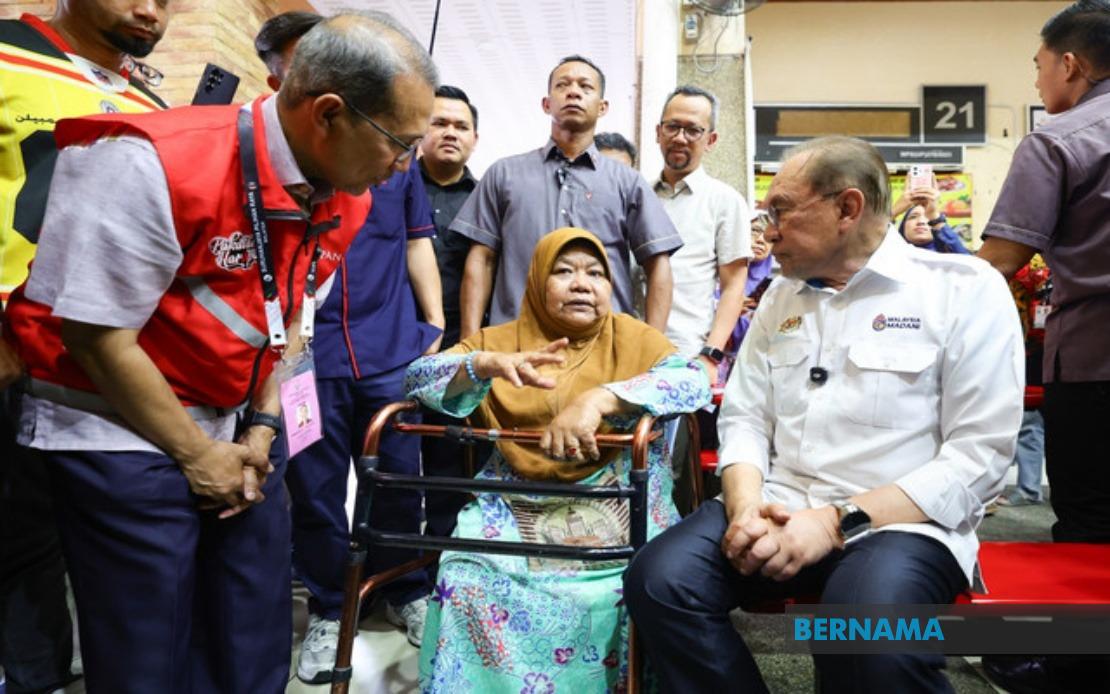
In a testament to determination that transcended both physical limitation and inclement weather, 68-year-old Jumaah Mohd Alif navigated her three-wheeled motorcycle through drizzle from Kampung Gedung Lalang to Benteng Ampangan in Seremban to realise a lifelong ambition: meeting Prime Minister Datuk Seri Anwar Ibrahim face-to-face. For this person with disabilities, who lost her left leg in an accident more than three decades ago, the spontaneous journey represented far more than a casual encounter with the nation's leader—it embodied a personal milestone she had long cherished but scarcely believed would materialise.
Jumaah's impromptu expedition unfolded after neighbours informed her that Anwar would be campaigning in the Ampangan area on that particular day. Despite the drizzling rain and the inherent difficulties posed by her mobility challenges, she made the immediate decision to seize the unexpected opportunity. The weather conditions and physical constraints that might have deterred many proved insufficient to dampen her resolve, and she set out on her adapted vehicle with a singular purpose.
When describing her momentous meeting, Jumaah spoke with evident emotion about the significance of the encounter. Throughout her life, her exposure to the Prime Minister had been limited to distant glimpses or television broadcasts. The prospect of engaging with him directly, of exchanging words and being acknowledged as an individual member of the Malaysian public, had seemed like an unrealistic fantasy. Yet circumstances aligned to transform that distant dream into immediate reality, validating her decision to brave the weather and make the journey.
The Prime Minister was in Negeri Sembilan as PH chairman, actively campaigning to strengthen the coalition's electoral position in the state election cycle. His presence in the Ampangan locality, therefore, represented a concentrated window of opportunity—one that Jumaah recognised and acted upon with commendable urgency. The meeting itself, though brief, held profound personal meaning for a pensioner who had navigated decades of life managing her disability within Malaysian society.
Jumaah's account reveals broader aspirations that extend beyond the novelty of meeting a political figurehead. She articulated specific hopes regarding government priorities, emphasising that the welfare frameworks for senior citizens and persons with disabilities demand continued attention and investment. Her words carried an implicit message: that vulnerable populations often feel overlooked in policy discussions and that direct access to leadership, however brief, provided an opportunity to reinforce their existence and their needs.
The Negeri Sembilan state election cycle, which provided the backdrop for this encounter, has already structured the timeline for electoral participation. The Election Commission established July 28 as the date for early voting, with the main polling occurring on August 1. Anwar's campaign visit was calculated to maximise PH's visibility and momentum during this critical pre-election window, ensuring the coalition maintained pressure across multiple constituencies and demographic groups.
Malaysia's person with disabilities community comprises millions of citizens navigating daily challenges with varying degrees of accessibility support. Stories such as Jumaah's illuminate both the resilience within this community and the gaps that persist in accessibility infrastructure and public consciousness. That a 68-year-old woman felt compelled to ride through drizzle on an adapted three-wheeler to simply spend moments with the nation's leader underscores how rare and precious such interactions remain for many Malaysians with disabilities.
The political significance of such grassroots moments should not be underestimated. Campaign visits and public appearances generate headlines through grand speeches and policy announcements, yet the interactions that voters remember most often involve personal acknowledgment and visible concern. Jumaah's determination to attend, regardless of obstacles, and her subsequent willingness to share her experience with media, potentially resonates more powerfully with voters than formal political rhetoric. Her story becomes a narrative about accessibility, inclusion, and representation that extends beyond Negeri Sembilan.
Furthermore, this episode illustrates how democratic processes can unexpectedly intersect with individual life stories. Election campaigns, though structured and strategic, create contexts where ordinary citizens encounter political leadership in public spaces. For those historically marginalised or underrepresented, these moments assume outsized significance. Jumaah's account suggests that while systemic barriers to full participation remain substantial, individual agency and determination can still generate meaningful engagement with the political process.
As Malaysia continues to refine its approach to disability inclusion and welfare provision, narratives like Jumaah's serve as reminders of both progress made and distances yet to travel. Her three-wheeled motorcycle, traversing rain-slicked roads to facilitate a chance meeting, becomes a symbol of the broader journey toward genuine accessibility and political representation for all Malaysians, regardless of age or ability status.

