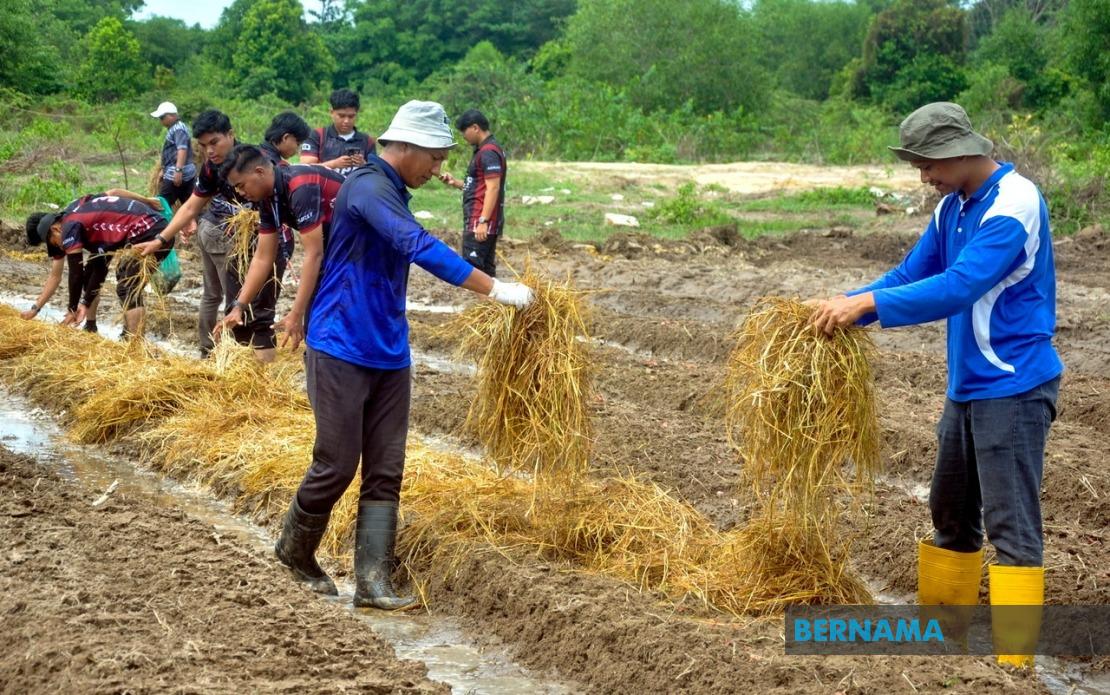
Malaysia's agricultural vocational education system is showing measurable progress in graduate employment, with the Ministry of Agriculture and Food Security reporting that 76 per cent of Technical and Vocational Education and Training (TVET) graduates in agriculture found work in 2024, up substantially from just 61 per cent in 2018. Yet this improvement, presented at a stakeholder engagement session in Putrajaya on July 23, masks a troubling gap: agricultural TVET employment still trails the national TVET average of 95 per cent by nearly 20 percentage points, suggesting the sector continues to struggle in competing for talent against other vocational pathways.
The findings emerge from a comprehensive Graduate Outcomes of Agricultural TVET in Malaysia report developed jointly by the Ministry of Agriculture and Food Security and PNB Research Institute under a memorandum of understanding signed in September 2025. The study represents one of the first systematic attempts to map the career trajectories and earnings of Malaysia's agricultural vocational graduates, providing policymakers with data-driven evidence about how well the sector is performing in talent retention and integration. By examining employment patterns, income levels, and entrepreneurial activity across multiple years of ministry data, the research offers crucial insights into whether agricultural TVET programmes are genuinely preparing students for viable livelihoods in farming and related industries.
One of the report's more encouraging findings concerns income potential within the agricultural sector. Graduates who chose agricultural careers earned approximately RM100 more per month on average than peers who worked outside the sector, a modest but meaningful differential that underscores agriculture's capacity to deliver competitive compensation. More strikingly, those who became agro-entrepreneurs—launching their own agricultural ventures—recorded higher incomes than graduates operating non-agricultural businesses. This suggests that the agricultural sector offers genuine entrepreneurial opportunities rather than serving merely as a fallback for those unable to secure employment elsewhere, a perception that has historically undermined efforts to attract young Malaysians to farming.
However, the sector's demographic challenges remain acute and potentially destabilizing. The report identifies a critical workforce composition issue: one in every two farm workers is now aged 40 or above, while youth participation in agriculture has declined steadily over the past decade. This aging workforce represents a long-term vulnerability to Malaysia's food security, as experienced farmers retire without sufficient younger cohorts developing the knowledge and skills to replace them. The disconnect between TVET programme outputs and actual youth interest in agricultural careers suggests that improving employment statistics alone will not solve the underlying problem of generational renewal in farming communities.
Geographic disparities in agricultural TVET graduate distribution reveal another structural challenge confronting the system. Participation clusters heavily in Sabah, where 15 per cent of graduates concentrate, followed by Kedah at 14 per cent and Sarawak at 13 per cent. Crucially, major agricultural states including Johor, Pahang, and Perak—historically significant food production regions—remain underutilized in terms of graduate deployment and programme positioning. This mismatch between where vocational graduates work and where agricultural production actually occurs suggests inefficiencies in either programme marketing, graduate migration patterns, or industry demand signalling that the sector has yet to fully address.
In response to these structural gaps, the Ministry of Agriculture outlined six policy directions intended to realign agricultural TVET with contemporary workforce needs. These recommendations emphasize customizing programme expansion to reflect individual state agricultural profiles rather than applying uniform national templates, evaluating success through agriculture-specific outcome metrics rather than generic employment rates, and reducing entrepreneurial risks through better business support frameworks. The ministry also proposed embedding stronger market awareness and business acumen throughout all agricultural vocational curricula, ensuring that graduates understand not just farming techniques but also value chain dynamics, supply chain positioning, and customer relationships.
A fifth strategic direction focuses on deepening industry collaboration and strengthening graduate exposure to the entire agricultural value chain—from primary production through processing, distribution, and retail. Rather than limiting TVET focus to farm-level technical skills, this approach acknowledges that modern agricultural careers increasingly involve value-added activities, logistics, quality assurance, and agribusiness management. Graduates equipped with broad sectoral understanding may identify more diverse career pathways and prove more adaptable as agricultural practices modernize and market conditions shift.
The timing of this policy agenda aligns with Malaysia's broader food security frameworks. The National Food Security Policy 2030 and the National Agro-Food Policy 2021-2030 (known as DAN 2.0) both position agricultural workforce development as essential to achieving domestic production targets and reducing food import dependency. The Ministry of Agriculture has secured backing from Deputy Prime Minister Datuk Seri Dr Ahmad Zahid Hamidi, who chairs the National Technical and Vocational Education and Training Council and endorsed these findings at a June 4 meeting. This senior-level political endorsement provides momentum for implementing the six policy directions but also signals that agricultural TVET reform will receive continued scrutiny at the highest levels of government.
For Malaysian policymakers focused on economic diversification and regional agricultural competitiveness, the TVET employment data carries multiple implications. Southeast Asia's growing food demand, accelerated by population growth and regional trade integration, creates genuine market opportunities for Malaysian agricultural products and services. Yet Malaysia can only capitalize on these opportunities if it develops a skilled, engaged agricultural workforce that views farming not as a residual career option but as a viable professional pathway offering reasonable incomes and modern working conditions. The 15-point employment gap between agricultural and national TVET averages suggests current vocational systems are not yet messaging agriculture effectively to students and families.
The report's emphasis on entrepreneurial income potential addresses a critical perception problem. Many Malaysian families have counselled children away from agriculture, viewing it as low-income, physically demanding, and technologically static. Evidence that agro-entrepreneurs outearning non-agricultural entrepreneurs directly contradicts this narrative and provides concrete data for educators, career counsellors, and parent communities to reconsider their assumptions. However, translating this data advantage into actual enrolment and completion improvements requires sustained messaging campaigns and visible success stories that demonstrate plausible pathways from agricultural TVET qualification to genuine prosperity.
The geographic concentration of graduates in eastern Malaysian states—Sabah, Sarawak, and to a lesser extent Kedah—also invites analysis of whether these regions benefit from stronger agricultural identity, more visible farming communities, or family traditions that normalize agricultural careers. Understanding why Johor, Pahang, and Perak have not generated equivalent graduate participation despite their significant agricultural production could illuminate barriers specific to peninsular Malaysia, whether cultural, informational, or institutional. Targeted interventions addressing these regional differences may prove more effective than national-level policy reforms alone.
Moving forward, the Ministry of Agriculture's success in implementing these six policy directions will depend substantially on stronger partnerships between educational institutions, agricultural businesses, and government agencies at state and federal levels. Simply adjusting programmes or improving messaging will not suffice without corresponding willingness from farmers, agribusinesses, and agricultural cooperatives to actively employ and mentor TVET graduates, invest in modernizing farm practices to create jobs worth holding, and participate in curriculum design. The 2024 employment improvement to 76 per cent demonstrates progress, but closing the gap to the 95 per cent national TVET average requires sustained, multifaceted effort across all these dimensions of the agricultural ecosystem.

