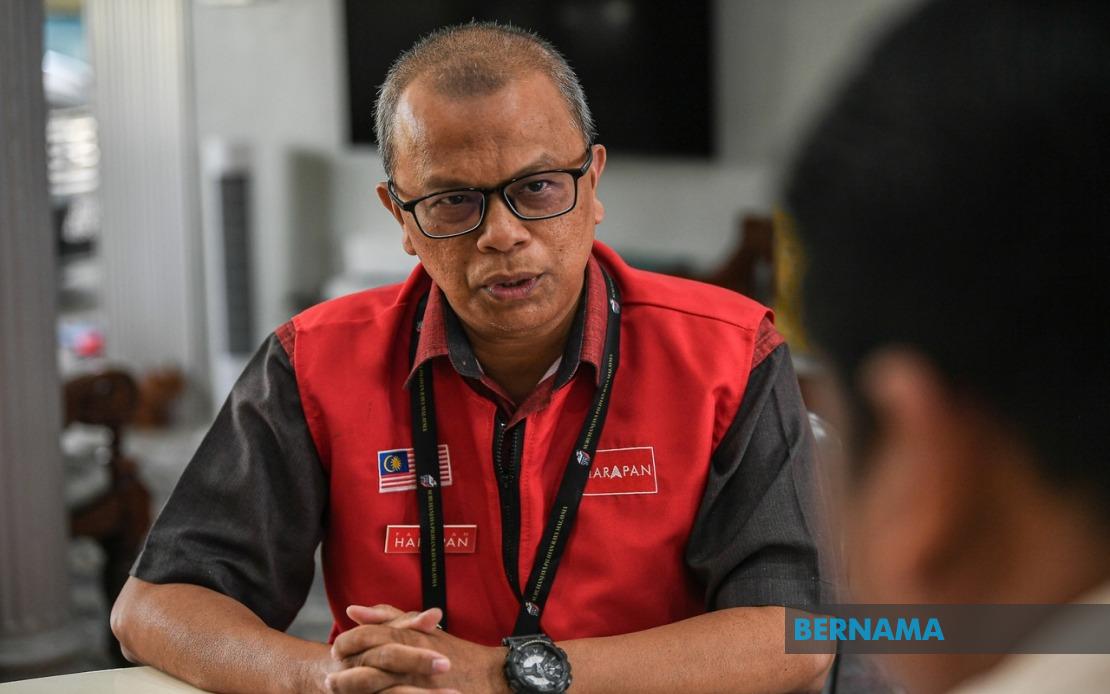
Pakatan Harapan's Ahmad Daniel Sharudin is pursuing an ambitious vision for the Panti state seat in Johor, seeking to harness the constituency's largely underdeveloped natural landscape as an engine for economic transformation. The 54-year-old civil engineer argues that the area possesses distinctive ecological assets capable of rivalling better-known attractions elsewhere in Kota Tinggi, but these assets remain commercially underexploited and require strategic investment to unlock their potential for both visitors and local residents.
At the heart of Ahmad Daniel's platform lies the transformation of rapids at Kampung Temenin into a flagship destination comparable to the waterfall attractions that have long defined Kota Tinggi's tourism reputation. He contends that upgrading these rapids through careful infrastructure development—maintaining ecological integrity whilst enhancing accessibility and amenities—could establish a secondary tourism corridor within the district. This approach differs from conventional tourism development by prioritising environmental stewardship alongside commercial opportunity, reflecting growing recognition among Malaysian policymakers that sustainability and economic return need not be mutually exclusive.
The broader economic argument underpinning his campaign centres on employment generation for young people, whom he identifies as disproportionately affected by limited local opportunities. Ahmad Daniel has observed that economic stagnation in Panti has prompted youth migration patterns extending beyond the district and even across the border into Singapore. By catalysing tourism-related economic activity, he projects that ancillary industries such as homestays, food services, and guided tour operations would naturally flourish, creating employment pathways rooted within the community rather than forcing outward migration. This analysis resonates with similar rural economic challenges across Southeast Asia, where geographic isolation and limited industrial bases have historically disadvantaged younger populations.
Beyond tourism development, Ahmad Daniel's manifesto encompasses three additional priorities that he frames as complementary to his primary vision. Affordable housing emerges as a pressing concern requiring targeted intervention, whilst industrial employment opportunities represent a hedge against over-reliance on a single economic sector. Simultaneously, he has prioritised rehabilitation of deteriorating public infrastructure, identifying maintenance deficits as symptomatic of broader governance gaps. These planks collectively suggest a candidate attuned to multifaceted development challenges rather than advancing a single-issue platform.
A former Kota Tinggi District Council member and current director of Amanah's Syariah and Dakwah Bureau, Ahmad Daniel positions his alignment with the federal government—which PH leads through a coalition arrangement—as a significant advantage for implementing his agenda. Access to federal funding mechanisms and coordination with federal agencies arguably accelerates infrastructure projects and development approvals that autonomous state-level action might struggle to achieve. This framing highlights the interconnected nature of Malaysian federalism, wherein state-level candidates increasingly campaign partly on their presumed capacity to unlock higher-level resources and support.
His campaign operations have achieved substantial coverage of the Panti constituency through face-to-face voter engagement, with his team reportedly conducting direct outreach across approximately 80 percent of the electorate. However, the geographic expanse of the state seat presents logistical constraints that traditional campaigning alone cannot fully overcome within the compressed timeframe preceding polling day. The acknowledgement of this limitation demonstrates realistic assessment of resource constraints affecting candidates across Malaysian politics, particularly those representing rural constituencies characterised by dispersed settlement patterns.
Recognising these physical limitations, Ahmad Daniel has increasingly leveraged digital platforms as force multipliers for his campaign messaging in the final period before polling. Social media deployment targeting voters across generational divides represents contemporary campaign orthodoxy in Malaysian elections, enabling candidates to extend their reach beyond constraints imposed by geography and time. This strategic pivot underscores the evolving nature of electoral competition in Malaysia, wherein online engagement increasingly complements rather than replaces conventional canvassing.
The Panti contest has crystallised into a three-way competition amongst Ahmad Daniel, Barisan Nasional's Dr Muhammad Naqib Md Ghazali, and Perikatan Nasional's Alias Rasman. This configuration reflects broader fragmentation of the Malaysian electoral landscape, wherein three-cornered contests have become increasingly common at state level, complicating seat prediction and potentially reducing winning margins. The 16th Johor state election encompasses 56 seats contested by 172 candidates collectively, with 2.7 million eligible voters determining outcomes this Saturday, July 11.
For the Panti electorate, the choice amongst these three candidates ultimately reflects divergent visions for the constituency's development trajectory. Ahmad Daniel's platform emphasising sustainable eco-tourism and grass-roots employment creation contrasts with competing approaches likely emphasising traditional development models or alternative governance philosophies. The outcome will signal voter priorities regarding environmental stewardship, economic diversification, and the appropriate balance between preserving natural heritage and pursuing commercial development—considerations extending far beyond Panti itself, potentially influencing approaches to rural development across Malaysia's remaining underdeveloped regions.

