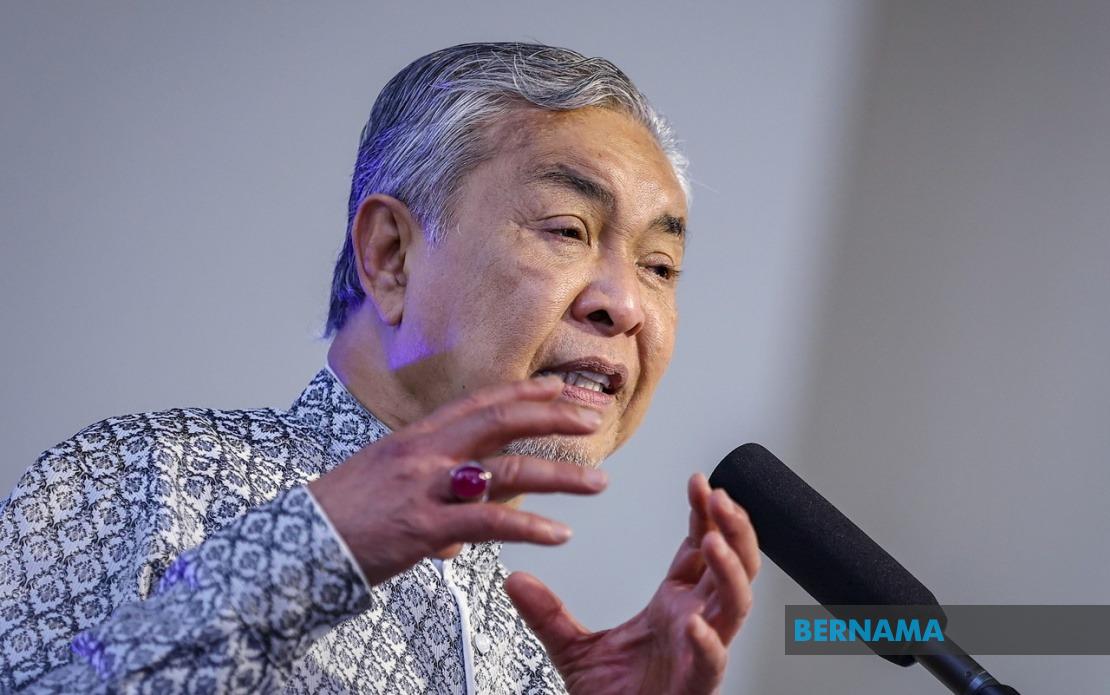
As the 16th Johor state election enters its final stretch, Barisan Nasional chairman Datuk Seri Dr Ahmad Zahid Hamidi has made an explicit appeal for political maturity, urging all contesting parties to shelve old grievances and concentrate instead on substantive policy offerings relevant to the state's future. Speaking after a community engagement in the Kempas constituency, the Deputy Prime Minister articulated a vision of restrained political discourse that prioritizes candidates' capabilities and their specific pledges to constituents over historical accusations or partisan settling of scores.
The timing and tone of Ahmad Zahid's statement reflect underlying tensions within Malaysia's governing coalition at the federal level. Several BN allies, including Umno's traditional partners, are competing directly against the ruling party in this state contest. By explicitly cautioning against the airing of "old issues," Ahmad Zahid appears to be addressing the risk that deep-rooted animosities could destabilize relationships maintained with some effort at the Cabinet table. The Deputy Prime Minister's candid reference to weekly ministerial meetings underscores an uncomfortable reality: rivals in Johor this week will sit opposite each other at federal gatherings the next, making campaigns that dredge up past conflicts counterproductive to national governance.
This appeal for civility arrives amid substantial shifts in Johor's electorate. Ahmad Zahid acknowledged that more than half of the state's voters are now young people, a demographic profile that demands different messaging strategies than traditional BN appeals. The party's underdog posture in this election—a deliberate rhetorical positioning by its leadership despite controlling the state government—reflects genuine uncertainty about its electoral prospects. In the previous contest, BN secured 40 of the 56 available seats, a commanding but not overwhelming majority that leaves room for meaningful gains by opposition forces should voter sentiment shift.
The Menteri Besar Datuk Onn Hafiz Ghazi has anchored BN's campaign manifesto firmly on youth-focused initiatives, recognizing that young voters prioritize employment security and professional development above traditional concerns. The emphasis on Technical and Vocational Education and Training (TVET) pathways addresses a legitimate gap in Malaysia's educational and employment ecosystem. While Ahmad Zahid highlighted the recent decline in national unemployment to 2.9 percent, this headline statistic obscures deeper anxieties among younger Malaysians about wage stagnation, underemployment of graduates, and access to positions offering genuine career progression.
Skills training represents a logical policy response to these concerns, particularly in a state like Johor where manufacturing, logistics, and service sectors offer substantial employment potential for technically trained workers. BN's manifesto positioning this issue centrally suggests campaign strategists believe youth employment is a vulnerability for opposition parties, which must articulate credible alternatives if they contest the same terrain. The availability of premium-wage opportunities through structured vocational pathways could resonate with voters anxious about their economic futures, assuming implementation matches rhetoric.
Ahmad Zahid's invocation of federal-level cooperation carries particular significance for Malaysian politics. The implicit acknowledgment that coalition members function simultaneously as competitors and colleagues introduces an unusual dynamic to this state contest. Unlike earlier elections where federal and state narratives could operate largely independently, modern Malaysian campaigns increasingly blur these boundaries. Parties must manage their messaging carefully to avoid alienating federal allies while still prosecuting vigorous state-level campaigns, a balancing act that demands considerable political sophistication.
The polling schedule concentrates activity into a compressed window, with early voting on July 7 and general polling on July 11. This compressed timetable favors well-organized parties with established ground machinery and less-fractured support bases. BN's decision to contest all 56 seats represents confidence in organizational capacity, though it also means accepting risks in every constituency rather than concentrating resources where victory margins appear tighter. Opposition coordination, or lack thereof, could prove decisive in determining final seat tallies.
Young voter engagement will largely determine this election's outcome. Ahmad Zahid's direct appeal to this demographic reflects internal BN calculations that young Malaysians represent both opportunity and threat. These voters demonstrated greater willingness to split tickets and cross traditional party lines in recent polls, suggesting they respond more to specific policy offerings than inherited party loyalties. BN's TVET-centered approach attempts to claim this terrain while implicitly questioning whether opposition parties have comparable concrete proposals.
The broader context involves Malaysia's ongoing political evolution following previous watershed elections. Johor's result will signal whether BN has stabilized its position after earlier setbacks or whether structural shifts in voter preferences continue eroding its traditional advantages. The state's economic importance to Malaysia—its manufacturing base, port infrastructure, and geographic significance—makes the election result consequential beyond purely provincial politics. An unexpectedly strong opposition showing could embolden challenges to BN's federal dominance, while conversely, a decisive BN victory could restore momentum and confidence to the coalition heading toward subsequent electoral contests.

