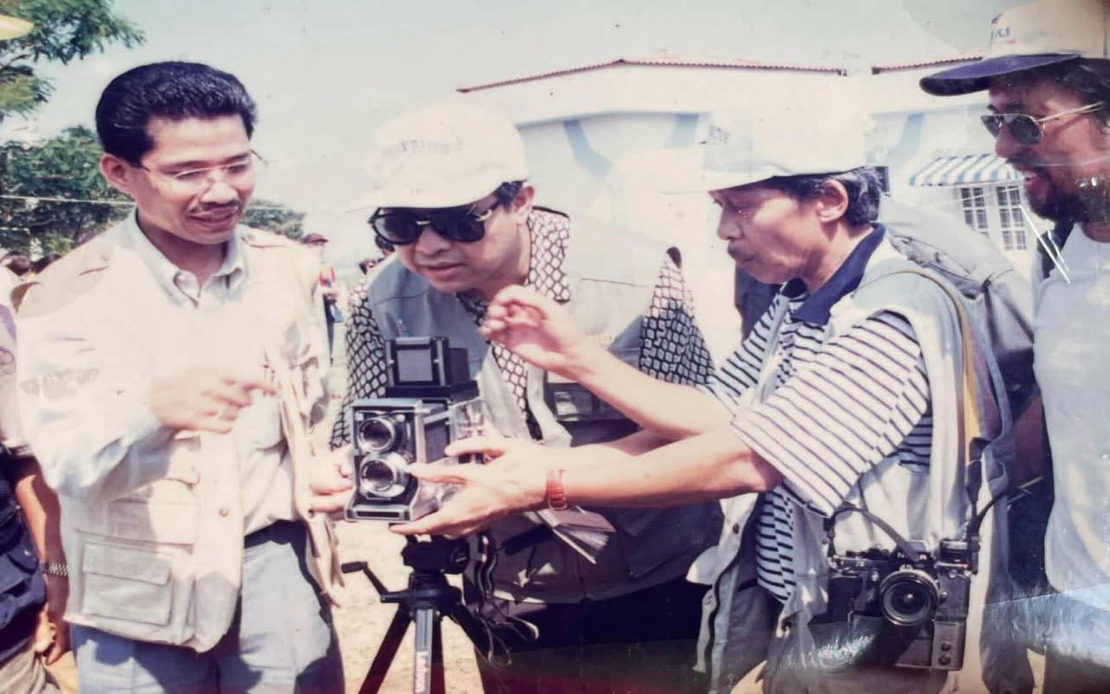
Deputy Prime Minister Datuk Seri Dr Ahmad Zahid Hamidi has extended recognition to the global photography community on World Photography Day 2026, emphasising the multifaceted role these visual storytellers play in documenting human experience and preserving moments that matter to individuals, families, and societies alike. His tribute reflects a broader acknowledgement of how photography transcends mere technical skill to become a fundamental tool for memory preservation and historical documentation across diverse contexts and communities.
Ahmad Zahid's recognition spans the entire spectrum of photographic practice, from seasoned professionals working in commercial and editorial capacities to casual practitioners who assume the unofficial role of family documentarians during important social gatherings. This inclusive approach underscores an important reality in the digital age—that photography is no longer the exclusive domain of trained specialists, yet the fundamental craft remains both valuable and increasingly essential as societies navigate an era of constant information flow and ephemeral digital content.
The Deputy Prime Minister's remarks highlight a philosophical dimension often overlooked in discussions about photography. Behind every successful image lies a deliberate act of observation and patience, wherein photographers must assess their environment, anticipate moments of significance, and execute their vision with precision often measured in fractions of a second. This convergence of technical knowledge, artistic sensibility, and timing represents a unique human capability that distinguishes photography from passive recording.
Photographs serve multiple functions within the social fabric. Many function as intimate personal archives, preserved in family collections and digital galleries as tangible connections to cherished moments and departed loved ones. Others occupy a more formal role, displayed prominently in homes and public spaces as visual anchors for identity and nostalgia. Yet beyond the personal sphere, photographs accumulate into something far more consequential—they become the visual record upon which societies construct historical narratives, inform public discourse, and educate future generations about the lived experiences of their predecessors.
The recognition of photography's historical significance carries particular resonance in Southeast Asia, where rapid social and economic transformation means that contemporary photographs are already documenting a pivotal moment in the region's trajectory. Images capturing urban development, cultural evolution, environmental change, and social dynamics in Malaysia and neighbouring countries will inevitably become invaluable primary sources for historians and researchers examining early twenty-first century Asia. The photographers creating these records, whether consciously or incidentally, shoulder a responsibility to preserve visual truths that might otherwise be forgotten or misinterpreted.
In an era where digital technology has democratised image creation, the volume of photographs produced daily has reached staggering proportions. Yet this abundance brings a paradoxical consequence—the proliferation of images alongside their tendency toward ephemerality. Photographs that might once have been carefully curated and preserved are now often lost amid the endless scroll of social media feeds and cloud storage backups. Ahmad Zahid's emphasis on preservation speaks to an underlying concern about ensuring that meaningful images survive the digital deluge and retain their power to communicate across temporal and cultural boundaries.
The distinction between professional photographers and casual practitioners increasingly blurs in contemporary visual culture. Media photographers, event specialists, and official documentarians occupy defined professional niches, yet their work shares fundamental principles with family members who capture birthday celebrations, weddings, and everyday moments. Both categories contribute to the collective visual memory of their communities, albeit in different registers and with varying degrees of technical refinement and intentional curation.
For Malaysia specifically, photography has assumed heightened importance as the nation undergoes significant development and cultural negotiation. Documenting this transition through photography—whether by professionals or enthusiasts—creates a visual archive of the country's evolution that transcends individual nostalgia to become a national cultural resource. Photographers operating across commercial, journalistic, and personal contexts are collectively authoring Malaysia's visual history, making their contributions worthy of formal recognition and support.
The timing of World Photography Day observances during this period of accelerating technological change and social media saturation makes Ahmad Zahid's tribute particularly pertinent. As artificial intelligence and digital manipulation technologies reshape what photographs represent and what trust audiences can place in images, celebrating human photographers and their craft affirms the continued value of authentic visual documentation and artistic vision. The practice of pausing, observing, waiting for the decisive moment, and intentionally composing an image remains a distinctly human endeavour worthy of recognition and encouragement.
Photography's role as a bridge between present and future merits sustained attention from policymakers and cultural institutions. As Ahmad Zahid's remarks suggest, the photographs created today—whether by professionals or enthusiasts—will inevitably become the primary visual sources through which future Malaysians and global audiences understand the early decades of the twenty-first century. Nurturing the photographic practice across all its forms, supporting emerging talent, and facilitating the preservation and accessibility of significant photographic archives represent investments not merely in cultural enrichment but in historical integrity and collective memory.

