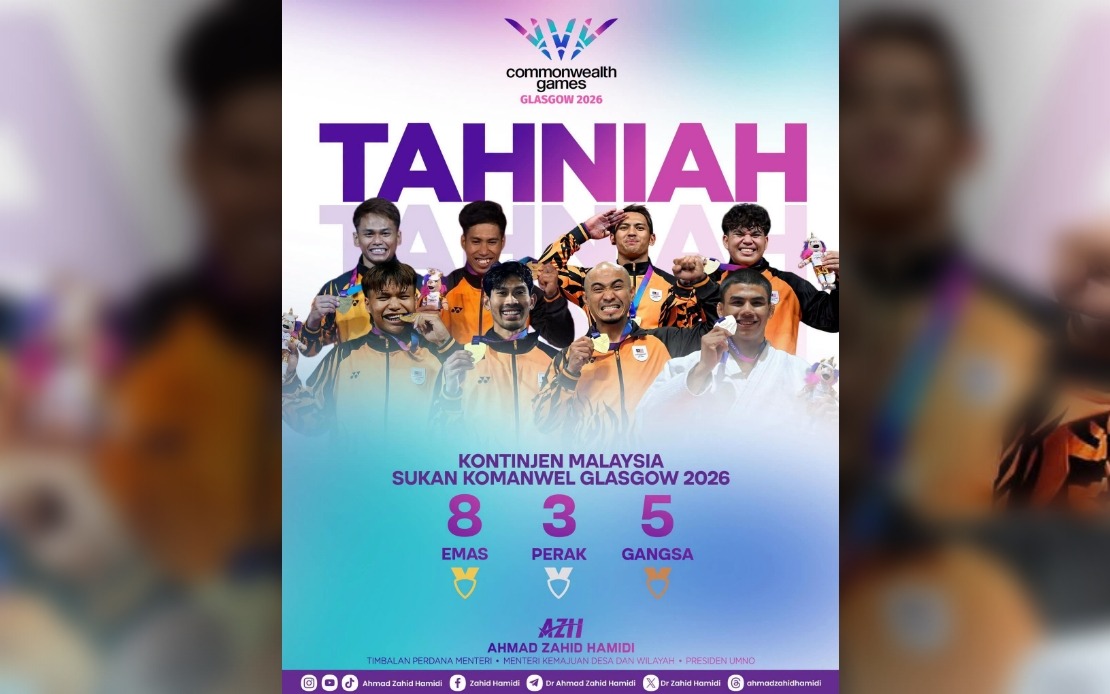
Deputy Prime Minister Datuk Seri Dr Ahmad Zahid Hamidi has extended his congratulations to Malaysia's contingent of 59 athletes—encompassing 22 para athletes—who represented the nation at the recently concluded Commonwealth Games in Glasgow, Scotland. The team's medal-winning performance, he noted, demonstrates the calibre of athletic talent within the country and the capacity of dedicated preparation to yield results on the international stage.
The Malaysian delegation's final tally of eight gold, three silver and five bronze medals represents a significant achievement, particularly when measured against pre-Games projections. Ahmad Zahid emphasised that the overall medal count of 16 exceeded the initial targets set for the contingent, placing Malaysia in a respectable 10th position within the medal standings. This outcome carries particular weight given the competitive nature of Commonwealth Games competition, which draws athletes from across the Commonwealth's diverse nations and territories.
The Deputy Prime Minister's statement underscores a broader narrative of Malaysian sporting success. The 2026 Glasgow Games results mark the nation's finest Commonwealth Games performance since 2010, a gap of more than a decade that had seen Malaysia seeking to rebuild its competitive standing. The return to medal dominance signals both improved preparation methodologies and renewed investment in athlete development programmes across both able-bodied and para-sport categories.
Acknowledging the collective effort required to achieve such results, Ahmad Zahid extended recognition beyond the athletes themselves. His congratulations encompassed coaching staff, event officials, medical and support personnel, and administrative teams whose behind-the-scenes contributions proved instrumental in the contingent's success. This holistic approach reflects the modern understanding that medal success rarely emerges from individual brilliance alone but rather from coordinated systems supporting performance.
The inclusion of 22 para athletes within the 59-person delegation carries particular significance for Malaysian sporting policy. Para-sport has increasingly featured within Malaysia's Commonwealth Games strategy, reflecting both international commitments to inclusive competition and recognition of untapped talent within the nation's disability community. The contribution of these athletes to Malaysia's overall medal haul underscores their competitive standing and the investment in their development.
In his Facebook posting, Ahmad Zahid sought to broaden the celebration beyond those who secured medals, framing national pride as encompassing every athlete's participation and effort. This messaging proves important for sustaining grassroots sporting interest and encouraging younger Malaysians to consider athletic careers. The statement acknowledges that not all contingent members returned with podium finishes, yet reaffirms their value to national representation.
The Deputy Prime Minister identified three key factors underpinning the Glasgow success: meticulous preparation, team spirit, and unwavering commitment. These elements align with contemporary sports science understanding, where technical training intertwines with psychological resilience and team cohesion. The emphasis on preparation suggests that Malaysia's sports authorities invested significantly in pre-Games conditioning and competitive exposure, moving beyond ad-hoc tournament participation toward structured long-term athlete development.
Looking forward, Ahmad Zahid expressed hope that Glasgow's achievements would catalyse greater Malaysian sporting success at future international competitions. This forward-looking perspective carries implications for government sports funding and policy direction heading toward major events including potential Asian Games hosting and Olympic preparations. The narrative of building momentum proves useful for justifying continued investment in sports infrastructure and athlete support systems.
For Malaysian sports enthusiasts and analysts, the Glasgow results offer encouragement following years of fluctuating Commonwealth Games performances. The combination of individual medal success across eight gold events and para-sport contribution suggests a broadening base of competitive strength rather than reliance on traditional sporting strongholds. This diversification may indicate emerging depth in sports like badminton, weightlifting, diving and cycling, alongside para-sport categories.
The timing of Ahmad Zahid's public commendation also carries political dimension, as government acknowledgement of sporting achievement enhances the minister's portfolio responsibilities and demonstrates commitment to national sporting development. For the Deputy Prime Minister, associating with successful outcomes proves strategically valuable for broader policy positioning.
Regionally, Malaysia's Commonwealth Games performance positions the nation competitively within Southeast Asia's sporting hierarchy. Neighbouring countries monitor such results closely as indicators of regional strength and as benchmarks for their own athlete development programmes. The 10th-place finish and strong para-sport showing may influence how other ASEAN nations calibrate their own Commonwealth Games strategies.
The Glasgow Games outcomes also reflect evolution in Malaysian sports governance over the past decade. Structural reforms, enhanced coaching recruitment, improved sports science integration, and increased athlete welfare standards have collectively contributed to performance improvements. These systemic changes, less visible than medal ceremonies but equally significant, provide foundations for sustained competitive success.
Moving forward, maintaining momentum from Glasgow requires sustained investment and strategic planning. Ahmad Zahid's emphasis on inspiration for future achievement suggests government recognition that Glasgow represents not a destination but rather a waypoint in longer-term athletic development. Whether Malaysia can build upon this platform will depend on continued resource allocation, talent identification programmes, and support infrastructure for both elite and developing athletes across the nation.

