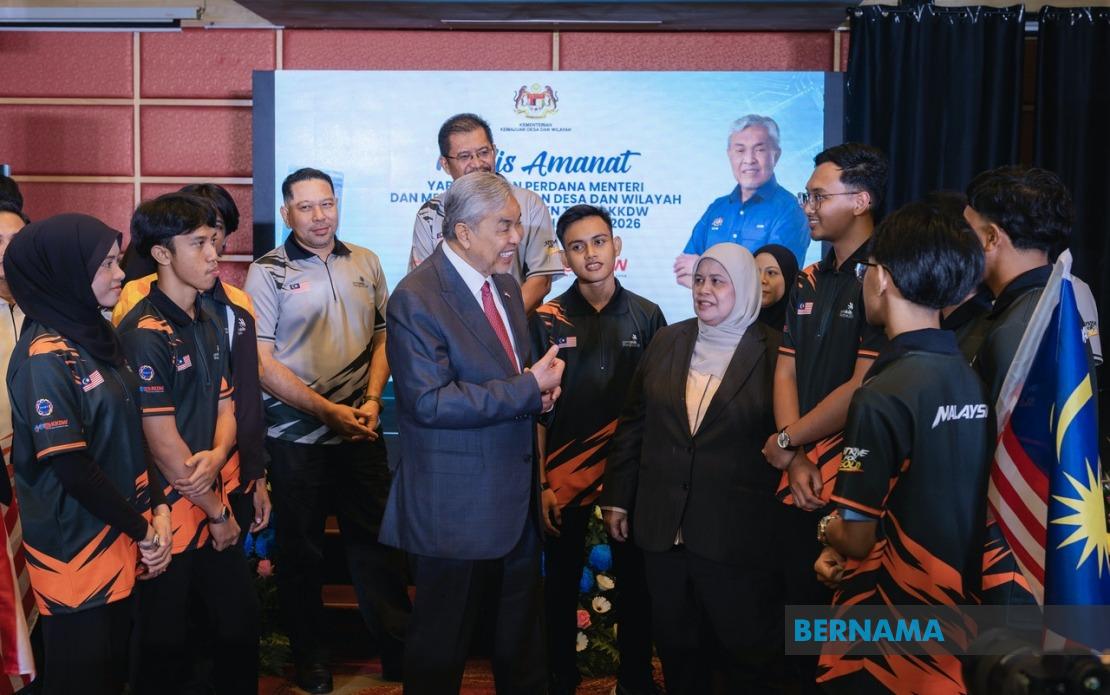
Deputy Prime Minister Datuk Seri Dr Ahmad Zahid Hamidi has announced a landmark commitment to fund umrah pilgrimages for Malaysian gold medallists participating in the WorldSkills Competition 2026 in Shanghai, China, scheduled for September 22-27. The initiative targets participants from Technical and Vocational Education and Training (TVET) institutions overseen by the Ministry of Rural and Regional Development, with the full costs to be drawn from Ahmad Zahid's personal resources as recognition of their competitive achievement.
In his address to the Malaysian TVET contingent assembled in Kuala Lumpur, Ahmad Zahid expanded the scope of his pledge beyond individual competitors. He committed not only to sponsoring the umrah journey for gold medal winners but also to covering all expenses for their parents to undertake the pilgrimage alongside them. This dual-generation approach underscores the cultural and family values embedded within Malaysia's vocational education framework, acknowledging the sacrifices parents make in supporting their children's technical development.
The tangible scale of Ahmad Zahid's undertaking becomes apparent when considering Malaysia's WorldSkills representation. Nine competitors will represent the nation across nine distinct technical disciplines, meaning a complete sweep of gold medals would require the Deputy Prime Minister to sponsor 18 individuals—the nine medallists and their accompanying parents—for the sacred journey to Saudi Arabia. While such a scenario remains aspirational, the willingness to commit substantial personal resources demonstrates the government's investment in recognising technical excellence at the international level.
The nine Malaysian competitors showcase the breadth of vocational specialisation now embedded within the TVET system. Nadratulliyana Ab Malek will compete in Fashion Technology, while Haziq Syahmi Nazri represents the automotive sector through Automobile Painting. The contingent spans multiple industrial domains: Amirul Sharif Sharifudin in Electronics, Mohammad Ezaly Iman Ramli in Cyber Security, and Wan Hamiz Ozai Wan Hamidzi in Rail Vehicle Technology. Three additional representatives—Khairul Idham Bahari, Muhamad Nashrul Zulkifli, and Muhammad Haziq Lailla Zamri—will compete in Cabinetmaking, Digital Construction, and Electrical Installations respectively, with Muhammad Huzairy Mohamad Thes representing Mechanical Engineering CAD.
The diversity of skill categories mirrors Malaysia's strategic positioning within regional and global manufacturing ecosystems. By fielding competitors across construction, automotive, electronics, and digital technologies, the nation signals commitment to workforce development that aligns with emerging economic priorities. Shanghai, as the venue for WorldSkills 2026, provides an appropriate backdrop given China's dominance in technical manufacturing and the city's status as a global innovation hub. Malaysian participation at such venues enhances regional competitiveness and provides crucial benchmarking opportunities against international standards.
Ahmad Zahid's personal funding mechanism for this incentive programme carries notable implications for how Malaysia recognises vocational achievement. Unlike conventional government-sponsored awards, the decision to draw from personal resources elevates the symbolic weight of the recognition while simultaneously framing technical excellence as worthy of sacrifice from senior political leadership. This approach may influence perceptions of TVET pathways among Malaysian youth, particularly in communities where technical education has historically carried lower cultural prestige than university degrees.
The timing of this announcement also reflects broader efforts to strengthen Malaysia's competitive positioning in international skills competitions. WorldSkills competitions serve as both sporting events and genuine assessments of national vocational competency. By offering substantial recognition for success, governments signal confidence in their technical education systems and create aspirational narratives around skilled trades. For Malaysian students considering vocational pathways, such incentives translate abstract international competition outcomes into tangible, culturally significant rewards.
Deputy Rural and Regional Development Minister Datuk Rubiah Wang's presence at the event underscores institutional support for the initiative. The Ministry of Rural and Regional Development's oversight of TVET@KKDW participants suggests that technical vocational development remains integrated within broader rural development strategy—acknowledging that skills training serves not only urban industrial sectors but also employment opportunities throughout Malaysia's regional economies. This positioning recognises that technical competence creates pathways for economic participation across geographical contexts.
The umrah pilgrimage component of Ahmad Zahid's pledge carries particular resonance within Malaysia's Muslim-majority context. The opportunity to perform this sacred journey represents both spiritual fulfilment and social recognition, effectively fusing achievement celebration with religious observance. This framing demonstrates sensitivity to the cultural frameworks through which Malaysian society values accomplishment, particularly among communities where religious observance remains central to identity and social standing.
WorldSkills competitions themselves carry substantial weight in international vocational education discourse. Gold medals at such events represent verification of technical competency against rigorous, internationally calibrated standards. Malaysian success at these venues provides documentary evidence of the effectiveness of local TVET programmes and contributes to the nation's reputation as a producer of skilled workers. For employers seeking technical talent, such accolades function as quality assurances that graduates possess capabilities matching international benchmarks.
The initiative also reflects competitive dynamics within Southeast Asia regarding technical workforce development. Regional rivals including Thailand, Indonesia, and Vietnam maintain active participation in WorldSkills, with successful outcomes generating domestic prestige and supporting claims of educational quality. Ahmad Zahid's pledge positions Malaysia within this competitive landscape, suggesting that government commitment extends beyond rhetorical support for vocational education to tangible resource allocation for international competition preparation and success recognition.
Looking forward, the sustainability and expansion of such incentive programmes may influence Malaysia's longer-term approach to technical education promotion. If Malaysian competitors achieve significant success at Shanghai 2026, the precedent established through Ahmad Zahid's pledge could extend to future competitions, potentially creating institutional programmes that formalise recognition for technical excellence. Such developments would signal maturation of Malaysia's commitment to elevating vocational education status within the broader educational hierarchy.

