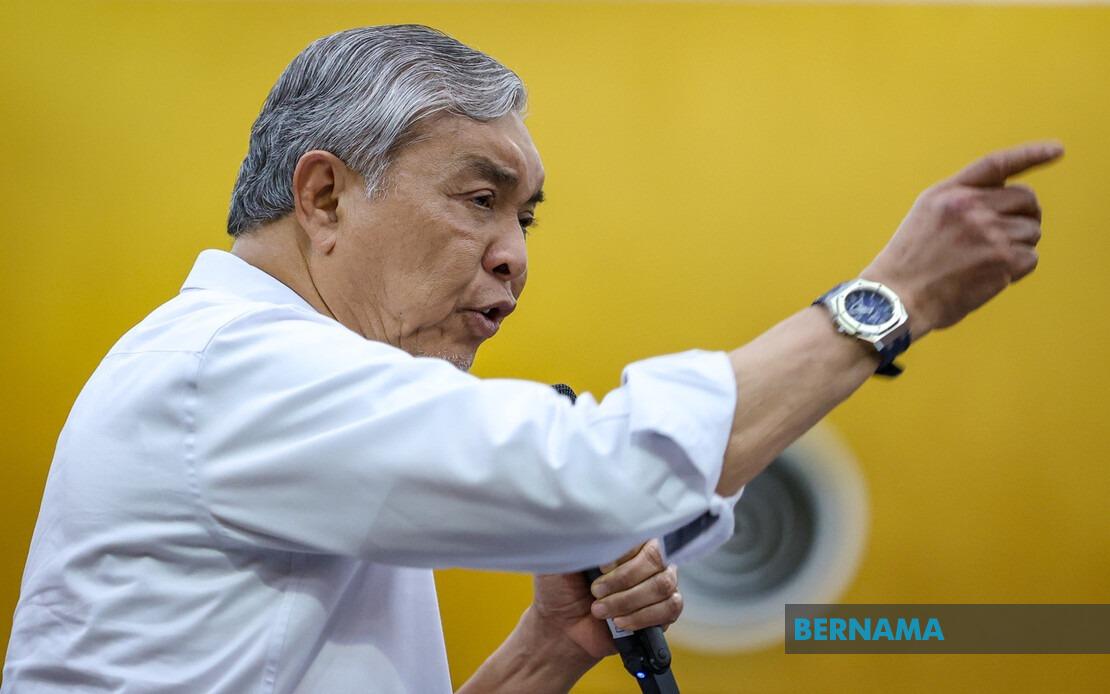
Deputy Prime Minister Datuk Seri Dr Ahmad Zahid Hamidi has proposed introducing formal leadership and political education programmes specifically designed for Student Representative Councils (MPP) across Malaysian universities and colleges. Speaking in Johor Bahru on July 9, Ahmad Zahid outlined his vision for equipping student leaders with deeper knowledge of democratic processes and Malaysia's complex political landscape, arguing that such structured learning would help develop a more civically conscious generation of young leaders.
The initiative reflects growing concern among senior government figures about ensuring young Malaysians—particularly those in student leadership positions—develop sufficient understanding of national political dynamics and contemporary governance challenges. Ahmad Zahid stressed that exposure to political education would nurture student leaders capable of grappling with the substantive policy debates and structural issues facing the nation, moving beyond superficial engagement with electoral processes.
Crucially, Ahmad Zahid indicated that the federal government stands ready to finance these educational programmes, pending approval from Higher Education Minister Datuk Seri Dr Zambry Abd Kadir. This financial commitment suggests the proposal carries backing from multiple government ministries and reflects a coordinated approach to youth political engagement. The funding mechanism would ensure that financial constraints do not prevent student councils from accessing quality leadership training and political education modules.
The Deputy Prime Minister, who additionally serves as chairman of Barisan Nasional, framed the proposal within a broader context of youth civic participation. He emphasised that while young voters and first-time voters need not pursue active political involvement, they bear a responsibility to remain informed and engaged with political developments affecting the nation. This distinction—between mandatory political participation and essential political literacy—represents a nuanced position on youth engagement, acknowledging diversity in career choices while establishing baseline expectations for informed citizenship.
Ahmad Zahid drew upon his own trajectory as evidence for the value of student political engagement. He recalled his formative years as a student leader at Universiti Malaya, positioning his early political involvement as foundational to his subsequent career in public service. This personal reference lends authenticity to his advocacy while implicitly suggesting that university remains a critical period for developing political awareness and leadership capacity, even for those who ultimately pursue non-political careers.
The proposal carries particular resonance given Malaysia's electoral system and demographic composition. As the nation's youth population expands its voting share, their collective electoral influence grows correspondingly. Ahmad Zahid highlighted that young voters frequently squander their franchise through apathy or poor decision-making, emphasising that informed voting represents a fundamental democratic responsibility. Each ballot cast by a young voter potentially influences not only which party forms government but also shapes the policy directions and leadership orientations that will dominate their formative professional years.
The timing of Ahmad Zahid's announcement, coinciding with Johor's state election campaign featuring 56 contested seats, suggests the proposal may partly reflect electoral positioning. Nonetheless, the underlying rationale addresses legitimate governance questions about youth political knowledge and engagement. Universities have traditionally served as laboratories for political experimentation and consciousness-raising, and institutionalising political education through student councils could extend these benefits systematically across the higher education sector.
From a Southeast Asian perspective, Malaysia's initiative parallels similar efforts across the region to strengthen democratic foundations through youth education. Singapore, Thailand, and Indonesia have implemented varying approaches to political and civic literacy programmes, often with mixed results. Malaysia's proposal notably targets student leaders specifically rather than the broader student population, reflecting a multiplier effect strategy—educating those with formal platforms and influence over peer networks could amplify the reach and impact of political awareness efforts.
The proposal also addresses a persistent challenge in Malaysian political discourse: the perception of generational disconnection between established political leadership and younger voters. By investing in structured political education for student representatives, the government acknowledges that informal exposure to political discussion may prove insufficient for developing sophisticated analytical frameworks. Formalised curricula could introduce students to constitutional history, federal-state relations, economic policy trade-offs, and international relations dimensions that shape domestic political competition.
Implementing such programmes will require careful curriculum design to balance political education with maintaining institutional neutrality within universities. Student representative councils occupy ambiguous institutional space—they are student advocacy bodies but also representatives of publicly funded institutions. The challenge lies in ensuring that leadership courses develop critical analytical thinking rather than functioning as vehicles for government propaganda or partisan recruitment.
The practical mechanics of programme delivery will significantly influence effectiveness. Whether courses occur on-campus or at centralised training facilities, how they balance theoretical knowledge with practical simulation, and whether they include exposure to diverse political perspectives will determine whether they genuinely broaden student leaders' understanding or simply reinforce prevailing orthodoxies. The involvement of the Higher Education Ministry suggests these logistical questions will receive institutional attention.
Looking forward, Ahmad Zahid's proposal may catalyse broader conversation about integrating civic and political education throughout Malaysia's education system. If student representative councils demonstrate enhanced political literacy and more sophisticated engagement with policy questions following such training, pressure could mount to extend comparable programmes to secondary schools and general university populations. Conversely, if the initiative produces limited observable results, it may signal the limitations of top-down political education in shaping youth consciousness.
Ultimately, the proposal reflects an assessment that Malaysia's democracy requires more deliberate cultivation of informed citizenship among young leaders. By targeting student councils with structured political education and committing government resources to the effort, Ahmad Zahid signals that youth political engagement represents a strategic priority for Malaysia's political establishment. Whether this translates into meaningfully enhanced political literacy and more substantive youth participation in democratic processes will depend significantly on implementation quality and genuine commitment to developing critical thinking alongside political knowledge.

