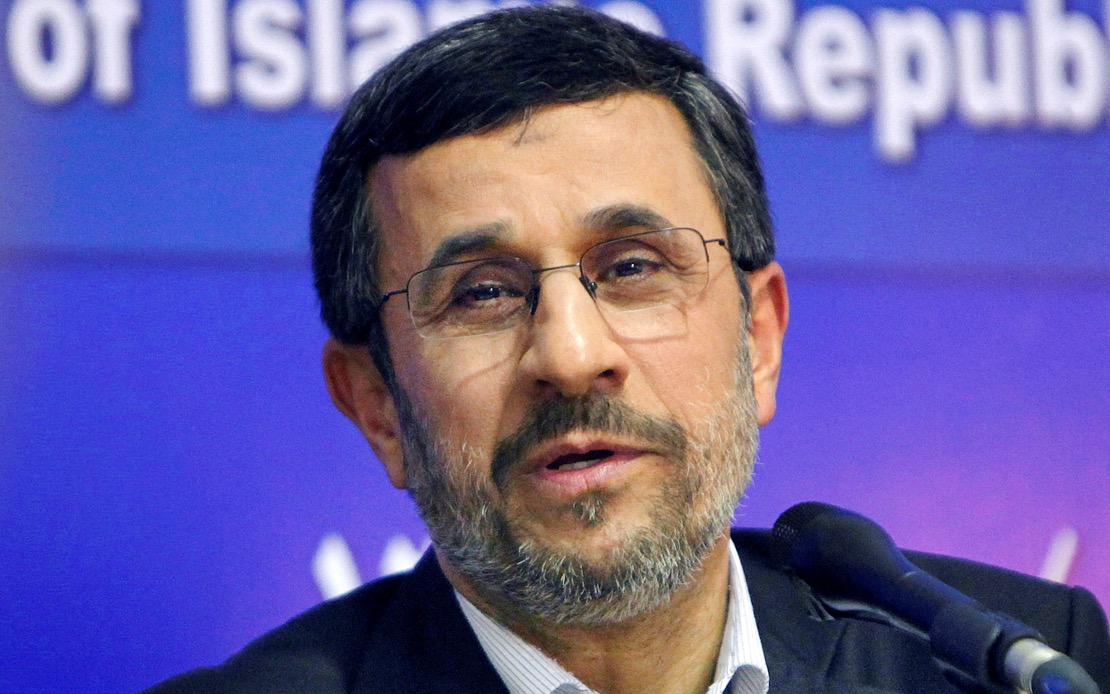
Former Iranian President Mahmoud Ahmadinejad has categorically denied allegations published by The New York Times that Israel's Mossad intelligence agency attempted to recruit him in recent years and currently holds him under house arrest. Through a statement released on Tuesday, his office dismissed the claims as wholly fabricated, part of what it characterised as a deliberate campaign by the newspaper to sow discord within Iran and mislead international opinion.
The New York Times report, published on Monday, presented a detailed account of alleged Israeli efforts to turn the former president into a potential replacement leader following military operations against Tehran. According to the newspaper's sources, which included unnamed American officials, Mossad operatives had met with Ahmadinejad on multiple occasions abroad, including in Budapest, and reportedly provided financial support for housing and travel expenses. The allegations paint a picture of a sophisticated covert operation spanning several years.
Central to the controversy is a claim that an Israeli airstrike on February 28 specifically targeted Ahmadinejad's compound in Tehran, destroying a guardhouse and his armoured vehicle. The New York Times cited four senior Iranian officials as sources, alleging that immediately after the strike, a black Peugeot vehicle arrived at the location and transported the former president to a clandestine safe house within Iran. The newspaper further alleged that Mossad operatives drove the vehicle, suggesting direct Israeli involvement in his extraction.
Ahmadinejad's office has categorically rejected each element of this narrative. The statement emphasised that the house arrest allegation was entirely fabricated, designed to lend credibility to what it termed "absurd" claims about Mossad recruitment efforts. The former president's representatives accused The New York Times of manufacturing stories specifically intended to undermine confidence in Iran's leadership and create internal instability.
The timing of the allegations raises significant questions about their credibility and purpose. The report emerged during an intensified period of US-Israeli military operations against Iran, a context that provided obvious geopolitical motivation for such disclosures. For Southeast Asian observers, the situation illustrates how major intelligence agencies utilise media channels to shape narratives during international conflicts, raising broader questions about information reliability during regional tensions.
Ahmadinejad's recent public activities would seem to contradict claims of house arrest. Last week, the former president made a notable public appearance at the funeral of Iran's Supreme Leader Ali Khamenei, marking his first visible engagement with major state events since the current US-Israeli conflict began. This appearance directly contradicts the newspaper's assertion that he remains under confinement, providing tangible evidence that counters at least part of the Times' narrative.
The allegations concerning Mossad's alleged strategy to facilitate regime change through Ahmadinejad's installation as leader deserve scrutiny. Such an approach would represent an extraordinarily complex intelligence operation, requiring sustained cooperation from a former president who served from 2005 to 2013 and who had previously adopted confrontational stances toward Israel and Western powers. The plausibility of such an operation warrants careful examination alongside the motivations of those sources providing information to The New York Times.
Ahmadinejad's office also attacked the newspaper's journalistic practices, arguing that The New York Times has demonstrated a pattern of publishing unverified claims designed to manipulate public opinion rather than inform it. This criticism reflects a broader debate about media accountability and the responsibility of major international outlets when reporting sensitive intelligence matters during active conflicts. For Malaysian readers accustomed to concerns about media accuracy and bias, this dispute highlights ongoing tensions between press freedom and responsibility in conflict reporting.
The geopolitical context underlying these allegations extends beyond Iran-Israel relations. The alleged American sources cited by The New York Times underscore the triangular nature of the situation, with United States intelligence also appearing to participate in or have detailed knowledge of covert operations. This dimension carries significance for regional security dynamics, as it demonstrates the depth of US-Israeli coordination and their willingness to pursue covert regime change strategies in the Middle East.
International responses to such allegations reveal fundamental divisions in how different nations interpret intelligence claims during wartime. Many countries remain sceptical of narratives emanating from or promoted by parties actively engaged in military conflict, recognising the inherent bias toward information that justifies continued operations. This scepticism applies equally to both the New York Times' sources and the Iranian government's categorical denials, suggesting that establishing the truth requires independent verification unavailable to most observers.
For Malaysia and Southeast Asia, this controversy offers instructive lessons about evaluating claims from major media outlets during international crises. The situation demonstrates how intelligence agencies, news organisations, and governments interweave their interests in ways that complicate determining factual accuracy. Malaysian policymakers monitoring regional developments must maintain critical distance from dramatic claims lacking independent verification, particularly when such claims serve geopolitical interests of major powers.
The broader significance of this dispute extends to questions about the future direction of Iranian politics and international intervention in Middle Eastern affairs. Whether the allegations contain any factual basis or represent entirely fabricated stories, the incident itself highlights the intense pressure surrounding Iran's internal stability and the various international actors seeking to influence its trajectory. This remains a crucial consideration as regional dynamics continue evolving.

