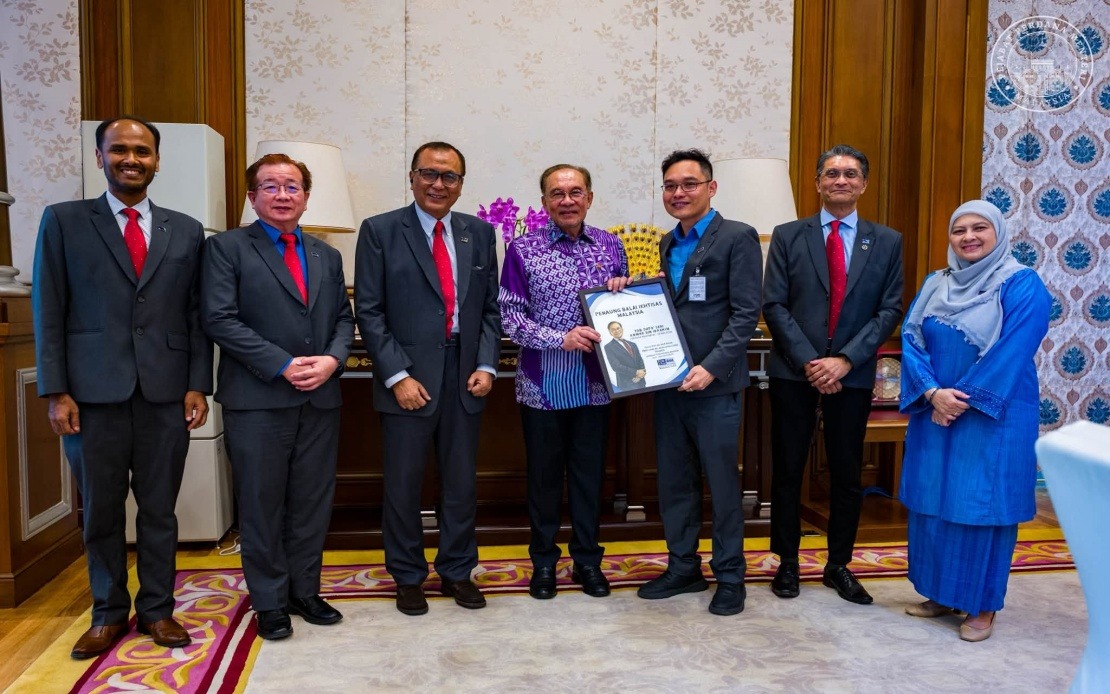
Prime Minister Datuk Seri Anwar Ibrahim has placed Malaysia's professional workforce at the centre of the government's strategy to establish the nation as a leading regional hub for expertise and innovation. The emphasis emerged during recent talks with Balai Ikhtisas Malaysia (BIM), the Malaysian Professional Centre, when a delegation headed by president Prof ChM Dr Juan Joon Ching met with the premier to discuss twin imperatives reshaping the country's economic trajectory.
The focus on artificial intelligence readiness reflects an understanding that technological disruption is accelerating across professional sectors, from finance and law to engineering and healthcare. Malaysia, like other Southeast Asian economies, faces the dual challenge of equipping its existing professional workforce to navigate AI integration while simultaneously preparing emerging talent for roles that have yet to be defined. This conversation between government and professional bodies signals recognition that reactive training programmes will prove insufficient—instead, forward-looking institutional partnerships must anticipate shifts in skill requirements and embed adaptability into professional development frameworks.
Talent development assumes particular urgency in Malaysia's competitive regional context. Singapore's dominance in attracting top-tier professionals reflects not merely higher salaries but systematic investment in continuous learning ecosystems and career advancement pathways. The ASEAN region's rising economies, from Vietnam to Indonesia, are simultaneously investing heavily in professional upskilling initiatives. For Malaysia to retain and attract talent, the government's partnership approach with professional bodies like BIM offers a mechanism to design development programmes aligned with both current industry needs and anticipated future demands.
Anwar's articulation of professionals as "strategic partners" in advancing national competitiveness carries substantive implications. This framing elevates the professional community beyond mere service providers to active participants in policymaking and economic strategy. The MADANI agenda—the government's overarching framework emphasising prosperity, inclusivity, and stability—requires professional expertise across multiple domains. Architects, engineers, economists, and technologists must contribute directly to conceptualising and implementing policies that translate electoral mandates into tangible improvements in public welfare.
The innovation dimension merits particular attention given Malaysia's aspiration to move beyond resource extraction and manufacturing toward knowledge-intensive industries. Singapore's success in biotech, fintech, and semiconductor design stems substantially from concentrated investment in professional expertise and institutional support for high-value work. Malaysia possesses comparable talent pools but has historically dispersed resources across multiple competing priorities. A coordinated government-professional partnership can help concentrate effort on sectors offering genuine comparative advantage.
BIM's invitation to Anwar for Hari Ikhtisas Malaysia—a national celebration honouring professionals' contributions to development—reflects institutional maturation within Malaysia's professional community. Such events serve dual functions: they publicly acknowledge the legitimacy and value of professional expertise while creating forums where practitioners across disciplines can exchange insights and coordinate around shared concerns. For the government, acceptance of the invitation signals tangible respect for professional institutions rather than mere rhetorical acknowledgment.
The emphasis on integrity alongside competitiveness and leadership vision addresses concerns within Malaysia's professional community about ethical standards and institutional accountability. International rankings of professional services sectors increasingly weight governance and anti-corruption measures alongside technical capability. By explicitly coupling professional excellence with integrity, the government acknowledges that Malaysia's regional positioning depends not only on technical prowess but on reputation for honest, ethical practice—particularly important as the nation competes for international clients and investment in professional services.
Stronger government-professional ties could yield concrete institutional benefits. Joint task forces on AI readiness might develop certification frameworks recognising professionals who have acquired relevant competencies. Public-private partnerships could fund research and development initiatives addressing sector-specific challenges. Professional bodies could input into regulatory reviews ensuring that government policies don't inadvertently obstruct professional innovation or create unnecessary barriers to international engagement. Conversely, professionals gain access to government data, policy roadmaps, and institutional resources that enhance their capacity to advise members and shape industry standards.
For Malaysian readers engaged in professional practice, this dialogue carries implications for career planning and institutional positioning. Sectors receiving targeted government attention—particularly those aligned with MADANI priorities and AI integration—may experience accelerated growth and expanded opportunities. Professionals investing in AI competencies and demonstrating commitment to integrity-grounded practice position themselves advantageously within this emerging framework. Professional associations should anticipate increased government consultation on workforce development initiatives and emerging regulatory requirements.
Regionally, Malaysia's emphasis on professional excellence and AI readiness reflects broader Southeast Asian recognition that post-pandemic economic recovery depends substantially on knowledge-intensive growth. Vietnam, Thailand, and Indonesia are pursuing parallel strategies, creating both competitive pressures and potential for constructive cooperation around training standards and professional mobility. Malaysia's distinctive approach—emphasising government partnership with professional bodies rather than relying solely on market mechanisms—may offer lessons applicable across the region and could position Malaysian professionals as valued contributors to regional projects requiring high standards of expertise and ethical practice.

