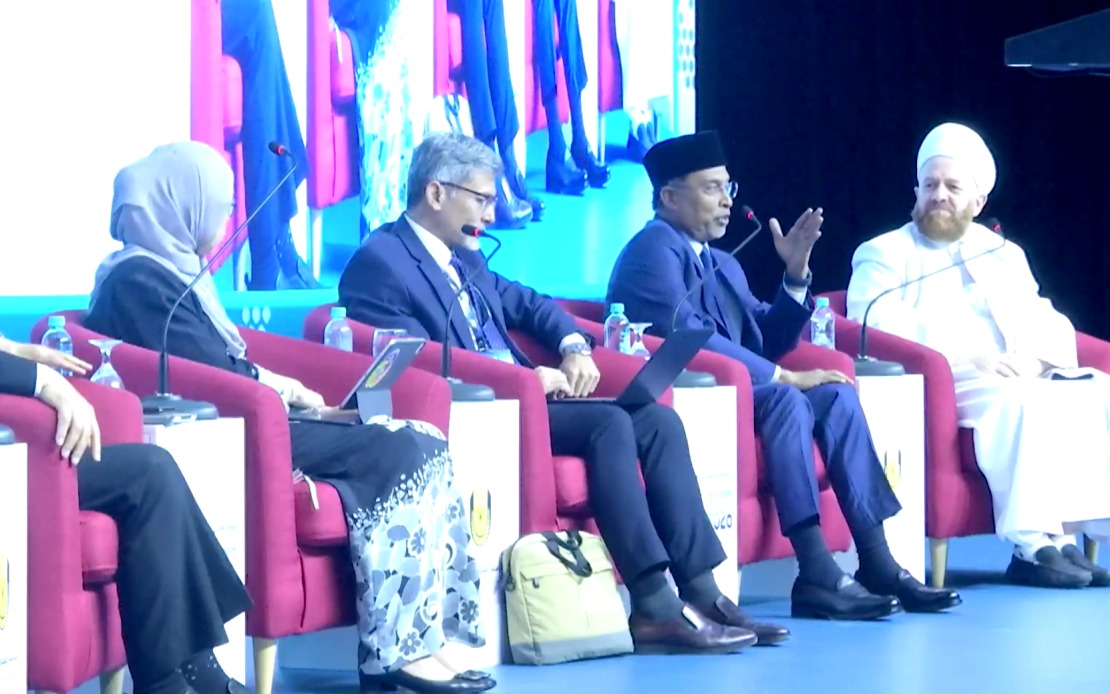
The integration of artificial intelligence and cutting-edge technologies into Malaysia's higher education system represents a critical investment in the nation's future competitiveness, according to Higher Education Minister Datuk Seri Dr Zambry Abd Kadir. Speaking at the 8th World Conference on Islamic Thought and Civilisation in Ipoh, the minister emphasised that this technological shift must occur alongside deliberate cultivation of human values and intellectual rigour, positioning education as the cornerstone for navigating an increasingly complex global landscape.
The Ministry of Higher Education has responded to this imperative by formulating an ambitious 10-year strategic blueprint spanning 2026 to 2035. This comprehensive framework attempts to reconcile three potentially competing priorities: technological innovation, human capital development, and moral education. Rather than treating these elements as separate concerns, the ministry's approach seeks to weave them together into a cohesive educational philosophy that prepares graduates not merely as technical operators but as thoughtful professionals grounded in ethical reasoning.
Zambry's remarks reflect growing recognition across Southeast Asia that the race for AI adoption cannot come at the expense of fundamental human development. As disciplines including artificial intelligence, quantum computing, and planetary health reshape academic landscapes globally, Malaysian institutions face pressure to modernise curricula rapidly. However, the minister cautioned against pursuing technological advancement in isolation, warning that algorithms and computational power alone cannot instil the character, integrity, and conscience required of future leaders. This tension between technical excellence and human formation remains one of the defining challenges for Malaysian universities seeking international competitiveness without sacrificing educational depth.
A key element of the ministry's vision involves transitioning educational frameworks from the traditional STEM model toward STEAM—a paradigm that incorporates arts, humanities, and liberal studies alongside science and engineering. This evolution reflects international best practice evidence suggesting that tomorrow's problem-solvers require cross-disciplinary thinking rather than narrow technical specialisation. Zambry highlighted Universiti Teknologi Petronas as a concrete example, noting that its engineering programmes deliberately require students to undertake coursework beyond their major discipline to cultivate rounded personalities and critical faculties. For Malaysian students preparing for professional careers, this breadth of exposure may prove invaluable in adapting to rapid technological disruption.
The minister's emphasis on integrating ethics and moral values directly into academic curricula addresses a distinctive concern in the Malaysian and broader Islamic context. Rather than treating ethics as an optional add-on or a separate module, the framework positions moral reasoning as foundational to every discipline. This approach acknowledges that technological systems reflect the values and assumptions of their designers, and that engineers, data scientists, and innovators must be equipped to question the ethical implications of their work. For Malaysian institutions training the next generation of tech professionals, embedding this sensibility from the outset represents preventative work against the concentration of unchecked technological power.
The challenge of balancing innovation with values takes on particular urgency in Malaysia's regional context. As Singapore, South Korea, and other competitors invest heavily in AI research and development, Malaysian policymakers must ensure that the nation's universities not only keep pace technologically but also maintain distinctive strengths grounded in humanistic traditions. The minister's framing suggests that this need not be a liability; rather, a carefully cultivated emphasis on character development, critical thinking, and ethical grounding may become a competitive advantage, attracting students and researchers seeking education that addresses questions of meaning and purpose alongside technical mastery.
Implementing this vision across Malaysia's diverse higher education ecosystem presents substantial practical obstacles. Not all institutions command the resources of a Universiti Teknologi Petronas to restructure programmes comprehensively. Faculty retraining and curriculum redesign require time and investment. Beyond logistics, conceptual disagreements may emerge about what constitutes appropriate moral or ethical content, particularly in a multi-religious society where values frameworks differ. The ministry's blueprint will require thoughtful navigation of these sensitivities while maintaining coherent principles.
The ten-year horizon adopted by the ministry reflects recognition that educational transformation operates according to longer timelines than technological innovation itself. Universities cannot pivot annually as startups do; they must balance stability with adaptability. This deliberate timeframe also permits empirical observation of outcomes—measuring whether graduates emerging from redesigned programmes indeed demonstrate stronger critical thinking, ethical reasoning, and adaptability than their predecessors. For Malaysian employers and international partners evaluating the quality of local talent, such evidence will matter considerably.
Zambry's articulation of a holistic educational philosophy also responds to global anxieties about artificial intelligence's societal impacts. From concerns about algorithmic bias to questions about technological unemployment and surveillance, AI raises issues that transcend technical domains. Graduates prepared only in narrow specialisms may struggle to grapple with these broader implications. Conversely, a population educated with breadth across technical and humanistic domains—with exposure to philosophy, history, and social studies alongside mathematics and computing—stands better equipped to shape AI's development toward beneficial ends. For Malaysia aspiring to influence global AI governance conversations, cultivating such broadly educated citizens represents an important strategic asset.
The minister's remarks also subtly reframe what Malaysian universities should consider their core mission. While efficiency, output metrics, and research rankings certainly matter, the emphasis on character, integrity, and conscience suggests a vision of higher education extending beyond credentialing toward genuine formation of persons. This classical educational ideal, rooted in Islamic scholarly traditions emphasising both intellect and virtue, resonates across Malaysian society and may mobilise stakeholder support for the curriculum reforms required. For Malaysian students deliberating university choices, institutions embracing this comprehensive vision may offer distinctive value proposition beyond technical programme rankings.

