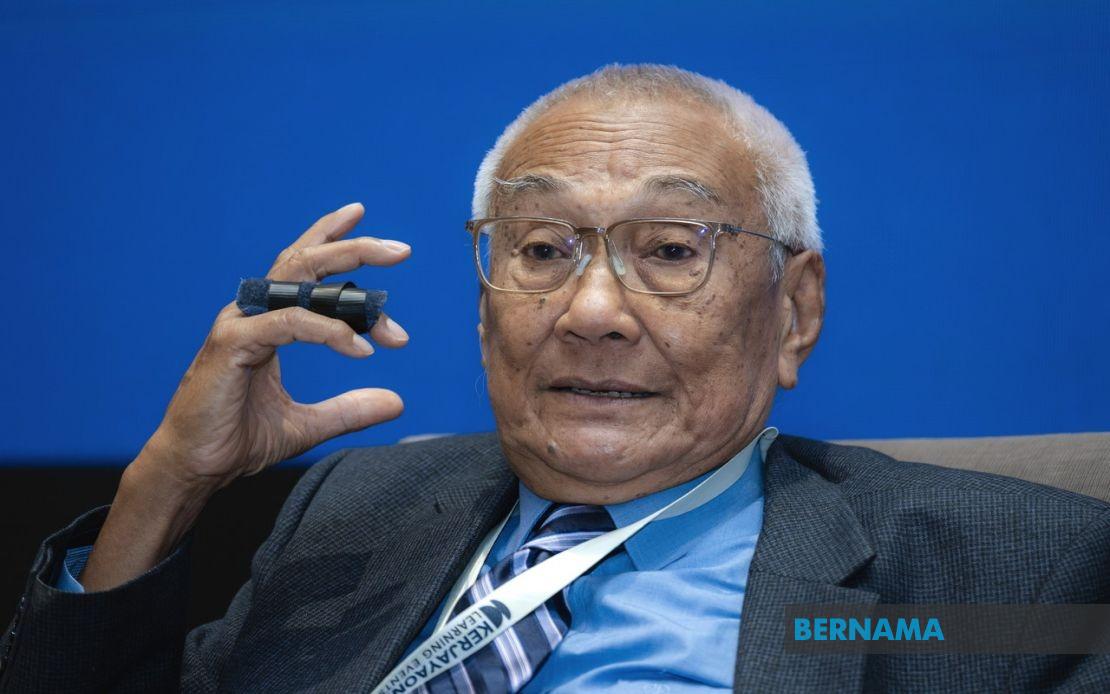
Artificial intelligence may streamline processes and offer fresh analytical approaches, but it cannot and must not displace the essential role of human reasoning in critical decision-making, according to Tun Zaki Azmi, the former Chief Justice of Malaysia and current chairman of Pertama Digital Berhad. Speaking at the Wisdom Malaysia 2026 Conference in Kuala Lumpur, Tun Zaki drew a careful distinction between technology as a supporting instrument and as a substitute for human judgment, a distinction he views as fundamental to preserving the integrity of institutions across the legal and corporate spheres.
The former judiciary leader grounded his position in practical experience from his tenure as Chief Justice of the Dubai International Financial Centre (DIFC) Courts, where he observed first-hand how artificial intelligence systems could be integrated into legal practice without compromising judicial independence. While acknowledging that AI possesses genuine utility in accelerating preliminary analysis and presenting alternative perspectives, Tun Zaki insisted that final determinations on matters of law, evidence, and fact must ultimately rest with human decision-makers who bring accumulated wisdom, professional ethics, and refined judgment to the bench. His comments reflect broader concerns within the global legal community about maintaining human accountability in an era of rapid technological expansion.
A significant practical problem that Tun Zaki highlighted is the phenomenon of AI "hallucinations"—instances where machine learning systems generate plausible-sounding but factually incorrect information. This vulnerability makes it particularly hazardous for judges to rely extensively on artificial intelligence outputs without independent verification and critical scrutiny. The risk of embedding undetected errors into judicial reasoning through unchecked AI dependency poses threats to the fairness and reliability of court proceedings, rendering human oversight not merely desirable but essential. Judges, he emphasized, must personally read and interpret legislation rather than outsourcing this foundational responsibility to algorithmic systems.
To address these risks in practice, the DIFC Courts implemented a disclosure mandate requiring lawyers and legal researchers to explicitly inform the court whenever artificial intelligence has been utilized in preparing legal briefs, research materials, or court documents. This transparency requirement enables judges to exercise heightened vigilance when reviewing AI-assisted work and serves as an accountability mechanism that protects the integrity of the legal process. Such protocols, Tun Zaki suggested, could serve as a model for courts across the region seeking to harness AI's benefits while maintaining safeguards against its limitations and potential misuses.
The former Chief Justice's reasoning about appellate court structures illustrates why human plurality of perspective remains irreplaceable. In appellate forums such as the Court of Appeal and Federal Court, multiple judges deliberate collectively because individual magistrates may legitimately interpret identical legal provisions differently or assess witness credibility through distinct analytical frameworks. This inherent capacity for principled disagreement—for reasonable jurists to reach opposing conclusions on the same facts and law—reflects a depth of understanding that no single artificial intelligence system can replicate. Appellate benches deliberately include odd numbers of judges (three, five, seven, or nine) to ensure that the preponderance view establishes precedent, a structure that assumes the irreducible value of human deliberation.
Beyond the judicial realm, Tun Zaki's observations carry significance for organizational leadership across Malaysia and Southeast Asia. The Wisdom Malaysia 2026 Conference, organized under the theme "Learning from the Past, Looking to the Future," explicitly sought to preserve institutional knowledge across generational transitions. Datuk Seri Abdul Mutalib Razak, chairman of KerjayaOne PLT, framed the gathering as an initiative to bridge leadership gaps that emerge when experienced decision-makers retire and institutional memory risks dissipation. This concern underscores that leadership wisdom accumulates through navigating crises, managing uncertainty, and drawing lessons from both triumphs and reversals—a holistic form of understanding that algorithms struggle to internalize.
The conference assembled prominent figures from Malaysia's corporate and institutional landscape, including Tan Sri Che Khalib Mohamad Noh, former president of Tenaga Nasional Berhad, Tan Sri Abdul Wahid Omar, chairman of both Cypark Resources Berhad and IOI Corporation Berhad, and Datuk Dr Mohd Khalis Abdul Rahim, former chief human capital officer at Malaysia Aviation Group. Their collective participation highlighted a recognition that technological advancement does not diminish the relevance of seasoned leadership perspectives. Rather, as institutions adopt digital tools and artificial intelligence, the need for experienced judgment about how and when to deploy such technologies becomes more pressing.
The Malaysian context amplifies these considerations. As the country pursues digital transformation through initiatives like the Digital Economy Framework and Industry 4.0 adoption, courts, regulatory bodies, and corporations face practical questions about integrating AI while preserving institutional safeguards. Tun Zaki's advocacy for explicit disclosure of AI usage in legal work provides a foundational principle: transparency about technological involvement enables proper oversight. Applied more broadly, this principle suggests that as Malaysian institutions incorporate artificial intelligence into decision-making processes, explicit protocols acknowledging human responsibility for outcomes remain essential.
The implicit argument underlying Tun Zaki's position is fundamentally about accountability. When artificial intelligence generates an output that influences judicial decisions, corporate strategies, or policy determinations, identifying which human actors bear ultimate responsibility for those outcomes becomes critical. An AI system cannot be held accountable; only the humans who deploy it can. This accountability framework requires that decision-making authority remain vested in human beings who can be questioned, who can explain their reasoning, and who can be evaluated against professional ethical standards. Outsourcing judgment to machines obscures this accountability, creating a dangerous vacuum.
Looking forward, Tun Zaki's perspective suggests that the most productive path forward involves deliberately complementary integration rather than replacement. Artificial intelligence might handle routine document analysis, identify patterns in case law, flag potential conflicts or inconsistencies, or accelerate preliminary research—tasks that are genuinely time-consuming and where AI demonstrates clear advantages. Humans would then apply their judgment to evaluate these AI-generated materials, make final determinations, and bear responsibility for those decisions. This division of labor preserves what machines do best (processing vast information rapidly) while protecting what humans do irreplaceably (exercising reasoned judgment under conditions of uncertainty and ambiguity).
For Malaysian policymakers, regulators, and institutional leaders, these considerations suggest the need for deliberate governance frameworks around artificial intelligence deployment. Rather than embracing AI uncritically as an efficiency panacea, institutions should establish clear protocols about disclosure, human review, and accountability. The DIFC Courts' requirement that lawyers disclose AI usage offers a concrete model. Similar requirements in Malaysian courts, regulatory agencies, and corporate governance structures would ensure that technological integration strengthens rather than undermines institutional integrity. Such frameworks would also position Malaysia as a thoughtful adopter of advanced technology—not a nation recklessly outsourcing judgment to algorithms, but one thoughtfully integrating tools while maintaining human agency.
Ultimately, Tun Zaki's message reflects a mature perspective on technological change. Artificial intelligence is neither inherently redemptive nor catastrophic; it is a tool whose value depends entirely on how it is deployed, governed, and constrained by human wisdom. In a region where institutional trust and judicial independence carry particular significance, his emphasis on preserving human judgment in critical decision-making offers guidance that extends well beyond the courtroom, speaking to how Malaysian society navigates the deeper challenge of integrating transformative technology without abandoning the human values that institutions ultimately serve.

