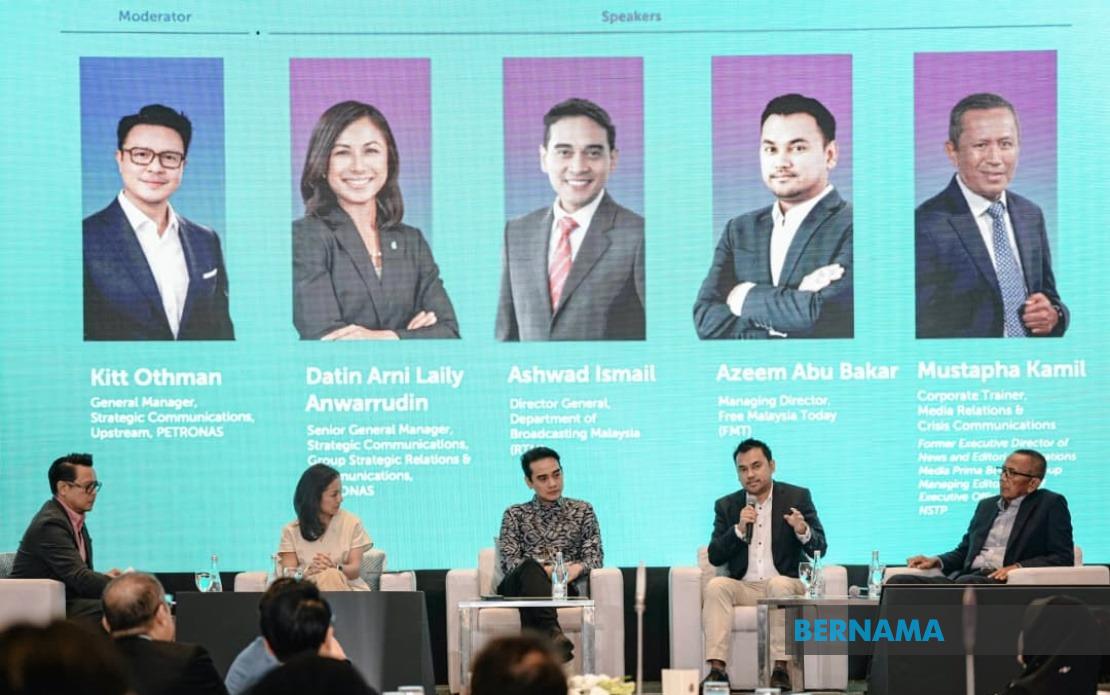
The explosive growth of artificial intelligence and the instantaneous nature of digital communication are fundamentally reshaping how Malaysian corporations and media organisations approach credibility and crisis management. Speaking at the PETRONAS Lunch Escape 2026 forum hosted jointly by PETRONAS and the Malaysian Press Institute here, panellists from Malaysia's largest corporations and news organisations outlined how the industry must abandon decades-old protocols to remain relevant in an era where unverified information can circle the globe before traditional responses can be formulated.
Datin Arni Laily Anwarrudin, PETRONAS Senior General Manager of Strategic Communications, articulated a central paradox facing modern organisations: the speed at which AI systems now disseminate unverified claims creates an unprecedented threat to brand reputation, yet simultaneously eliminates the option of silence. She argued that corporations can no longer delegate narrative control to external parties or hope that carefully timed official statements will counter viral misinformation. Instead, the imperative has shifted toward radical transparency as both a protective mechanism and a competitive necessity. When organisations fail to actively shape their own story through proactive disclosure, the vacuum is inevitably filled by less reliable sources, speculation, and potentially hostile interpretations of events.
The challenge extends far beyond simple public relations. Traditional crisis communication frameworks—built around concepts like the 16-hour window between incident and newspaper publication—have become completely obsolete. Arni Laily emphasised that modern protocols must navigate an entirely different operational reality: something can trigger a crisis at any moment, with global amplification occurring within minutes through social media, messaging platforms, and AI-powered news aggregators. Yet this velocity creates a dangerous temptation toward reflexive reaction rather than careful truth-seeking. The real skill for contemporary organisations lies in developing the institutional capability to move quickly without sacrificing accuracy, to respond responsively while still conducting due diligence about what actually occurred.
Former Media Prima and NSTP Group managing editor Mustapha Kamil Mohd Janor reinforced this point from the media industry's perspective, stressing that newsrooms have entirely lost control over publication timelines. The traditional editorial process—where journalists had hours to verify stories before going to print—has been superseded by an environment where breaking news unfolds in real time across multiple digital platforms simultaneously. He urged corporate communication teams to recognise this shift not as a temporary disruption but as a permanent structural change requiring fundamental reorganisation. Any organisation lacking a dedicated, well-trained crisis communication team that can operate around the clock should treat establishing one as an urgent priority.
Yet amid this focus on speed and responsiveness, panellists cautioned against abandoning the foundational principles that legitimate journalism and credible corporate communication have historically maintained. Mustapha Kamil articulated the media's enduring role as a searchlight illuminating issues that matter to society, helping audiences navigate complexity and reach informed conclusions. Despite the technological disruption surrounding them, journalists must continue fulfilling this guide function—distinguishing signal from noise, context from sensation, fact from allegation. This responsibility becomes more critical precisely when AI systems optimise for engagement rather than accuracy, and when information ecosystems reward sensationalism over substantiation.
The media industry's adaptation to AI presents distinct challenges from those facing corporate communicators. Free Malaysia Today Managing Director Azeem Abu Bakar distinguished between tasks where artificial intelligence delivers genuine value and areas where human judgment remains irreplaceable. AI excels at automating operational workflows, processing vast data volumes, and accelerating routine production tasks. However, Azeem argued that media organisations must simultaneously invest in cultivating what he termed "SUPER journalists"—professionals who command sources, demonstrate deep contextual understanding, identify meaningful patterns in complex information, operate efficiently within resource constraints, and maintain the reputation for fairness that audiences rely upon for trust. These capabilities—rooted in experience, judgment, relationships, and ethical commitment—represent precisely the dimensions where technology cannot substitute for human excellence.
Radio Televisyen Malaysia director-general Ashwad Ismail contributed the perspective of Malaysia's national broadcaster, which operates under particular obligations to serve the public interest across diverse demographics and linguistic communities. Public service broadcasters face distinctive pressures as they navigate between audience engagement metrics, advertiser demands, and constitutional mandates to inform citizens without manipulation. Ashwad's participation underscored how this industry-wide recalibration extends across different organisational types and business models, affecting everyone from state institutions to commercial media to corporate communications teams.
The forum also featured Bernama CEO Datin Paduka Nur-ul Afida Kamaludin and Editor-In-Chief Arul Rajoo Durar Raj, representing Malaysia's national news agency. Bernama's role as a foundational source for news dissemination across Malaysian media makes its adaptation to AI particularly consequential, as errors or credibility gaps at that level cascade throughout the broader information ecosystem. The presence of leadership from Bernama, RTM, Media Prima, Free Malaysia Today, and PETRONAS reflected recognition that addressing AI-era communication challenges requires sustained dialogue across sectors and institutional types.
For Malaysian organisations operating in this transformed environment, the implications are substantial. Companies can no longer rely on geographic or temporal buffers to manage crises—any significant incident now has potential for global visibility and reputational impact within hours. Simultaneously, the proliferation of AI-generated content and deepfakes means audiences increasingly struggle to distinguish authentic from fabricated information, heightening the premium on sources they recognise as consistently reliable. This creates both risk and opportunity: organisations that establish genuine credibility through transparency, accuracy, and consistency gain competitive advantage, while those perceived as defensive, evasive, or inconsistent face accelerated reputational damage.
The shift also reflects Malaysia's deeper integration into global information networks and AI adoption patterns. As artificial intelligence systems become embedded in news recommendation algorithms, social media platforms, and corporate analytics tools across the region, Malaysian media and communications professionals must develop expertise in understanding how these systems shape information flows and public perception. This technological literacy becomes as essential to modern journalism and corporate communication as traditional reporting skills or media law once were.
Moving forward, the consensus among panellists suggested that success requires simultaneously embracing three imperatives: first, developing organisational capacity for rapid, truthful response to emerging crises; second, maintaining the editorial judgment and ethical standards that distinguish reliable information from noise; and third, recognising that technological change does not eliminate the fundamental human need for trustworthy sources, but rather intensifies it. Malaysian organisations that navigate this transition thoughtfully—maintaining speed without sacrificing accuracy, adapting to technological change without abandoning professional principles, and engaging transparently while protecting legitimate confidentiality—will likely emerge as industry leaders in the AI era.

