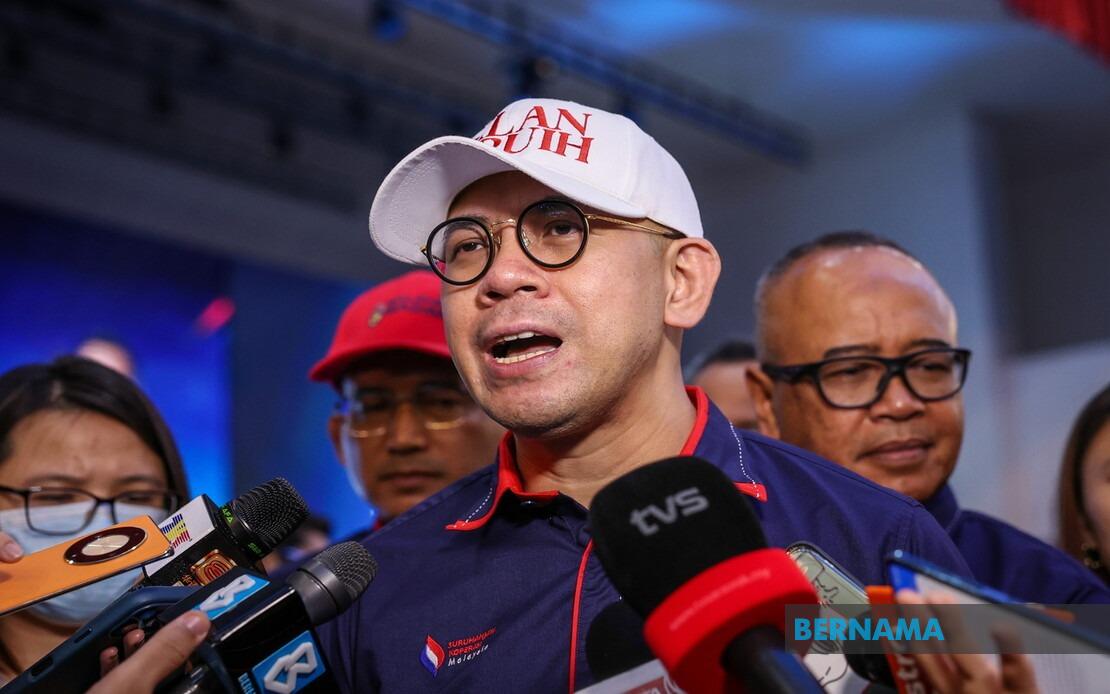
Entrepreneur and Cooperatives Development Minister Steven Sim has delivered a stark warning to Malaysia's business community about the pitfalls of deploying artificial intelligence purely as a mechanism for workforce reduction. Speaking at the 11th CHT International Award 2026 in Petaling Jaya on July 11, Sim argued that organisations adopting such a narrow approach fundamentally misunderstand both the technology's potential and the irreplaceable value of skilled personnel. Rather than viewing AI and human workers as substitutes locked in zero-sum competition, companies should recognise AI's true function: as a capacity multiplier that enhances what talented teams can accomplish.
The minister's intervention reflects growing anxiety across Southeast Asia about automation's employment impact. His framing offers a middle path between techno-utopianism and technophobia, suggesting that the binary choice between AI adoption and job preservation presents a false dichotomy. When businesses treat human labour simply as a line item to eliminate, they forfeit precisely those capabilities—intuition, creative problem-solving, contextual understanding—that remain stubbornly difficult for machines to replicate. Sim explicitly noted that major technology firms globally, despite massive AI investments, continue aggressive recruitment of software developers, indicating that industry leaders understand the complementary rather than competitive relationship between artificial and human intelligence.
Sim painted a cautionary picture of the financial consequences awaiting organisations that slash payroll in favour of technology. Paradoxically, companies adopting aggressive cost-cutting through workforce reductions often discover technology proves more expensive to maintain and operate than anticipated. Legacy systems become unwieldy, technical debt accumulates, and the organisations lack internal expertise to navigate emerging challenges. Wider skills gaps develop within industries when multiple firms simultaneously shed experienced personnel, creating a market where remaining talent commands premium compensation and organisations struggle to compete for scarce expertise. This dynamic, Sim implied, ultimately undermines the supposed cost advantages that initially motivated the layoff strategy.
Beyond the immediate economic calculus, Sim raised a more fundamental concern about organisational character and competitive positioning. He contended that the intuitive judgment, creative thinking, and human connection that remain intrinsic to how people work constitute the genuine wellspring of competitive advantage in increasingly commoditised markets. Technological capabilities diffuse rapidly across competitors, but the culture, judgment, and relationship-building skills embedded within a human-centred organisation remain distinctive and difficult to duplicate. Treating people as mere expenses to pare down therefore represents strategic self-sabotage, eroding the very differentiators that separate market leaders from followers.
Speaking more broadly about the challenges confronting Malaysian enterprises, Sim stressed that the business environment has fundamentally transformed. The technological and social upheaval of the past decade—from reusable rocket technology to generative AI—has rewritten competitive rules so thoroughly that adaptation alone proves insufficient. Companies cannot simply respond reactively to change; they must position themselves to anticipate and shape emerging trends. Organisations that passively follow market trends rather than actively directing their trajectory risk obsolescence. Sim employed a nautical metaphor to drive the point home: drifting with prevailing waves may feel safe but ultimately leads to sinking, whereas active navigation towards desired destinations demands constant attention and purposeful action.
The minister underscored that the challenge transcends technological innovation alone. Rapidly shifting consumer preferences, evolving cultural values, and changing social attitudes present challenges as complex as mastering new software platforms. The businesses that navigate these currents successfully combine technological sophistication with deep understanding of their markets, communities, and customers—precisely the human-centric capabilities that cannot be outsourced to algorithms. This holistic view situates AI deployment within a broader strategic framework rather than treating it as a narrowly technical problem.
Sim also directed attention to a distinctive and underappreciated Malaysian strength: the prevalence and resilience of family-owned small and medium enterprises. Despite their significant contribution to the economy and employment, family businesses often remain overlooked in policy discussions. Sim highlighted their particular assets: strong value systems, cohesive internal relationships, and cultural commitments to long-term sustainability rather than short-term profit maximisation. These qualities have historically enabled family enterprises to weather economic downturns and maintain stakeholder loyalty through crises. In an era of increasing corporate volatility, such characteristics represent genuine competitive assets rather than anachronistic impediments to modernisation.
Recognising this potential, Sim indicated that his ministry is exploring mechanisms to better understand and support the family business sector. The ministry is considering engaging SME Corp Malaysia to conduct comprehensive research into family-owned enterprises' distinctive strengths and particular challenges. Such investigation could yield insights that inform more precisely calibrated government support measures, moving beyond generic SME policies towards approaches specifically designed for family business contexts. This initiative reflects a welcome shift away from one-size-fits-all policy frameworks towards approaches acknowledging Malaysia's actual economic diversity.
The minister's remarks carry particular resonance for Malaysian policymakers grappling with how to position the country's economy within rapidly shifting regional and global competition. Southeast Asia faces intensifying competition for technology investment and talent from established hubs, yet possesses distinctive advantages in human capital, market understanding, and entrepreneurial energy. An approach that treats AI as a tool for amplifying these human strengths, rather than replacing them, aligns with Malaysia's comparative advantages and the region's demographics. Countries that preserve and develop their human capital while selectively deploying technology where it provides genuine leverage are positioning themselves advantageously for sustained competitiveness.

