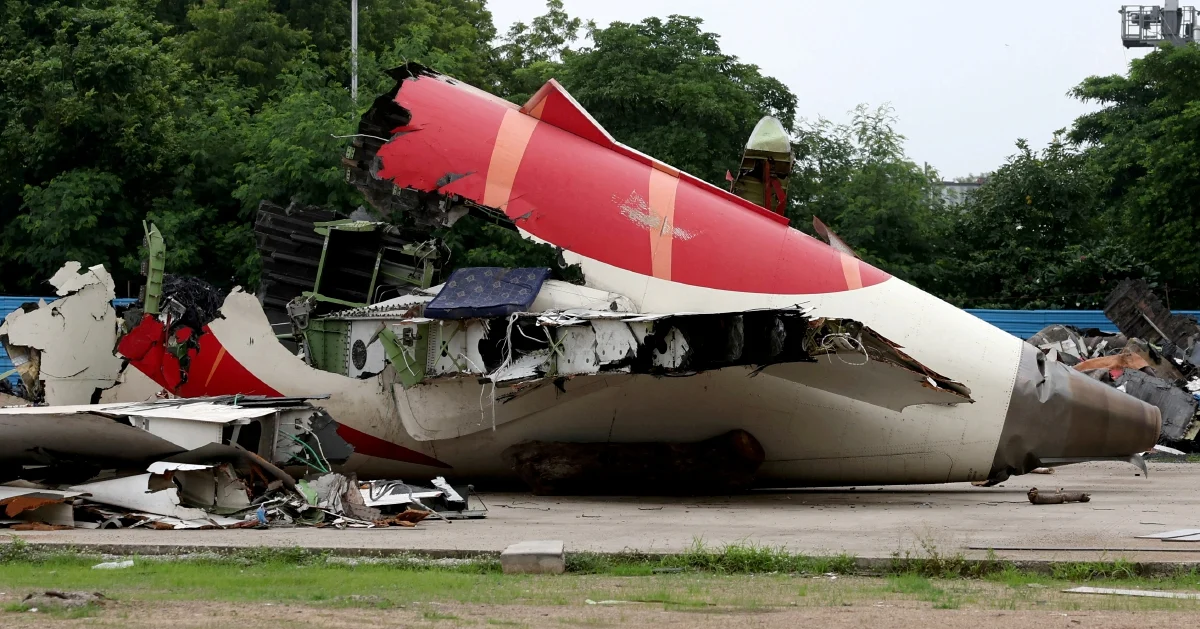
India's national aircraft accident investigating authority has substantially progressed its examination of the catastrophic Air India crash that occurred last year, with investigators now preparing for the concluding stages of their formal inquiry. Court documents filed in connection with the case reveal that the investigating body has completed several crucial analytical phases, including the transcription and review of cockpit voice recorder data and the execution of a comprehensive psychological autopsy. These developments signal that the lengthy technical and human-factors investigation is approaching its final reporting stage, though officials have not yet disclosed findings or potential conclusions.
The cockpit voice recorder represents one of the most valuable investigative tools available following an aviation accident. This device continuously captures conversations, radio communications, and ambient sounds within the flight deck, providing investigators with a minute-by-minute account of crew interactions and decision-making during the aircraft's final moments. By meticulously transcribing and analysing these recordings, accident investigators can reconstruct the sequence of events, identify communication breakdowns, assess crew response to technical problems, and determine whether fatigue, confusion, or procedural violations contributed to the disaster. For Malaysian aviation professionals and the broader Southeast Asian air transport community, the detailed methodology employed in such investigations provides insight into how regional authorities approach similar challenges.
The psychological autopsy component of the investigation deserves particular attention for its significance to understanding human factors in aviation accidents. This assessment involves a retrospective examination of the mental and emotional state of crew members during the flight, drawing on personnel records, training files, medical histories, and circumstantial evidence gathered from the accident scene. Such evaluations can illuminate whether stress, incapacity, personal crisis, or other psychological factors influenced crew performance. In Southeast Asia, where aviation growth continues rapidly and crew fatigue remains an occasional concern, understanding how psychological factors intersect with accident causation has direct relevance to safety management systems across regional airlines.
The progression to final investigative stages typically involves synthesising data from multiple technical domains. Beyond cockpit voice and flight data recorders, investigators will have examined aircraft maintenance records, weather documentation, air traffic control communications, and wreckage analysis. The compilation of these findings into a comprehensive accident investigation report represents a structured process governed by international standards established by the International Civil Aviation Organization. Such reports, once published, serve as critical learning documents for the aviation industry worldwide, identifying systemic deficiencies and prompting regulatory refinements that enhance safety margins across all air transport operations.
The timeline for completing major air accident investigations varies considerably depending on complexity and the availability of evidence. Some inquiries conclude within months, while others extend over several years. The involvement of court proceedings, as suggested by the source documentation, may introduce additional procedural requirements or delays. For countries like Malaysia operating within the Southeast Asian regulatory space, monitoring the progress and eventual findings of major accident investigations in neighbouring nations provides valuable benchmarking data for their own safety oversight mechanisms. The Indian accident investigation authority's methodologies and conclusions often influence how regional aviation authorities approach similar technical and procedural matters.
Access to cockpit voice recorder data during ongoing investigations is typically restricted to authorised personnel working directly on the case, with strict protocols governing its use and eventual public release. International aviation regulations and ethical considerations require that sensitive personal conversations unrelated to aircraft operation be redacted from published transcripts. This balance between transparency and privacy has generated ongoing debate within the aviation industry and among safety advocates. The completion of this transcription phase indicates that investigators have likely identified the portions most pertinent to understanding the accident sequence and causes.
The psychological autopsy methodology reflects the aviation industry's maturation in recognising human factors as a critical safety variable. Modern accident investigation has evolved considerably from earlier eras when mechanical or structural failure was assumed to be the sole cause of most crashes. Contemporary understanding acknowledges that most accidents result from a complex interplay of technical, procedural, and human factors. The crew's physiological and psychological condition at the time of the incident can substantially influence their capacity to respond appropriately to emergencies, make sound decisions under pressure, and communicate effectively with colleagues and air traffic control.
For Malaysian airlines and aviation authorities, the conclusions drawn from this Air India investigation will contribute to the broader body of knowledge regarding accident causation in the region. Southeast Asian carriers operate in a complex environment characterised by diverse weather conditions, varying infrastructure standards, and crews drawn from multiple cultural and training backgrounds. Each major accident investigation conducted within the region or affecting regional carriers generates insights that can be applied to enhance safety protocols, training programmes, and operational procedures across the aviation community.
The investigation's advancement into its final stages suggests that the authorities have completed their fact-finding mission and are now engaged in analysis, interpretation, and report preparation. This phase typically involves independent peer review, consultation with relevant technical experts, and refinement of the accident narrative to ensure accuracy and comprehensiveness. The formal publication of the investigation report will mark the culmination of intensive work involving multiple specialist disciplines, from aeronautical engineering and metallurgy to human factors psychology and meteorology.

