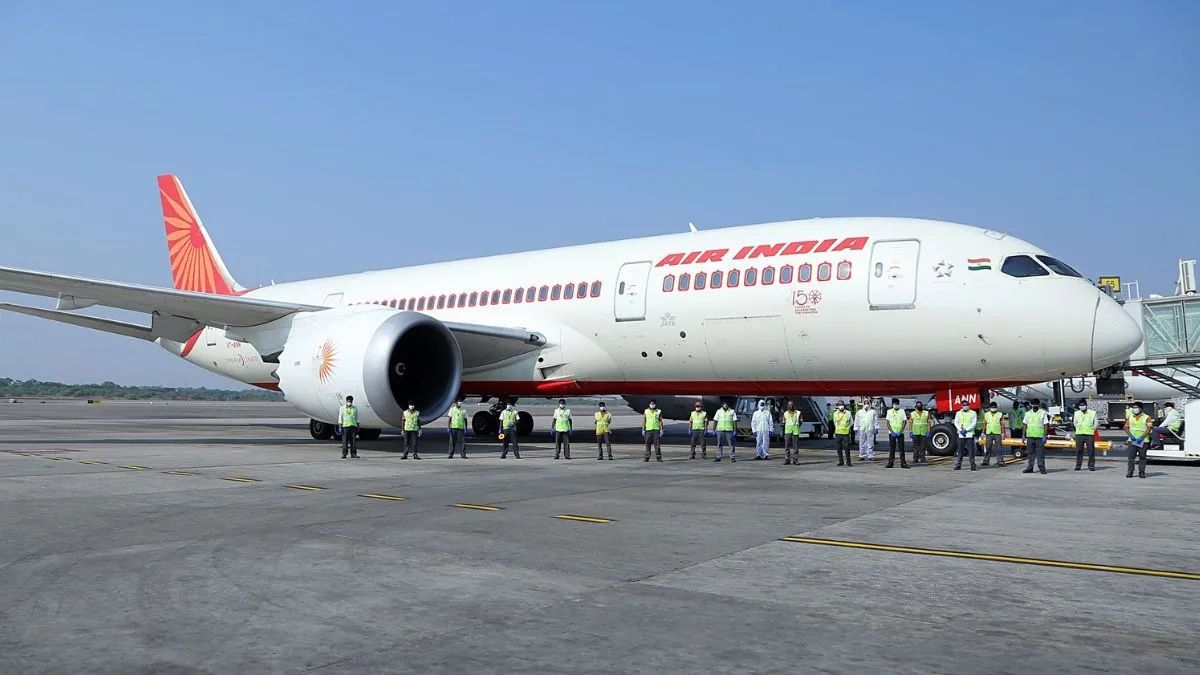
An Air India Airbus A321 operating between India's capital and the holy city of Amritsar inadvertently strayed into Pakistani airspace on Monday evening after experiencing a technical failure in its onboard navigation equipment. The incident, confirmed by official sources this week, underscores the critical importance of robust systems and vigilant air traffic management along one of South Asia's most sensitive aerial corridors. While the aircraft was guided back safely into Indian territory through coordinated efforts between Pakistani and Indian aviation authorities, the episode highlights persistent operational vulnerabilities in the region's airspace management infrastructure.
Flight AI-463 departed from Delhi's Indira Gandhi International Airport at 9:18 pm on June 22, embarking on what should have been a routine one-hour journey northwestward to the Punjab city. Barely after takeoff, the aircraft's navigation systems encountered a technical malfunction that gradually caused the flight path to deviate westward, pushing the aircraft across the International Border into Pakistan's declared airspace. The navigation failure was neither detected immediately by the crew nor by Indian air traffic controllers, a concerning gap that raises questions about monitoring protocols and system redundancy along this frequently travelled route.
Pakistani air traffic control personnel were the first to identify the incursion and promptly established contact with the flight crew to warn them of the airspace breach. This coordinated response between the two countries' aviation authorities, despite their broader geopolitical tensions, demonstrates the professionalism of air traffic management professionals on both sides of the border who prioritize flight safety above political considerations. The pilots immediately corrected their course upon receiving the alert from Islamabad, guiding the aircraft back into Indian airspace without further incident. No emergency protocols were activated, and at no point was passenger safety compromised during the brief deviation, officials confirmed.
The complications that followed the successful course correction proved more vexing than the initial navigation failure. As the aircraft approached Sri Guru Ram Dass Jee International Airport in Amritsar around 10:30 pm, controllers informed the flight crew that the airport was experiencing significant traffic congestion with no immediate landing slots available. This congestion, typical during evening hours at major Indian airports, forced air traffic authorities to make the operational decision to divert the flight back to Delhi. The aircraft returned to the capital, where it was taken out of service for a comprehensive technical inspection to diagnose and address the navigation system failure.
The maintenance and inspection process consumed several additional hours as aircraft engineers examined the faulty navigation equipment and conducted the necessary system diagnostics. Once the technical issues had been resolved and aviation authorities granted operational clearance to return to service, Flight AI-463 departed Delhi for the second time early on Tuesday morning. The aircraft finally touched down in Amritsar at approximately 2:20 am on Tuesday, completing a journey that should have taken roughly ninety minutes but instead consumed nearly four hours from initial departure to final arrival. The substantial delay would have impacted connecting passengers and disrupted travel schedules for those boarding in Amritsar.
Neither Air India nor India's Directorate General of Civil Aviation has yet released a detailed public statement specifying the exact nature of the navigation system failure or the technical factors that contributed to the initial westward deviation. This lack of transparency is not unusual in aviation incident reporting in India, where detailed technical disclosures are sometimes withheld pending completion of formal investigations. However, for a busy route connecting two major cities and traversing sensitive international borders, greater public disclosure of such incidents can build confidence in safety standards and alert other operators to potential systemic vulnerabilities requiring attention.
Aviation authorities have initiated a formal investigation to establish the precise circumstances surrounding the route deviation and to determine whether the navigation failure stemmed from equipment malfunction, software glitches, pilot error, or a combination of factors. Such investigations are routine in civil aviation whenever aircraft stray from their assigned flight paths, regardless of whether an international border is crossed. The probe will examine maintenance records, flight data recorders, and communications logs to construct a complete chronology of events. Investigators will also assess whether existing safety protocols and monitoring systems functioned as designed or whether procedural gaps contributed to the incident.
The incident arrives just one month after a Pakistan International Airlines flight unintentionally entered Indian airspace due to severe adverse weather conditions. During that episode, Indian air traffic controllers detected the deviation and coordinated with the PIA flight crew to guide the aircraft back onto its authorized flight path. That earlier incident, combined with the Air India occurrence, suggests that despite decades of civil aviation operations and established protocols, airspace incursions remain an occasional occurrence along the India-Pakistan border, where geographical proximity and heavy air traffic create inherent operational challenges.
These recurring incidents reflect broader structural challenges in South Asian aviation infrastructure, including aging ground-based navigation systems at some airports, limitations in real-time monitoring capabilities, and the sometimes-fragmented coordination between national air traffic management systems. The region operates with relatively high traffic density along key corridors, yet investment in modernized surveillance and navigation technologies has not always kept pace with growing flight volumes. For Malaysia and other Southeast Asian nations sharing similar geographical and operational characteristics, these incidents offer important lessons about the necessity of continuous infrastructure upgrades, regular system audits, and robust information-sharing agreements between neighbouring countries' aviation authorities.
The successful resolution of the Air India incident ultimately demonstrates that established safety mechanisms and professional cooperation between Indian and Pakistani aviation personnel can mitigate risks even when technical failures occur. The fact that Pakistani controllers promptly identified the incursion and Indian pilots immediately corrected course prevented what could have escalated into a more serious situation. However, preventing such incidents altogether requires sustained investment in navigation technology, comprehensive pilot training programmes, and proactive maintenance schedules. For regional airlines and aviation regulators, the takeaway remains clear: technical reliability and vigilant air traffic management are non-negotiable imperatives that demand continuous attention and resources, particularly in areas where international borders and high traffic volumes intersect.