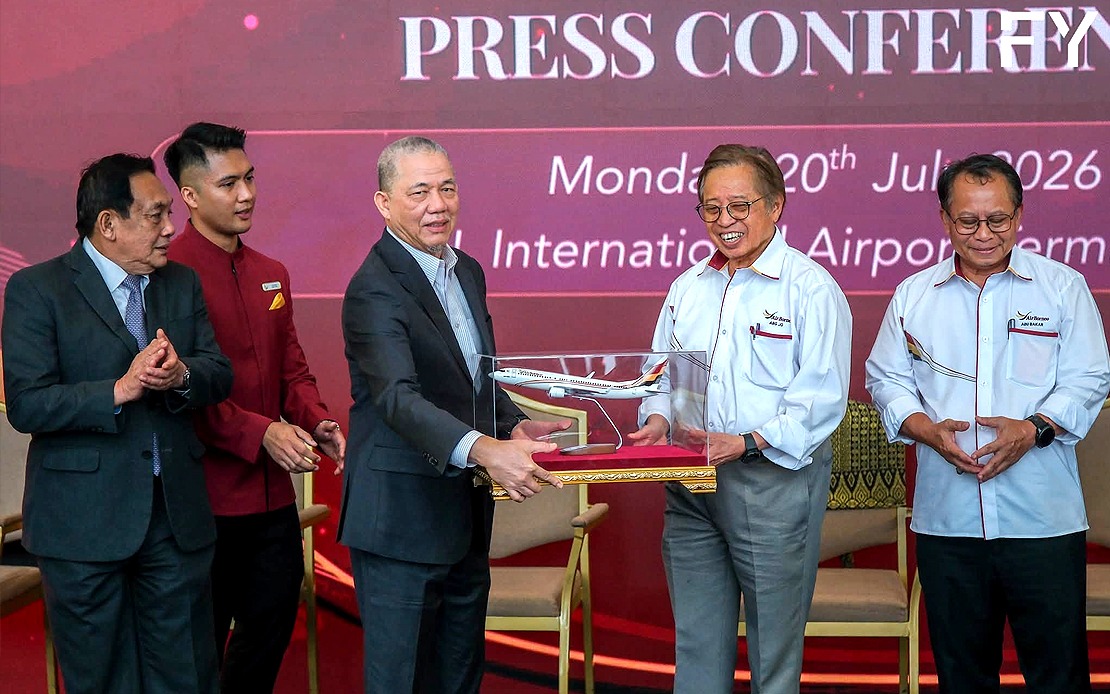
Sarawak has taken a significant step toward addressing one of its most persistent connectivity challenges with the inaugural flight of AirBorneo Airways, the state government's new carrier. Deputy Prime Minister Datuk Seri Fadillah Yusof has framed the airline's launch as a strategic response to a problem that has plagued Sarawakians for years: the high cost of air travel within and from the state. The timing carries symbolic weight, arriving just two days before Sarawak Day celebrations on July 22, positioning the venture as part of a broader narrative about the state's economic independence and self-determination.
The core promise underlying AirBorneo is straightforward yet ambitious: to deliver passenger air services that are not only more competitively priced but also transparent in their operations and genuinely responsive to traveller needs, all while maintaining professional service standards. Fadillah's public statements emphasise that affordability alone is not the objective; the airline aims to fundamentally reshape how residents and businesses think about air travel within Sarawak. This multifaceted approach reflects recognition that the problem extends beyond mere pricing into questions of service culture, operational transparency, and passenger rights—areas where established carriers operating in the state have historically faced criticism.
For Malaysia's East Malaysian state, establishing homegrown aviation capacity represents more than a commercial venture. Sarawak Premier Tan Sri Abang Johari Tun Openg has characterised AirBorneo as a strategic economic investment designed to secure the state's long-term prosperity. This framing acknowledges that air connectivity is foundational infrastructure for modern economies, particularly in a geographically dispersed state like Sarawak where vast distances and limited road networks make aviation essential rather than optional. By owning and operating its own airline, the state government signals its intention to treat aviation not as a service industry left entirely to private market forces but as a strategic sector where state interests and public welfare must be explicitly considered.
The potential ripple effects of AirBorneo extend well beyond simple fare reductions. Improved air connectivity, particularly at competitive prices, could catalyse growth across multiple economic sectors. Tourism operators have long cited high airfares as a constraint on visitor numbers; more affordable flights could expand the market for Sarawak's natural attractions and cultural experiences. Trade and investment flows may similarly benefit from reduced transportation costs, making the state a more attractive location for businesses seeking regional hubs. Regional development initiatives that depend on moving goods and people efficiently between Sarawak and other Malaysian states or neighbouring countries become more economically viable when airline operating costs and passenger fares decline.
One particularly important dimension of AirBorneo's mission concerns rural connectivity. Sarawak's interior regions, home to indigenous communities and agricultural activities, have long struggled with expensive and limited air services. These areas lack alternative transport infrastructure adequate to the distances involved, rendering aviation not a luxury but an essential service. By explicitly committing to maintain air access in underserved rural areas, AirBorneo addresses a gap that profit-maximising private carriers have struggled to fill adequately. This social dimension—ensuring that geography does not consign residents to poor connectivity—reflects values that extend beyond typical airline commercial logic.
The launch flight from Kuching to Kuala Lumpur International Airport at Terminal 1 marks the beginning of what will likely be a carefully managed expansion strategy. Starting with what is undoubtedly Malaysia's most commercially important route positions the airline to build operational experience and establish brand credibility on high-traffic segments before potentially expanding into less densely travelled routes. The decision to operate from KLIA Terminal 1 rather than the newer terminal facilities signals practical choices about logistics and market positioning that will evolve as the airline matures.
Fadillah's rhetoric surrounding AirBorneo emphasises state agency and capability. The airline is presented not merely as a vendor of seats but as a manifestation of Sarawak's capacity to shape its own future and drive its own economic destiny. This narrative resonates in a Malaysian context where East Malaysia has periodically advocated for greater control over its development agenda. By successfully establishing an airline operation, Sarawak demonstrates institutional capacity and financial resources that validate claims for economic self-determination in other sectors as well.
The competitive dynamics this creates merit close attention. Established carriers already serving Sarawak—particularly Malaysia Airlines and AirAsia—have achieved market dominance through scale, network effects, and established brand recognition. For AirBorneo to achieve meaningful impact on fares, it must capture sufficient market share to force competitive responses from incumbents. Whether the new carrier can sustain operations while maintaining service quality and profitability while simultaneously keeping fares low remains an open question that will unfold over coming months and years.
From a Southeast Asian perspective, Sarawak's experiment with state-owned airline development occurs against a broader regional backdrop of aviation consolidation and competitive pressures. Several neighbouring jurisdictions operate state carriers with varying degrees of success, offering both models to learn from and competitive pressures to manage. AirBorneo's performance could influence how other Southeast Asian states contemplate their own aviation sectors and the appropriate role of government ownership and control in connectivity provision.
The regulatory and operational frameworks supporting AirBorneo's establishment remain important considerations. Malaysian aviation is governed by federal regulations overseen by the Civil Aviation Authority of Malaysia, which establishes safety standards, slot allocation procedures, and operational requirements that AirBorneo must navigate alongside commercial imperatives. The state government's capacity to provide financial support or absorive losses during an airline's development phase differs markedly from private operators' obligations to shareholders, potentially creating competitive tensions that regulators will need to address transparently.
Ultimately, AirBorneo's success will be measured by whether ordinary Sarawakians see tangible fare reductions, improved service reliability, and genuinely expanded connectivity options. If the airline achieves these outcomes while maintaining financial sustainability, it will validate the state government's investment and potentially inspire similar initiatives elsewhere. Conversely, if operational challenges, competitive pressures, or financial constraints prevent meaningful improvements in passenger experience, the experiment may ultimately reinforce arguments that essential infrastructure like aviation is best provided through market mechanisms rather than state ownership, regardless of sector control ambitions.

