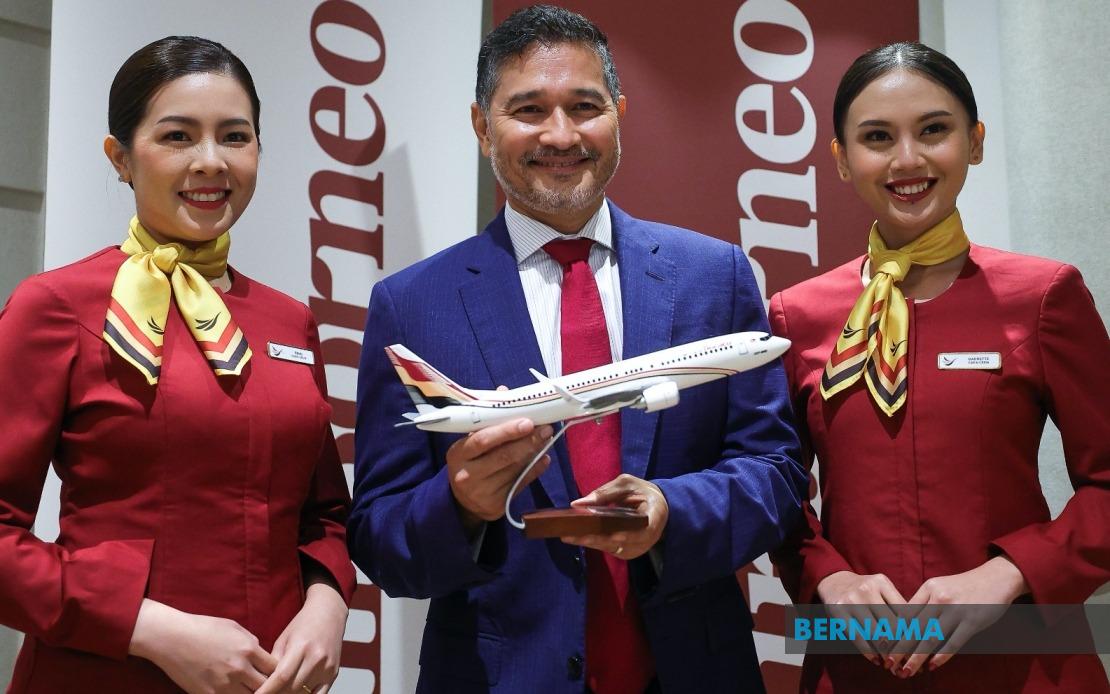
Sarawak's state-owned carrier AirBorneo has pledged to maintain a fixed RM375 all-in one-way Economy fare on the Kuala Lumpur-Kuching route throughout the year, a move designed to shield passengers from seasonal price fluctuations and competitive undercutting. The announcement comes as the airline formally launches ticketing for what has become a strategically important corridor for domestic connectivity, with operations set to run twice daily between Kuching International Airport and Kuala Lumpur International Airport Terminal 1.
Chief executive officer Megat Ardian Wira Mohd Aminuddin outlined the methodology behind the pricing decision, explaining that AirBorneo conducted a comprehensive six-month pricing analysis encompassing fuel price volatility and comparative benchmarking across competing carriers on the same route. The approach reflects a deliberate strategy to establish a baseline fare that remains insulated from market swings while remaining competitive against other operators. By anchoring the price to historical data rather than allowing it to drift with seasonal demand, the airline is attempting to remove unpredictability from traveller budgeting—a persistent frustration in Malaysian aviation markets where identical routes can see wildly disparate fares depending on booking windows and calendar dates.
The RM375 figure represents a middle ground in the competitive landscape. Megat Ardian Wira acknowledged that rival carriers occasionally advertise marginally lower headline fares, but emphasised that such advertised prices frequently exclude ancillary charges, effectively obscuring the true cost to passengers. By contrast, AirBorneo's quoted fare includes airport taxes and fuel surcharges, presenting a transparent all-in price that eliminates surprise fees at the point of sale. This approach addresses a longstanding industry criticism in Malaysia, where low-cost carriers attract customers with barebones fares only to recover revenue through hidden levies and charges.
For Business Class passengers, the airline is offering an all-in one-way fare of RM736, completing a tiered fare structure designed to capture different passenger segments. The launch fares are branded as part of AirBorneo's "Sarawakku Sayang" promotional campaign, signalling the airline's commitment to accessibility and affordability as it establishes itself on a route traditionally dominated by Malaysia Airlines and low-cost operators. The consistency of the pricing strategy—maintained regardless of season—aims to eliminate the volatility that has long characterised Malaysian domestic aviation, where summer holidays and festive seasons trigger price spikes that disproportionately affect lower-income travellers and families.
The decision to stabilise fares year-round directly responds to public sentiment regarding connectivity costs between Peninsular Malaysia and Sarawak. Regional airfares have become a political and economic issue, with stakeholders arguing that high ticket prices hinder business travel, tourism, and family connectivity. By committing to a single price regardless of season, AirBorneo positions itself as an alternative to traditional boom-and-bust pricing models, though the sustainability of this approach depends on the airline's ability to manage costs and load factors through operational efficiency rather than dynamic pricing.
AirBorneo's ambitions extend considerably beyond the KL–Kuching route. The airline has signalled its intention to bid for official carrier status for the 2027 SEA Games, which Sarawak will co-host alongside Peninsular Malaysia. This positioning requires expanding regional capabilities and network reach, with the airline targeting scheduled services to two or three additional ASEAN destinations by early next year. Such expansion would not only prepare AirBorneo logistically for the Games but also establish it as a genuine regional competitor, enabling charter operations to transport athletes, officials, and supporters across Southeast Asia—a significant opportunity for revenue and brand visibility.
The SEA Games ambition underscores a broader strategic shift in Malaysian aviation. Rather than relying solely on foreign carriers or domestic incumbents, Sarawak is leveraging AirBorneo to strengthen its own air connectivity infrastructure. This aligns with Malaysia's broader push toward strengthening intra-ASEAN linkages and reducing travel barriers within the region. For Malaysian passengers travelling regionally—whether for business, tourism, or family—having an additional carrier with ambitions to serve multiple ASEAN destinations offers meaningful competition and choice.
The fare strategy also reflects economic realities in Sarawak and adjacent regions. Many travellers on the KL–Kuching route are either Sarawakians maintaining connections to the peninsula or peninsula-based businesses accessing the state. For this demographic, predictable pricing enables more effective budgeting and planning. Corporate travel managers can book tickets without hedging against unexpected price increases, while holiday makers can make informed decisions about journey frequency. This stability, particularly for lower-income segments of the travelling public, has measurable economic implications, potentially stimulating demand that might otherwise be suppressed by airfare unpredictability.
The competitive dynamics merit attention. By committing to fixed pricing, AirBorneo potentially pressures rivals to justify premium positioning or lose market share. Malaysia Airlines and low-cost carriers will need to articulate distinct value propositions—whether through service quality, schedule frequency, loyalty benefits, or pricing that undercuts AirBorneo's fixed rate. The decision also signals confidence in the airline's ability to fill aircraft at the stated fare, suggesting management believes there is sufficient underlying demand on this route to sustain profitability at RM375.
Looking forward, the sustainability of AirBorneo's pricing commitment hinges on several variables. Fuel price stability remains crucial; a dramatic spike in jet fuel costs could squeeze margins and force strategic recalibration. Competitive responses from incumbent carriers will shape demand patterns. And the airline's ability to execute twice-daily operations reliably will determine whether it captures the market share necessary to justify the business model. For Malaysian readers, particularly those in Sarawak or those with regular travel needs between regions, the arrival of a committed alternative carrier with transparent pricing and regional ambitions represents a tangible shift in aviation accessibility.

