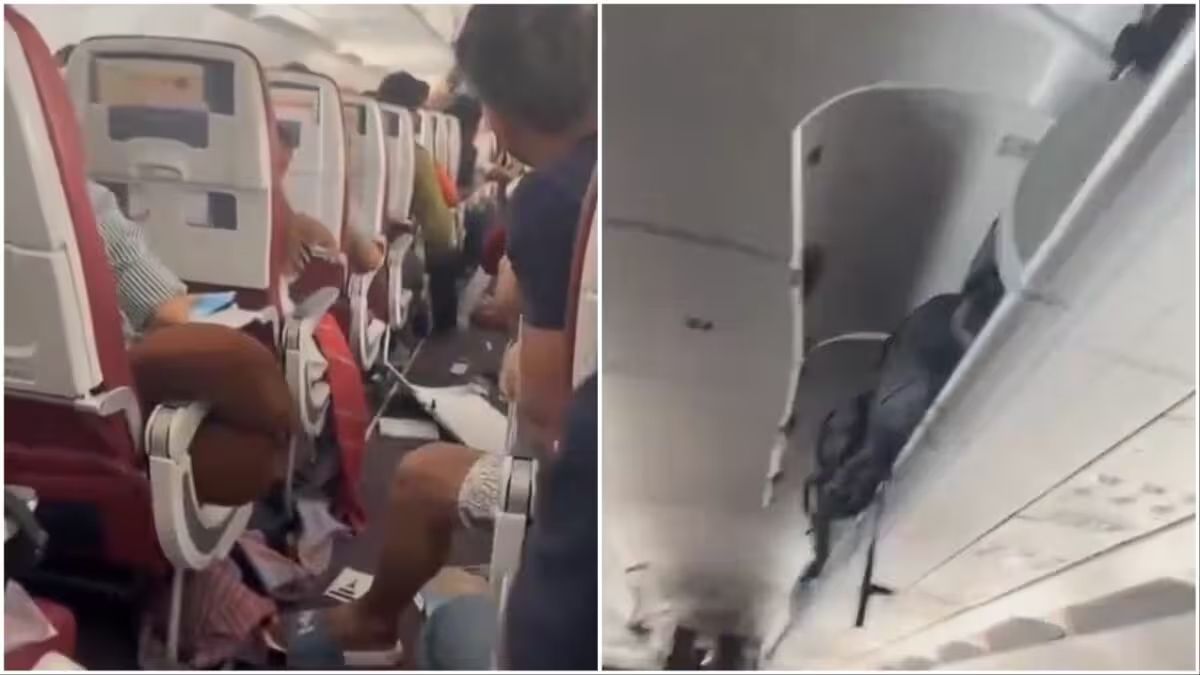
Aircraft manufacturer Airbus is sending a team of technical specialists to New Delhi this week to help Indian authorities unravel what caused an Air India flight to plummet unexpectedly mid-air last month, an incident that has deepened concerns about safety at India's flag carrier. The A320, operating as Air India Flight 171 from Phuket to New Delhi on August 4, shed approximately 300 feet of altitude in what passengers and crew described as a harrowing episode before the pilots regained control and landed the aircraft safely at their destination.
The aircraft had 137 passengers and eight crew members aboard when the sudden descent occurred. According to Air India's initial statement, the plane experienced what the airline termed "a sudden loss of altitude" without elaborating on the cause or sequence of events that led to the alarming drop. Seventeen people sought medical attention after the flight landed, with eight passengers and four cabin crew members requiring hospital admission in the Indian capital. The airline immediately signalled its cooperation with authorities and notified the aircraft manufacturer of the incident, triggering what would become a multi-agency investigation.
India's civil aviation ministry formally classified the occurrence as a Serious Incident and placed it under the purview of the Aircraft Accident Investigation Bureau, the country's dedicated accident investigation body. Airbus confirmed it was providing "technical assistance" to Indian authorities, describing the effort as aimed at supporting both the airline and the investigation process. The aerospace company's involvement underscores the technical complexity of determining what malfunctioned during those critical minutes when the aircraft lost thousands of feet.
Wide reporting in Indian newspapers has pointed to several technical anomalies the aircraft exhibited immediately before the altitude loss, though neither Air India, Indian aviation authorities, nor Airbus have formally acknowledged or detailed these reports. The lack of transparency has fuelled speculation and concern among aviation safety experts and the flying public, particularly given Air India's troubled recent history. The investigation's findings could determine whether the incident resulted from pilot error, mechanical failure, systemic oversight, or a combination of factors.
A critical dimension of the probe involves the chief pilot's health and condition on the day of the incident. India's aviation ministry disclosed that both pilots underwent standard psychoactive substance screening immediately after landing. The screening of the pilot-in-command returned a result "requiring confirmatory testing," prompting authorities to send samples for detailed laboratory analysis. As of the investigation's latest updates, the confirmatory results have not been publicly released, a delay that has kept the investigation in a state of incomplete assessment. Pending the outcome, both pilots have been removed from flying duties, a standard precaution in such circumstances.
The incident strikes at a particularly vulnerable moment for Air India, which has been struggling to recover from a succession of operational and reputational challenges. The carrier has endured significant disruptions stemming from the geopolitical turmoil in the Middle East, which has constrained flight routes, increased operational costs, and complicated scheduling. These pressures compound an already difficult business environment for Indian aviation, where carriers face rising fuel prices, intense competition, and evolving regulatory demands.
However, the most devastating blow to Air India's credibility occurred in June 2025, when Air India Flight 171, a Boeing 787 Dreamliner bound for London, crashed shortly after departing from Ahmedabad. The catastrophe claimed 241 of the 242 passengers and crew aboard, along with 19 people on the ground, making it one of India's deadliest aviation disasters in recent years. That tragedy exposed systemic vulnerabilities within the airline's operations and raised fundamental questions about safety culture, maintenance standards, and pilot training protocols.
The timing of the August incident, occurring mere months after the Ahmedabad crash, amplifies concerns within India's aviation sector and among passengers. Every new incident, regardless of severity, now triggers heightened scrutiny of Air India's safety management systems. For Malaysian and broader Southeast Asian aviation communities, the unfolding investigation carries significance as it may reveal vulnerabilities in aircraft maintenance, crew competency standards, or regulatory oversight that could have regional implications. Airlines operating similar aircraft models across Southeast Asia will monitor the findings closely.
In response to the mounting pressures facing the airline, Air India appointed Tewolde Gebremariam, the former chief executive of Ethiopian Airlines, to lead the carrier as it attempts to navigate its most serious crisis. Gebremariam brings international aviation experience and a reputation for operational reform, with his appointment signalling Air India's recognition that fundamental changes are required to restore confidence and safety standards. His leadership will be tested as the investigation into the August incident concludes and the airline confronts both immediate safety concerns and the longer-term challenge of rebuilding its reputation.
The investigation into the Phuket-New Delhi flight descent represents more than a technical inquiry into a single incident. It serves as a diagnostic examination of Air India's safety culture, decision-making processes, and operational integrity at a moment when the airline faces existential pressure to demonstrate that it can operate safely. For passengers and aviation industry observers across South and Southeast Asia, the investigation's conclusions and the airline's subsequent response will significantly influence perceptions of flying with India's national carrier.

