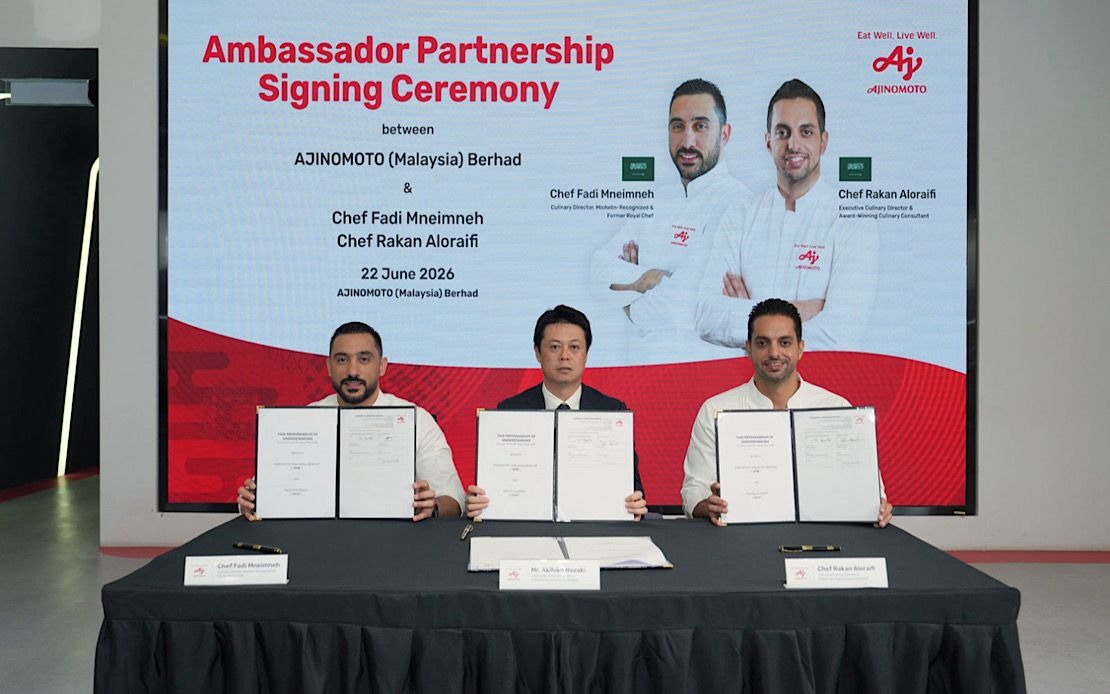
Ajinomoto (Malaysia) Berhad is making a calculated push into the lucrative Middle Eastern market by enlisting two of Saudi Arabia's most respected culinary figures as strategic partners. The collaboration with Chef Fadi Mneimneh and Chef Rakan Aloraifi marks a deliberate shift towards leveraging local culinary authority to penetrate a region where halal certification and authentic food preparation carry significant cultural weight. This move reflects AMB's broader recognition that simply exporting products is insufficient in markets where trust, heritage, and adherence to Islamic dietary principles determine purchasing decisions.
Chef Fadi, who holds Michelin-star credentials and previously served as a royal chef, brings both prestige and institutional credibility to the partnership. Chef Rakan, an award-winning executive director and culinary consultant, complements this with deep operational knowledge of the hospitality sector. Together, they represent not merely celebrity endorsement but genuine influence among procurement decision-makers, restaurant operators, and food service professionals across the Saudi Arabian market—precisely the stakeholders AMB needs to convert for sustained commercial success.
The partnership crystallised during a factory tour at AMB's Bandar Enstek facility in Negeri Sembilan, where both chefs gained direct exposure to manufacturing processes, quality controls, and halal certification protocols. This transparency serves a strategic purpose beyond mere relationship-building: it allowed the chefs to develop authentic understanding of AMB's operational standards, enabling them to speak credibly about product integrity when engaging their industry networks. For Malaysian food manufacturers, this represents an increasingly essential practice in Muslim-majority markets, where local leaders require substantive knowledge before endorsing foreign brands.
The centrepiece of the engagement was a series of live culinary demonstrations in which Chef Fadi and Chef Rakan prepared traditional Middle Eastern cuisine using selected Ajinomoto products, particularly focusing on umami—the fifth taste sensation derived from glutamates and nucleotides. This educational component addresses a critical market challenge: many Middle Eastern consumers and professionals harbour misconceptions about flavour enhancers, viewing them as artificial shortcuts that compromise authentic cooking. By showcasing how umami can deepen flavour complexity while maintaining traditional recipe integrity, AMB positions its products not as Western convenience items but as sophisticated culinary tools compatible with heritage cooking practices.
The umami angle proves particularly significant for Malaysia's food export narrative. As a leading halal producer, Malaysia has historically competed on certification and safety rather than culinary philosophy. By emphasising umami—a concept deeply embedded in Japanese cuisine but universally applicable—AMB creates a bridge between Japanese food science and Middle Eastern culinary traditions. This framing allows the company to differentiate from competitors while implicitly elevating the prestige of Malaysian-made products, positioning them alongside established culinary authority rather than generic industrial ingredients.
The regional networking dimension also merits attention. The factory visit included AMB's distributor representative from Brunei, deliberately constructing a Southeast Asian commercial ecosystem. This suggests AMB views the Middle East opportunity within a broader regional strategy where Southeast Asian distributors and partners collectively serve as the infrastructure for expansion. For Malaysian businesses observing this partnership, the model demonstrates how regional supply chain coordination can amplify market entry effectiveness, particularly when combined with local cultural expertise.
Looking forward, AMB has committed to collaborating with both chefs at a Hotel, Restaurant and Café (HORECA) industry event scheduled tentatively for October 2026 in Riyadh and Jeddah. These professional gatherings attract procurement officers, executive chefs, and hospitality decision-makers—the precise audience whose purchasing decisions drive volume in the food service sector. By securing the chefs as live demonstration leaders at this event, AMB creates multiple engagement touchpoints: the chefs build credibility through public performance, procurement professionals observe practical applications, and AMB achieves visibility among trade buyers simultaneously.
The halal dimension remains foundational to this strategy. While AMB's halal certification is already established, partnering with respected Saudi figures amplifies that certification's value proposition. In markets where halal compliance is baseline expectation rather than differentiator, cultural affinity and professional endorsement become the actual competitive factors. The partnership essentially converts halal certification from a table-stakes requirement into a trust signal, backed by personalities whom Middle Eastern industry professionals already respect and follow.
For Malaysian exporters broadly, this case study illustrates an evolution in market entry strategy beyond traditional export-import models. Rather than simply shipping products to regional distributors, sophisticated manufacturers now invest in creating local influencer ecosystems, factory transparency initiatives, and culinary credibility through partnerships with recognised professionals. This approach demands deeper market understanding and longer relationship timelines but generates substantially more resilient market positions.
The timing of this expansion also reflects broader market dynamics. Middle Eastern demand for premium halal food products continues accelerating, driven by rising consumer incomes, growing restaurant and hospitality sectors, and increasing sophistication in food service operations. AMB's partnership strategy positions the company to capture this expansion at precisely the moment when professional chefs and food service operators are actively seeking innovative yet authentic products. By establishing relationships now through influential culinary voices, AMB creates first-mover advantages in brand recognition and professional networks that may prove difficult for later entrants to displace.
Ultimately, this partnership demonstrates that in Muslim-majority markets with sophisticated culinary traditions, successful product penetration requires more than regulatory compliance and quality assurance. It demands genuine engagement with local culinary professionals, transparent manufacturing practices, and strategic positioning within existing networks of influence and authority. For AMB, enlisting two of Saudi Arabia's most respected chefs represents a calculated investment in market credibility that will likely generate returns extending well beyond the immediate HORECA event into sustained commercial relationships across the region.

