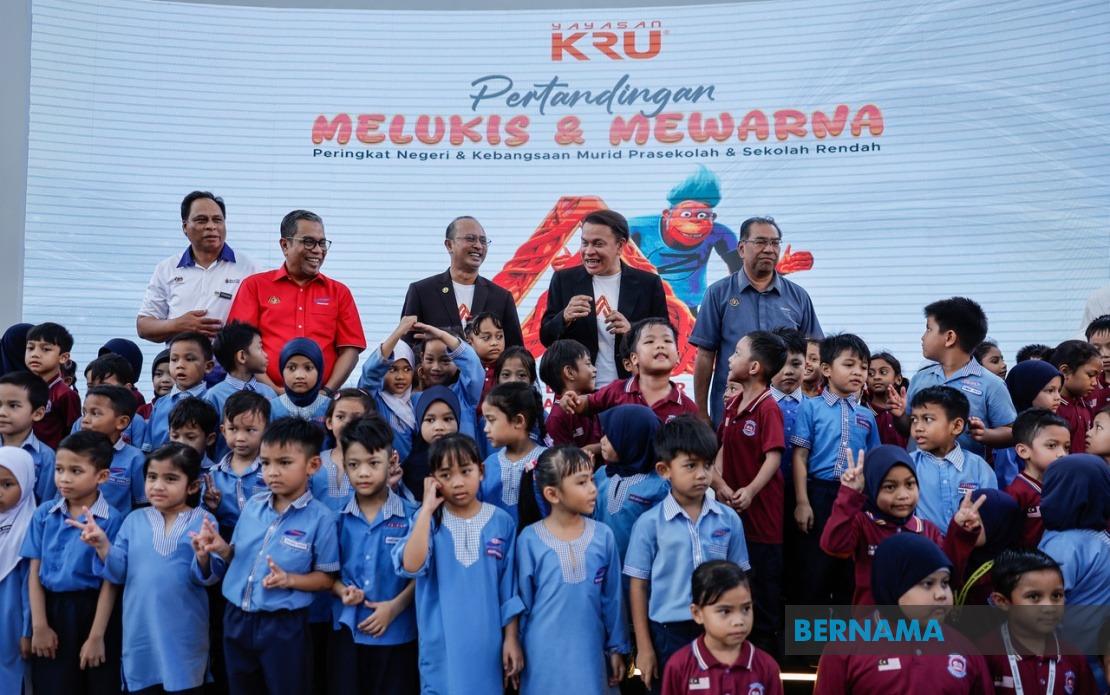
A nationwide colouring competition organised by Yayasan KRU has achieved a remarkable milestone by setting a new Malaysia Book of Records after drawing participation from over 153,000 preschool children across the country. The AKAR 2026 (Kreatif Aspirasi Reka) Awards represent the largest-scale initiative of its kind targeting young learners in Malaysia, demonstrating the growing appetite for structured creative programmes at the foundational education level.
The competition attracted children primarily from KEMAS and Unity kindergartens, with simultaneous events held across all states to ensure equitable access and participation. This coordinated nationwide approach underscores the logistical complexity involved in managing such a large-scale youth engagement programme and reflects the commitment of participating institutions to fostering creativity among Malaysia's youngest students during a formative period of their development.
The initiative benefited from substantial institutional backing, with the Education Ministry, Community Development Department, Department of National Unity and National Integration, and the National Higher Education Fund Corporation all lending their support. This multi-agency collaboration signals recognition at the policy level that creative skills development represents a strategic priority for the nation's early childhood education framework, particularly as schools increasingly emphasise holistic child development beyond traditional academic metrics.
According to Datuk Norman Abdul Halim, president of Yayasan KRU's Board of Trustees, the programme transcended simple entertainment by embedding environmental conservation messaging through its "I Love Orangutans" campaign. This thematic integration demonstrates how youth engagement initiatives can serve dual purposes—nurturing artistic expression while simultaneously inculcating environmental stewardship values among participants who will shape Malaysia's future policy landscape and consumer choices.
The competition structure incorporates meaningful incentives designed to reward excellence while supporting educational advancement. Winners at state and national levels will receive prize money totalling approximately RM100,000, with these funds credited directly to recipients' National Education Savings Scheme accounts. This mechanism connects immediate recognition of achievement with longer-term educational financing support, easing the financial burden on families whilst celebrating children's accomplishments.
The highest-performing participants from each state will progress to national finals scheduled for August 29 in Putrajaya, where they will compete for the top prize of RM3,000. This tiered structure—combining state-level recognition with culminating national competition—provides multiple layers of achievement and maintains momentum throughout the programme cycle, ensuring sustained engagement rather than a single-event experience.
Datuk Mohd Hanafiah Man, director-general of KEMAS, articulated the educational rationale underlying such initiatives, emphasising that creativity represents an indispensable competency for Malaysia's next generation competing in an increasingly knowledge-driven global economy. His remarks positioned the AKAR 2026 competition within broader workforce development strategy, suggesting that early exposure to creative problem-solving establishes foundations for innovation-oriented careers that Malaysia seeks to cultivate as part of its economic transformation agenda.
The programme's scale and institutional support reflect evolving attitudes toward early childhood development in Malaysia, moving beyond traditional academic instruction toward comprehensive skill-building that encompasses artistic expression, environmental consciousness, and competitive spirit. The involvement of high-ranking officials from multiple government departments—including Datuk Zulkifli Hashim from the Department of National Unity and Integration and Ahmad Dasuki Abdul Majid from PTPTN—underscores the perceived importance of this initiative within Malaysia's broader policy framework.
For Malaysian readers and educators, the AKAR 2026 achievement carries implications for how youth programmes might be structured and scaled going forward. The successful coordination of over 153,000 participants across geographic and institutional boundaries demonstrates feasibility of large-scale, decentralised programming that maintains quality and consistency. Similar models could potentially be adapted for other skill-development initiatives, from STEM engagement to cultural literacy programmes, provided adequate institutional coordination and funding are secured.
The environmental messaging embedded within the competition—centred on orangutan conservation—connects artistic development with conservation urgency particularly relevant to Southeast Asian audiences. As Malaysia grapples with deforestation and habitat loss affecting its iconic wildlife, programmes introducing these concerns to younger demographics through engaging, creative channels may cultivate informed citizens more attuned to environmental challenges affecting the region's future.
The AKAR 2026 initiative also highlights the potential role of foundations like Yayasan KRU in advancing national educational objectives through private-sector-led programming that complements government initiatives. This partnership model—combining governmental reach and authority with foundation agility and creativity—may represent a template for addressing education gaps and skill deficits more efficiently than traditional government-only approaches.
Looking forward, the record-breaking participation in AKAR 2026 establishes a baseline and benchmark for future iterations of the programme. Should participation continue expanding while maintaining quality, this initiative could evolve into a defining feature of Malaysia's early childhood education landscape, potentially influencing curriculum development and pedagogical approaches emphasising creative expression alongside traditional academic content.

