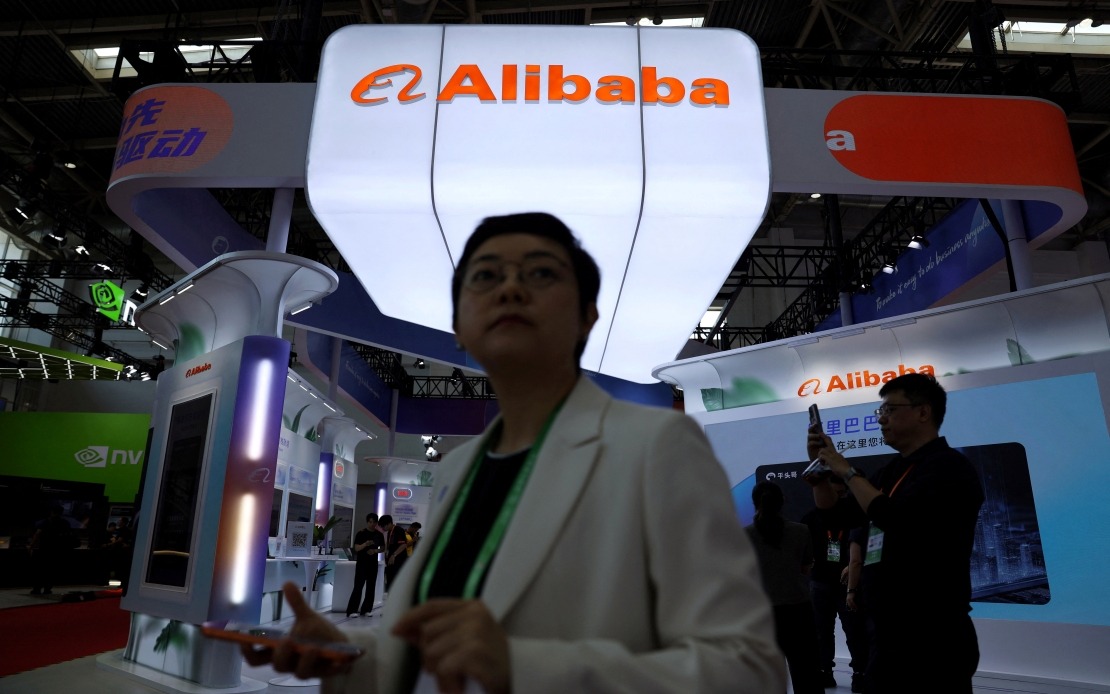
Chinese e-commerce and technology conglomerate Alibaba has initiated legal proceedings against the United States Department of Defense, contesting a controversial classification that identifies it as an entity connected to China's military-industrial apparatus. The lawsuit, formally submitted in mid-June, represents a significant pushback from one of Asia's most influential technology firms against American national security determinations that could severely impact its international operations and relationships.
The company's legal challenge directly contests the factual and legal foundations of the Pentagon's designation, which Alibaba characterizes as fundamentally flawed. According to court documents filed on Tuesday, the corporation maintains that its operational structure, governance framework, and commercial mandate have no meaningful connection to military interests or activities. The company emphasizes that it maintains an independent board of directors whose membership contains no individuals with military affiliations or backgrounds that could suggest institutional ties to defense-related operations.
Alibaba's defence strategy focuses on the civilian nature of its business portfolio and service offerings. The firm argues persuasively that its entire product ecosystem has been designed and deployed exclusively to serve retail commerce, supply chain logistics, and enterprise information technology solutions. These assertions position Alibaba as a purely commercial entity whose technological infrastructure and digital platforms function within the civilian economy rather than supporting state military capabilities or defense procurement systems.
The company has further strengthened its position by highlighting comprehensive contractual safeguards and compliance mechanisms embedded throughout its organizational practices. Alibaba points to explicit contractual provisions and established compliance protocols that specifically and unambiguously forbid any military applications or utilization of its services. Additionally, the firm notes that it does not maintain military certifications, licences, or regulatory approvals that would typically be required for companies genuinely engaged in defense-related work or military supply chains.
This legal challenge emerges from a broader Pentagon initiative announced earlier in June that dramatically expanded the list of Chinese companies officially designated as linked to China's military-industrial complex. The Department of Defense added 188 entities to this designation roster, a substantial expansion that included not only Alibaba but also other major Chinese technology corporations such as Tencent and automotive manufacturer BYD. This sweeping action reflects escalating American security concerns regarding Chinese technological advancement and potential military applications of civilian technology sectors.
The implications of the Pentagon's designation extend far beyond symbolic classification. Companies on this list face severe restrictions on business relationships with American entities, potential inclusion in trade sanctions frameworks, and complications in accessing international financial systems and supply chains. For a corporation like Alibaba, which operates globally and maintains complex international business relationships, such designation threatens commercial viability in Western markets and complicates partnerships with companies seeking to avoid entanglement with entities linked to foreign military interests.
The designation strategy reflects the Trump administration's evolving approach to technology competition with China, treating civilian technology corporations as potential national security threats due to their theoretical capacity to support military modernization or intelligence operations. This approach has transformed the technology sector into a primary battleground in US-China competition, moving beyond traditional defense contractors to encompass mainstream commercial enterprises with global operations and civilian customer bases.
For Malaysian and Southeast Asian stakeholders, this dispute carries significant consequences. Many regional businesses utilize Alibaba's cloud services, logistics platforms, and e-commerce infrastructure for their operations and international expansion. Restrictions on Alibaba's American business activities could create complications for Asian companies relying on these services, particularly those seeking to maintain simultaneous operations and partnerships across both American and Chinese markets.
The outcome of Alibaba's legal challenge remains uncertain but potentially consequential for the broader technology sector. If the company successfully contests the designation, it may establish precedent for other Chinese firms facing similar classifications. Conversely, if the Pentagon's designation survives legal scrutiny, it may embolden further expansions of the military-linked entity list to encompass additional civilian technology companies, intensifying the bifurcation of global technology sectors along geopolitical lines.
This litigation represents a critical moment in the escalating technological nationalism that has reshaped global business relationships since 2017. As American national security policy increasingly treats commercial technology as a strategic asset to be controlled rather than a product to be traded, companies operating across geopolitical divides face unprecedented pressure to choose allegiances. Alibaba's legal strategy, emphasizing the purely civilian nature of its operations and governance independence, attempts to establish a middle ground—a possibility that may determine whether technology companies can maintain truly international operations or must increasingly align with single geopolitical spheres.