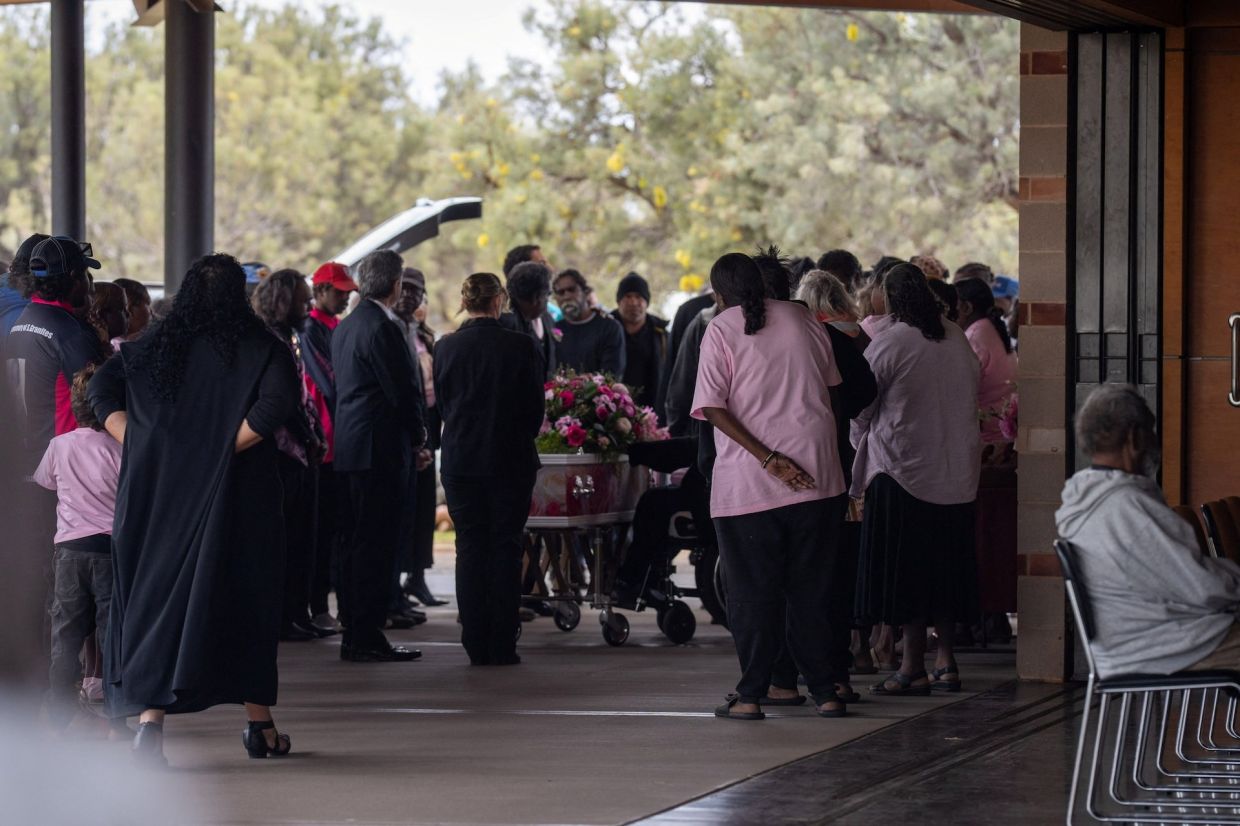
Alice Springs, the capital of Australia's Northern Territory, held a solemn farewell on Saturday for a five-year-old Indigenous girl whose tragic death four months earlier plunged the remote outback town into violent turmoil. The funeral of Kumanjayi Little Baby drew hundreds of mourners to the Garden Cemetery on the town's outskirts, with many wearing pink in tribute to the child's favourite colour. The service marked the culmination of an extended mourning period following the girl's death in April, which shocked the nation and exposed deep tensions within one of Australia's most challenged regional communities.
The killing set off a chain of events that exposed fault lines in Alice Springs and raised uncomfortable questions about Indigenous welfare, justice, and community safety. When authorities arrested the suspect—47-year-old Jefferson Lewis, who faces murder charges along with two other offences that remain subject to legal restrictions—locals discovered him and subjected him to a beating before his apprehension by police. This act of vigilante violence triggered violent clashes throughout the town of approximately 25,000 residents, located roughly 1,250 kilometres south of Darwin. The riots underscored the raw emotion and frustration simmering within Alice Springs' Indigenous and non-Indigenous populations alike.
The funeral service reflected the significance of the tragedy within the broader Indigenous community, where mourning rituals follow cultural protocols distinct from mainstream Australian practice. The coffin, adorned with flowers, arrived in a black hearse for the ceremony, which local media reported drew participation from several hundred people. Many attendees wore the little girl's preferred colour as a mark of respect, creating a visual expression of collective grief that extended beyond immediate family members. Following Indigenous custom, the community has been observing what is known locally as "sorry business"—an extended period of mourning combined with specific cultural practices observed after the death of an Indigenous person.
The tragedy has cast a spotlight on the dire living conditions endured by thousands of Indigenous Australians residing in makeshift camp communities on Alice Springs' periphery. These settlements, which house a significant portion of the town's Indigenous population, are characterized by chronic shortages of adequate housing, basic services, and infrastructure. The concentration of poverty, overcrowding, and limited access to essential facilities has long been identified as a contributing factor to elevated rates of social dysfunction, health problems, and interpersonal violence. Approximately one-fifth of Alice Springs' population identifies as Indigenous, yet these communities remain markedly disadvantaged compared to other residents.
The circumstances surrounding the child's death galvanized national attention and prompted senior political figures to confront the systemic issues plaguing these settlements. Prime Minister Anthony Albanese issued statements in the days following the killing, calling upon Northern Territory authorities to accelerate efforts to enhance living conditions within the camp communities. His intervention reflected the reality that the tragedy had become not merely a local concern but a matter demanding urgent federal scrutiny and potential intervention. The political pressure signals growing recognition that incremental reforms have failed to address the scale of disadvantage facing Indigenous populations in remote Australian towns.
Jefferson Lewis, who is 47 years old, currently faces murder charges along with two additional criminal offences. However, specific details regarding the supplementary charges cannot be disclosed publicly due to ongoing legal proceedings and court-imposed restrictions on media reporting. This legal constraint has created an information gap that has allowed speculation and community anxiety to flourish in Alice Springs. The trial proceedings will likely occupy significant public and media attention as the community seeks answers and accountability for the events that triggered the violence.
The funeral's observance of "sorry business" represents a critical period for the affected Indigenous community to process grief while reinforcing cultural bonds and social cohesion. This mourning framework, which extends over weeks or sometimes months, involves specific protocols regarding gatherings, communication, and commemoration. For many Indigenous Australians, these practices serve therapeutic and spiritual functions that formal grief counselling or Western-style memorials may not adequately address. The funeral ceremony therefore carried profound meaning beyond the immediate act of interment, functioning as a collective affirmation of cultural identity and community resilience.
The broader implications of the Alice Springs tragedy extend throughout Australia's approach to Indigenous affairs and remote community governance. The incident has renewed debate about resource allocation, preventative social policy, and whether current approaches to supporting vulnerable populations are adequate or fundamentally misaligned with needs on the ground. For Southeast Asian observers, the case illustrates challenges common across the region—the persistent marginalisation of Indigenous and minority populations, inadequate service delivery in remote areas, and the vulnerability of children in communities lacking institutional support structures.
Looking forward, the funeral marks both a moment of closure for grieving family members and a potential turning point for broader policy reconsideration. The tragedy has provided a catalyst for renewed scrutiny of Alice Springs' governance, service provision, and the underlying social conditions that permitted events to escalate so dramatically. Whether this attention translates into meaningful, sustained improvement in living conditions for the town's Indigenous camp communities remains an open question, but the national focus generated by the funeral and preceding violence suggests that indifference is no longer a viable political option.

