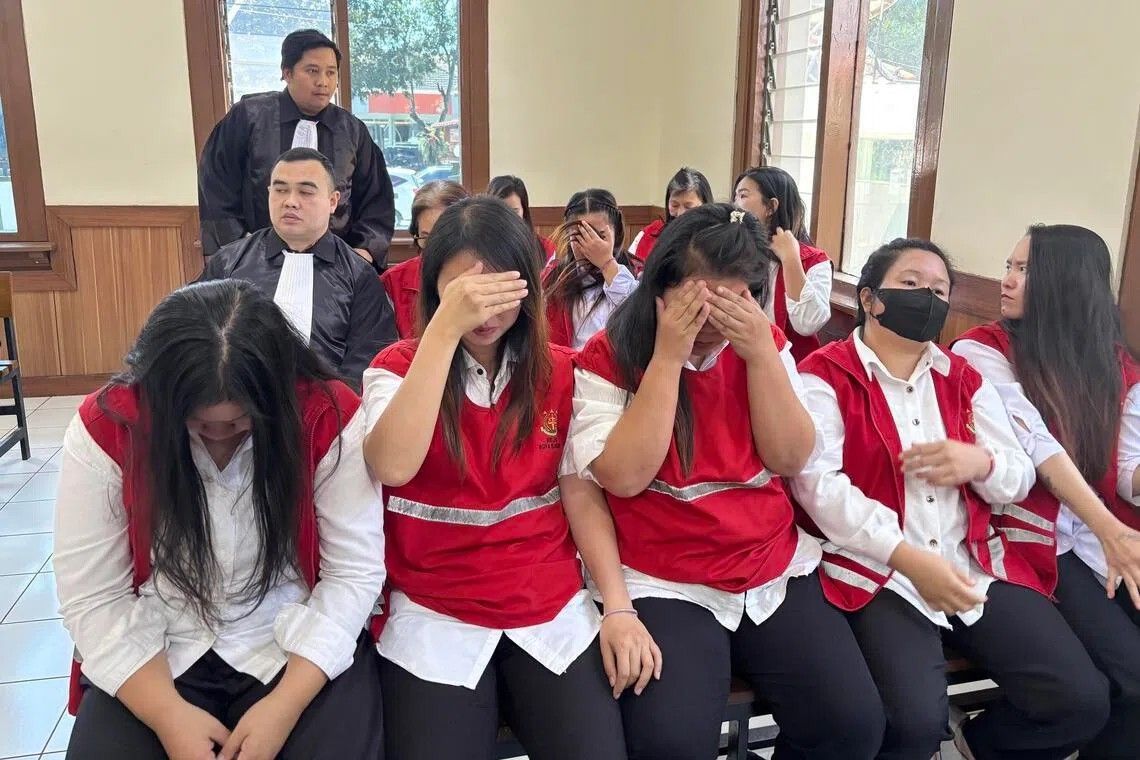
A major human-trafficking operation targeting vulnerable infants has been dismantled following convictions handed down by the Bandung District Court in West Java on Tuesday. The case represents one of Southeast Asia's most alarming recent examples of organised infant smuggling, with dozens of newborns transported across borders through a coordinated network that exploited forged documentation and vulnerable families. All 19 defendants, including the syndicate's 70-year-old ringleader, now face imprisonment for their roles in an operation that authorities estimate moved at least 34 babies between 2023 and 2025.
Lie Siu Luan, known by aliases Popo and Lily, orchestrated the entire trafficking operation from Indonesia and has been sentenced to seven years imprisonment following conviction on human-trafficking charges. The Bandung District Court found Lie guilty of coordinating the recruitment, documentation, and international transfer of infants for purposes of exploitation. Judge Gatot Ardian Agustriono, heading the three-judge panel, formally declared the defendant had been proven guilty of recruiting, harbouring, and transferring persons for exploitation. The sentence, delivered at the conclusion of a trial that began in April, fell short of the prosecution's request for a ten-year term, reflecting the court's assessment of culpability and mitigating factors.
The syndicate's scale of operation raises serious questions about infant protection mechanisms across the region. According to prosecutors, at least 12 of the trafficked infants were sent specifically to Singapore, with each child commanding prices between 200 and 250 million rupiah—equivalent to approximately S$18,110. The pricing structure suggests a commercialised operation targeting affluent foreign buyers, likely prospective adoptive parents seeking to circumvent legitimate adoption channels. The availability of willing customers abroad demonstrates the international demand that sustains such criminal networks, creating powerful incentives for organisers willing to exploit vulnerable populations.
Beyond the mastermind, the court convicted the operation's chief recruiter, Astri Fitrinika, to six years and seven months imprisonment. Two additional recruiters, Djaka Hamdani and Elin Marlina, received identical sentences, indicating their equivalent responsibility in identifying and processing infants for transfer. These individuals formed the frontline of the operation, tasked with approaching families, negotiating arrangements, and assembling the cohorts of babies destined for overseas placement. Lai Su Hua, convicted of falsifying state adoption documents, also received six years and seven months, highlighting how documentary fraud was central to the operation's viability. The remaining 14 defendants, who operated as caregivers during the trafficking process, received comparatively shorter sentences of three years and four months, reflecting their lower-level participation.
The investigation uncovered a methodical operation relying on false documentation to obscure the infants' origins and circumstances. State adoption records were systematically falsified to create the appearance of legitimate childcare arrangements, enabling transfers that would otherwise raise immediate red flags with immigration and customs authorities. This documentary dimension suggests sophisticated operational planning rather than opportunistic trafficking, with designated individuals specifically assigned to handle paperwork. The forgery operation would have required access to official channels or corrupt officials, raising questions about potential complicity within Indonesian administrative systems that authorities may still be investigating.
During proceedings, both Lie and Astri acknowledged most allegations against them but maintained a critical narrative: that all infants were voluntarily surrendered by their parents rather than abducted, and that all children received appropriate care without abuse. This defence strategy, while acknowledging the basic facts of the operation, attempts to reframe the crimes as facilitating adoptions rather than trafficking exploitation. However, the distinction between voluntary surrender and trafficking often collapses when families are economically desperate and lack genuine understanding of where their children are being taken or the legality of arrangements. The court's conviction despite these admissions suggests judicial skepticism toward this framing.
The case carries significant implications for Southeast Asian child protection frameworks. The ready availability of infants for purchase at fixed prices indicates that Indonesia's domestic safeguards—whether in hospitals, orphanages, or social welfare systems—failed to prevent systematic extraction of children. The trafficking network's ability to operate continuously from 2023 through 2025 suggests that warning signs went undetected or unreported for extended periods. For receiving countries like Singapore, the case underscores risks within international adoption systems when informal arrangements circumvent legitimate vetting procedures. Infants transferred outside official channels lack the background checks, health screenings, and family assessments that protect children's welfare.
The geographic dimension of this operation reflects broader regional patterns. Southeast Asia has become increasingly attractive to trafficking networks seeking to exploit economic disparities—some families in Indonesia struggle to afford basic care, while affluent households elsewhere desperately desire children. The price points cited suggest buyers with substantial means, likely in developed economies. Singapore's role as a receiving destination reflects its prosperity and established culture of international adoption, though the case demonstrates that demand itself can incentivise criminal supply networks that exploit source communities.
Malaysia and other regional nations should recognize this case as a warning about vulnerability within their own child-protection systems. If infants in Indonesia could be extracted systematically over two years, similar gaps likely exist elsewhere in Southeast Asia. The operation depended on corrupt or negligent officials, willing intermediaries, and families desperate enough to surrender children without full understanding of consequences. Strengthening hospital protocols, enhancing social worker training, and improving information-sharing between countries and law enforcement agencies could disrupt similar networks before they achieve this scale.
The convictions represent significant law-enforcement success, yet the fact that 34 infants were trafficked before intervention occurred suggests detection came relatively late. Authorities must have gathered substantial evidence—potentially including witness testimony, financial records, and communications—to prosecute all 19 defendants successfully. However, the critical question remains: how many children transferred through this network are now permanently separated from families and communities of origin? Recovery and reunification efforts, if underway, face enormous practical and legal obstacles given the time elapsed and destinations reached.
The sentencing reflects judicial determination to hold all participants accountable, from the mastermind through caregivers. The differentiated sentences reasonably account for varying roles and decision-making authority. However, questions persist about whether sentences will deter others considering similar crimes. The financial rewards—potentially millions in proceeds if all 34 infants generated equivalent revenue—may seem substantial compared to the prison terms imposed, particularly for younger defendants who might hope for eventual release and asset recovery. Longer mandatory sentences and substantial asset confiscation might prove more effective deterrents.
For Indonesian authorities, this case demonstrates capabilities to identify, investigate, and prosecute sophisticated trafficking networks operating across borders. The coordination required to bring all 19 defendants through trial simultaneously required sustained investigative effort and inter-agency cooperation. Moving forward, challenges include preventing network reconstitution, ensuring convictions withstand appeals, and extending investigation to identify international recipients and any officials who facilitated the operation. The case should also prompt Indonesia to examine why such activity flourished with apparent minimal detection, addressing systemic vulnerabilities that allowed systematic infant extraction across two years.
The broader implications extend to international adoption frameworks across Asia. Legitimate adoption processes exist for sound reasons—to protect vulnerable children, verify parental consent, ensure suitability of adoptive families, and maintain child welfare standards. This operation demonstrates that informal arrangements, however attractive they seem financially to poor families or to childless couples, inevitably create exploitation and abuse risks. Strengthening legitimate pathways while communicating their importance to families considering relinquishment remains essential to reducing trafficking supply.

