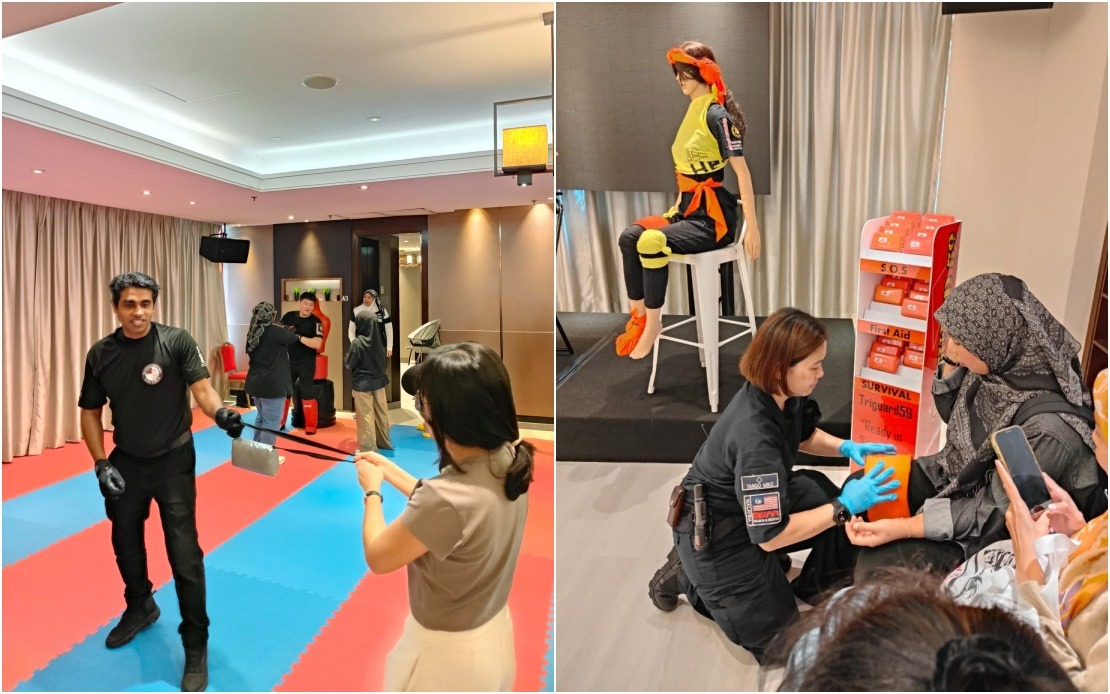
Allianz Malaysia has deepened its commitment to community safety by organising the ninth iteration of a women-focused street crime awareness campaign in partnership with Kelab Marshal Keselamatan Jalan Raya Kuala Lumpur (RSMC), underscoring the insurance firm's sustained investment in corporate social responsibility initiatives addressing personal security across Malaysia. The programme, conducted at Wisma Huazong YTL Hall in Seri Kembangan, Selangor, reached 200 female participants and represented a comprehensive effort to translate safety awareness into actionable knowledge that extends beyond the event itself.
The campaign structure reflected a multifaceted approach to women's security, combining educational seminars with hands-on practical training. Participants aged 16 and above engaged with specialist instructors covering an expansive range of contemporary safety threats, from traditional concerns such as home intrusions and handbag theft to modern urban risks including road-based fraud schemes and carjacking incidents. By addressing both conventional and evolving criminal methodologies, the programme acknowledged that women's safety concerns span the domestic, personal, and vehicular domains simultaneously.
A notable innovation in this year's iteration involved the introduction of dedicated dialogue sessions between participants and RSMC experts. Rather than presenting safety information in a unidirectional lecture format, organisers created structured opportunities for women to voice real-world concerns and receive tailored guidance. This interactive component recognised that generic safety advice holds limited utility unless participants can contextualise principles within their own lived experiences and community environments. The dialogue format also allowed facilitators to surface emerging threats that statistical crime data might overlook.
Self-defence instruction featured prominently alongside awareness training, reflecting acknowledgment that personal safety requires both psychological preparedness and practical physical capability. The inclusion of accident response protocols indicated recognition that ordinary women face threats not only from criminal actors but from routine traffic incidents and emergency situations requiring decisive intervention. This comprehensive framing positioned the campaign as addressing survival competencies rather than merely crime prevention.
Allianz Malaysia's Chief Executive Officer Sean Wang emphasised that programmatic success should not be measured exclusively by direct participant numbers but rather by knowledge dissemination velocity through family and community networks. His observation highlighted an implicit multiplier effect, whereby 200 trained women theoretically influence safety practices among hundreds of additional household members and neighbours. This observation reflects sophisticated understanding of how awareness campaigns achieve systemic cultural change through personal influence rather than mass media messaging alone.
The enthusiasm demonstrated by community leaders to replicate the initiative in their respective neighbourhoods underscored latent demand for structured safety education in Malaysian communities. This grassroots interest suggested that official safety campaigns often struggle to penetrate local contexts, and that bottom-up replication by trusted community figures may prove more effective than centralised dissemination strategies. The phenomenon indicated a genuine appetite for practical, locally-delivered safety training rather than abstract awareness messaging.
RSMC Founder and President Captain K. Balasupramaniam framed street crime awareness fundamentally as an empowerment exercise, distinguishing the initiative from fear-based approaches that simply frighten populations into defensive behaviours. His articulation emphasised that effective safety intervention builds decision-making confidence rather than amplifying anxiety. This philosophical approach aligns with contemporary criminology literature demonstrating that fear-driven campaigns often prove counterproductive, generating hypervigilance without commensurate safety improvements.
The programme's emphasis on creating safety advocates within families and communities reflected understanding that formal institutions possess limited reach for intimate safety conversations. Parents, elder relatives, and respected community members carry greater credibility when discussing personal security with household members than distant government agencies or corporate entities. By training 200 women as informal safety educators, the campaign essentially distributed instructional capacity throughout Selangor's social networks.
For Malaysian policymakers and corporate entities, this partnership model demonstrates sustainable approaches to addressing grassroots safety concerns outside purely governmental frameworks. As street crime and personal security anxieties persist across urban Malaysia, collaborative initiatives between private sector actors and community organisations offer scalable templates for reaching populations that official campaigns may fail to engage effectively. The ninth iteration's continuation signals durability of the partnership and suggests potential for further expansion.
The campaign's comprehensive curriculum addressing home security, vehicular safety, stalking recognition, and emergency protocols indicated sophisticated understanding of how contemporary women navigate multiple threat environments. Rather than addressing singular categories of risk, the initiative acknowledged that modern women simultaneously occupy domestic, professional, and public spaces, each presenting distinct safety challenges requiring differentiated response strategies. This intersectional approach to safety likely enhanced relevance for diverse participant demographics.
Moving forward, the success metrics extending beyond attendance figures suggest emerging recognition that awareness campaigns require evaluation frameworks capturing behavioural change, knowledge retention, and community-level replication rather than merely counting event attendees. This methodological sophistication aligns with international best practices in public health and safety intervention assessment, potentially positioning Malaysian initiatives as evidence-based rather than performative in nature.

