The Pakatan Harapan coalition in Negeri Sembilan is placing its faith in demonstrated governance as the centerpiece of its electoral strategy, with nine Amanah candidates emphasizing what they characterize as tangible achievements by the ruling state administration. This emphasis on substance rather than rhetoric represents a deliberate pivot by the coalition, which has allocated the state's 36 contested seats among its three component parties based on their agreed power-sharing arrangement. Amanah's nine candidates are being positioned as experienced community representatives capable of connecting residents' grievances with government machinery and delivering concrete results.
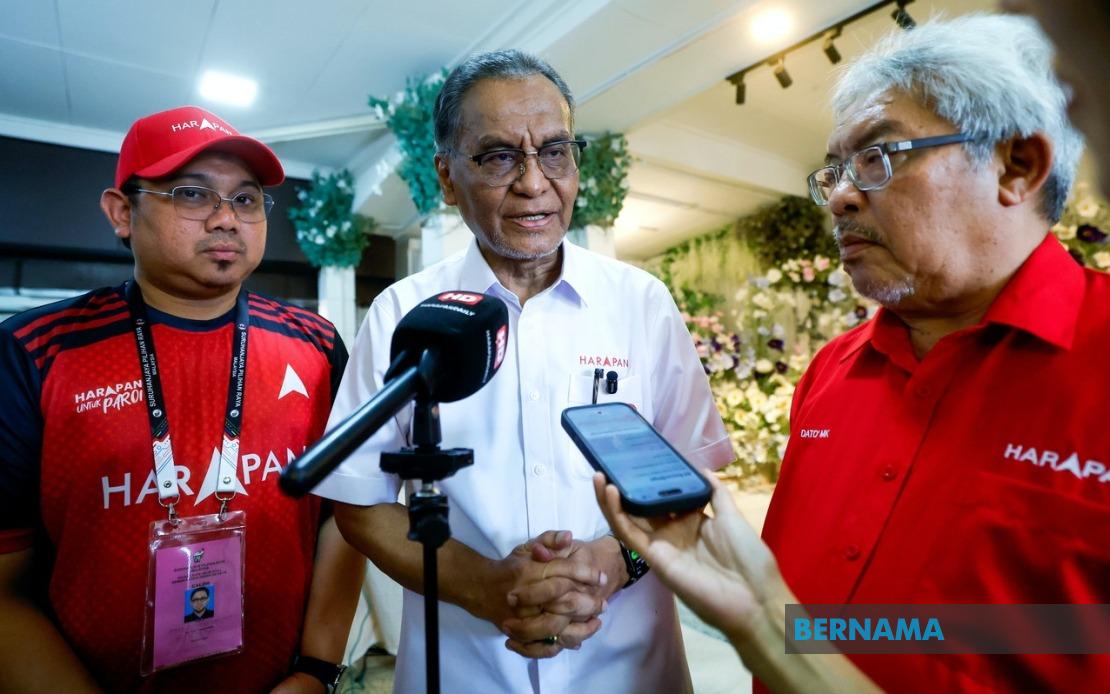
Datuk Seri Dr Dzulkefly Ahmad, Amanah's vice-president, framed the election as fundamentally different from conventional campaigns that rely on volume of messaging. Speaking after a campaign gathering in Seremban, he stressed that voter confidence is earned through demonstrable problem-solving ability and historical commitment to public service rather than through rhetorical flourish. This messaging strategy reflects a broader calculation that in Negeri Sembilan, where the Pakatan Harapan government has governed since 2023, voters may be persuaded to maintain continuity if shown concrete examples of policy implementation and administrative competence.
The seat distribution itself tells the story of how the coalition has negotiated its internal dynamics. Parti Keadilan Rakyat secured the largest allocation with 16 seats, reflecting its status as the coalition's dominant party, while the DAP was assigned 11 seats and Amanah received nine. This arrangement, while transparent, also reveals the relative negotiating positions of each party within Pakatan Harapan's peninsular machinery. For Amanah, whose organizational footprint in Negeri Sembilan is smaller than its counterparts, the nine seats represent a meaningful platform to demonstrate its capacity as a governing partner and potentially strengthen its position for future electoral cycles.
Amanah's campaign methodology incorporates layered community engagement rather than mass rallies. Dzulkefly articulated a strategy centered on small-group discussions, door-to-door canvassing, and social media deployment designed to facilitate two-way communication with voters. This granular approach serves multiple purposes: it allows candidates to understand localized concerns before they become flashpoints, creates opportunities for personal relationship-building with constituents, and generates evidence of responsiveness that can be highlighted in subsequent campaign messaging. Such tactics acknowledge that in an era of declining traditional media consumption, particularly among younger voters, direct contact remains effective for building perceived accessibility.
The Paroi constituency candidacy of Ahmad Shahir Mohd Shah illustrates how individual candidates are localizing the broader coalition message. With more than 65,000 registered voters spread across a population of approximately 140,000, Paroi requires representatives capable of multi-stakeholder coordination. Ahmad Shahir has identified small-trader empowerment as his priority, proposing streamlined licensing procedures and improved business infrastructure through collaboration with local authorities. This specificity—moving beyond generic promises to identify particular economic constituencies and their regulatory obstacles—represents the operational level at which campaign promises either translate into governance action or dissolve into rhetoric.
The incumbent contingent defending their seats provides the coalition with built-in credibility arguments. Datuk Bakri Sawir seeks reelection in Klawang, while seven other Amanah candidates represent a mixture of incumbent and challenger positions across constituencies including Serting, Lenggeng, Senaling, Johol, Kota, Bagan Pinang, and Gemencheh. The presence of sitting representatives enables the coalition to point to specific legislative achievements, constituent services delivered, and infrastructure projects completed during their tenure. This creates a feedback loop: governance record becomes campaign narrative, which if successfully communicated may translate into electoral validation.
Negeri Sembilan's electoral trajectory provides context for understanding current positioning. In 2023's 15th state election, Pakatan Harapan secured 17 seats, establishing its government with a slim majority in the 40-seat assembly. Barisan Nasional captured 14 seats while Perikatan Nasional obtained five, positioning opposition forces as cohesive alternatives should the government stumble. This relatively tight margin means the upcoming election in August offers realistic pickup opportunities for both opposition blocs, particularly if the government's record is perceived as disappointing or if economic conditions deteriorate during the intervening period.
The timing of the election campaign itself carries implications for Southeast Asian political observers. The 16th Negeri Sembilan state election follows Malaysia's federal political realignment, where Pakatan Harapan governs nationally while managing varied configurations of state-level power. Success or failure in Negeri Sembilan carries reverberations for the broader coalition's credibility as a governing force. A strong performance would reinforce narratives about Pakatan Harapan's administrative competence and electoral appeal; conversely, seat losses would trigger internal recriminations about strategy and performance, potentially affecting coalition unity ahead of future federal-level contests.
The Election Commission has scheduled early voting for July 28, with the general poll set for August 1, providing the campaign period with defined temporal boundaries. This compressed timeline means that Amanah's strategy of deep community engagement must be deployed with precision, targeting constituencies where personal connection can shift marginal voters. Social media becomes particularly important in this context, as digital campaigns can operate simultaneously across multiple constituencies while candidate time remains inevitably finite.
The strategic emphasis on governance track record versus opposition promises reflects calculations about voter priorities in this particular electoral moment. Negeri Sembilan, with its mixed urban-rural character and significant Chinese and Indian minority communities alongside Malay-Muslim voters, represents a microcosm of Malaysia's electoral complexity. Pakatan Harapan's decision to anchor its campaign in demonstrable administration rather than aspirational pledging suggests internal research indicating that voters prioritize delivery over rhetoric. Whether this assessment proves accurate will become apparent on August 1, when Negeri Sembilan voters render their judgment on the incumbent government's stewardship.

