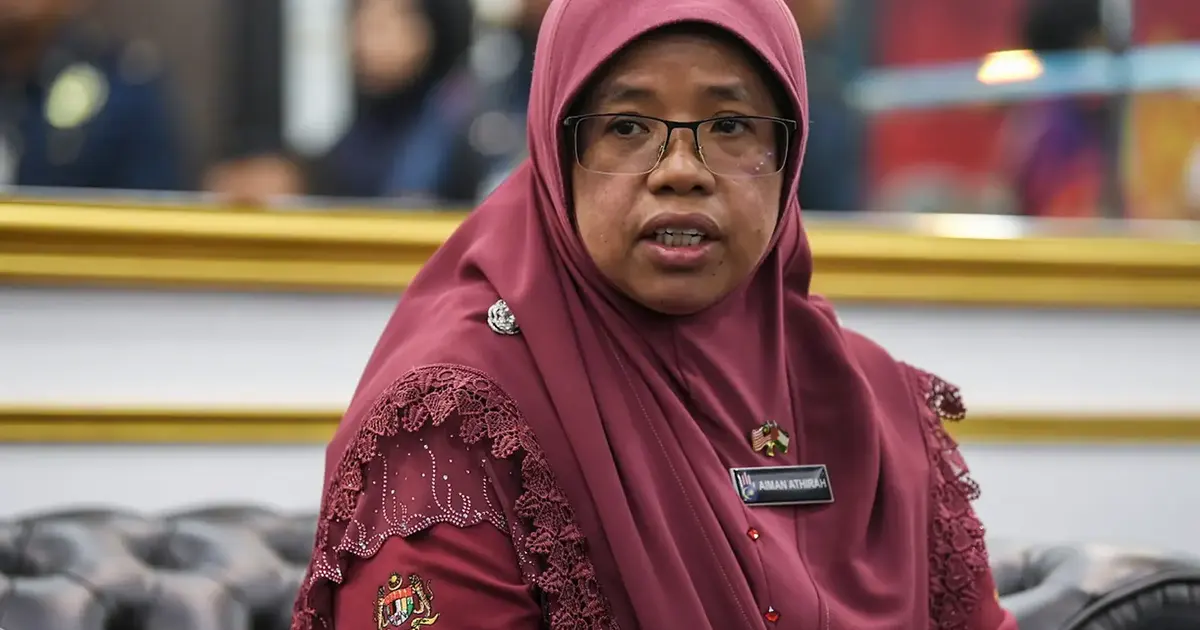
The political temperature has risen significantly as Amanah deputy president Aiman Athirah Sabu has issued a direct challenge to PAS president Hadi Awang, demanding he either produce concrete evidence to support allegations that DAP opposes Islam or take the matter to court. This confrontation underscores the deepening fractures within Malaysia's political coalitions and reflects the ongoing struggle for credibility among parties competing for both Malay and Muslim voter support.
Aiman Athirah's intervention represents a calculated escalation in the rhetoric surrounding Islamic governance and religious policy in Malaysia. By explicitly inviting legal action, she has elevated the discourse from mere political accusations to a level where substantiation becomes legally necessary. This move carries significant weight in Malaysia's political ecosystem, where claims about religious matters carry particular resonance and influence public perception of party credentials.
The PAS president's previous statements characterising DAP as antagonistic towards Islam have become a recurring theme in Malaysian political discourse, particularly as these two parties operate in markedly different ideological spaces. DAP, as a predominantly Chinese-led secular party, and PAS, an explicitly Islamic party, have historically positioned themselves as ideological opposites. However, Aiman Athirah's challenge suggests that such blanket characterisations lack substantive grounding and may constitute defamation under Malaysian law.
The timing of this challenge is notable given the current state of Malaysian coalition politics. Amanah, which split from PAS in 2015 over governance and democracy concerns, has positioned itself as a centrist Islamic party that can bridge communal and ideological divides. By calling out unfounded accusations against a political rival, Amanah seeks to establish itself as a more principled, evidence-based alternative to the more combative rhetoric emanating from PAS leadership.
From a constitutional standpoint, Malaysia's legal framework around defamation and the Sedition Act provides pathways for pursuing such claims, though the threshold for proving intent and malice can be complex. By inviting Hadi to use these mechanisms rather than relying on political rhetoric, Aiman Athirah is essentially questioning whether PAS leadership is confident enough in its assertions to defend them in a court of law. This distinction between political claims and legally defensible statements carries important implications for how Malaysian political discourse operates.
The broader context involves ongoing debates about religious authority in Malaysian governance. PAS has consistently leveraged its role as guardian of Islamic interests to maintain its political base, particularly in rural and semi-urban areas. Accusations that secular or non-Muslim-led parties undermine Islam have served as powerful mobilising narratives. Aiman Athirah's challenge attempts to puncture this rhetorical strategy by forcing specificity and evidence rather than allowing generalised claims to circulate unchallenged.
For DAP specifically, while the party has often found itself at the receiving end of such accusations, this indirect defence from Amanah reflects evolving coalition dynamics. DAP's participation in various state governments alongside PAN and Amanah members has demonstrated that practical governance can transcend ideological positioning. The challenge implicit in Aiman Athirah's statement is that Malaysia's political maturity requires substantive critique rather than reflexive sectarianism.
The stakes of this confrontation extend beyond the three parties directly involved. Malaysian voters, particularly those in urban centres and younger demographics, are increasingly demanding evidence-based political discourse rather than rhetorical posturing. Aiman Athirah's intervention resonates with demands for greater accountability and transparency in political claims. This reflects a gradual but discernible shift in how sections of the electorate evaluate political actors.
Regionally, Malaysia's religious and political dynamics are watched closely by other Southeast Asian democracies grappling with similar tensions between secular governance, religious authority, and multiethnic pluralism. The way Malaysian political leaders handle such confrontations—whether through courts, dialogue, or continued rhetorical escalation—influences perceptions of institutional strength and democratic maturity across the region.
The practical likelihood of Hadi pursuing legal action remains uncertain. Litigation carries political risks, including the possibility of unfavourable judgments that could undermine PAS's narrative authority. Conversely, ignoring the challenge allows it to stand as an implicit admission of lacking substantive evidence. This dilemma encapsulates the challenge facing parties that rely heavily on rhetorical framing rather than policy differentiation.
Amanah's positioning as a party willing to challenge both Hadi's PAS and critique the broader political ecosystem reflects its strategic identity as a reform-oriented Islamic force. By demanding standards of evidence and legal accountability, Aiman Athirah advances an argument that Islamic parties need not rely on unsubstantiated claims to maintain credibility with constituents. This philosophy, if embraced more broadly, could reshape Malaysian political discourse toward greater substantiveness and reduced sectarian temperature.
Moving forward, the response from PAS leadership will likely determine whether this challenge catalyses meaningful change in political rhetoric or simply becomes another episode in Malaysia's increasingly polarised political theatre. For Malaysian voters observing these dynamics, the exchange serves as a referendum on what standard of political conduct they are willing to tolerate from their elected representatives.

