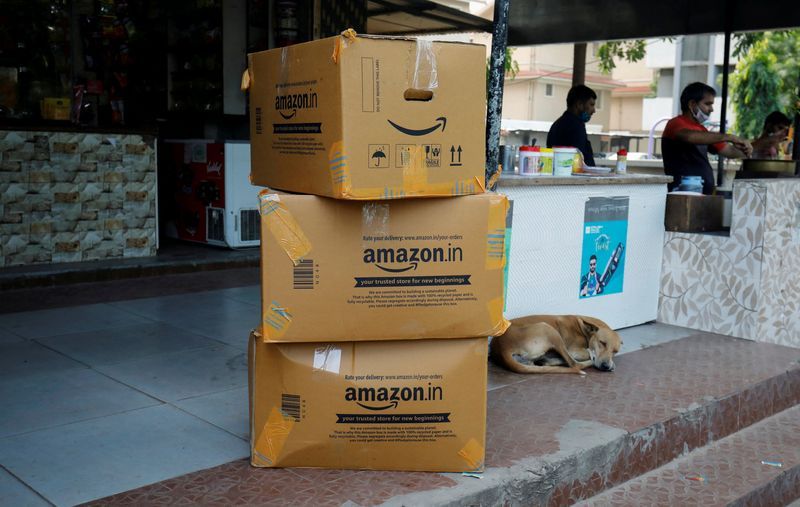
Amazon has committed to taking "appropriate action" against one of its third-party delivery partners in India following the conclusion of a police investigation into a deadly warehouse fire that claimed two lives last month. The e-commerce giant said on Thursday that it would proceed with measures against the partner in line with its established policies once local authorities complete their inquiry. Simultaneously, Amazon has initiated its own internal investigation into the incident, according to sources familiar with the matter who declined to be publicly identified due to confidentiality restrictions.
The fire occurred on June 5 at a facility operated by M&M Logistics Solutions in Uttarakhand, a state in northern India. Court documents and police records reviewed by international media reveal a catalogue of safety failures at the location, including the absence of valid fire safety certification, non-functional fire alarm systems, missing smoke detection equipment, and inadequate emergency exit provisions. These shortcomings point to systemic lapses in workplace safety standards that Amazon's own vendor code explicitly prohibits.
M&M Logistics Solutions operates a substantial logistics network for the e-commerce platform across northern India, managing 45 delivery centres spread across 21 cities according to company disclosures from 2023. This scale underscores how deeply Amazon's delivery operations depend on third-party contractors throughout the region, and raises questions about the robustness of safety oversight mechanisms across its sprawling supply chain. The company's reliance on external partners to handle last-mile delivery has become a defining feature of its Indian operations, yet this structure creates accountability challenges when failures occur.
Amazon's internal supplier code of conduct explicitly mandates that vendors maintain safe working environments free from hazardous conditions, including uncontrolled fire risks. The code provides explicit remedies for violations, permitting Amazon to suspend or terminate contracts with third-party operators found to have breached safety requirements. This formal framework exists on paper, but the incident raises uncomfortable questions about how consistently these standards are monitored and enforced across the sprawling network of delivery partners operating under Amazon's banner.
The tragedy has drawn sharp criticism from worker advocacy groups. The Amazon India Workers Union has demanded that an independent judicial investigation be launched into the deaths, characterizing the incident as symptomatic of "grave failure of workplace safety and protection of human dignity." Such calls reflect broader concerns within labour circles about the conditions faced by workers in India's expanding e-commerce and logistics sectors, where rapid growth has sometimes outpaced regulatory oversight and safety compliance.
This is not Amazon's first encounter with labour-related controversies in India. In 2024, the National Human Rights Commission scrutinized the company's practices after workers at a facility near New Delhi reported deplorable conditions during an extreme heatwave, with allegations of violations concerning labour law compliance. The state government subsequently initiated legal proceedings under Indian labour statutes following the commission's involvement. These recurring issues suggest structural challenges within Amazon's Indian operations that go beyond isolated incidents.
Amazon has consistently stated that worker safety and wellbeing represent its highest priorities, yet the accumulation of documented incidents creates tension between such rhetorical commitments and operational realities. The company's stated position reflects standard corporate messaging but does little to address the systemic pressures that may incentivize cost-cutting measures that compromise safety standards among its contractor network.
For Malaysian readers and regional observers, this situation illustrates the complex regulatory and accountability landscape that multinational e-commerce platforms navigate across South Asia. As Amazon and competitors like Flipkart expand their footprints throughout Southeast Asia and the Indian subcontinent, the experiences in India's market provide a window into how these companies manage third-party relationships and respond when safety incidents occur. Malaysia's own growing e-commerce sector and the proliferation of delivery platforms suggests similar tensions may emerge locally, making the governance structures and enforcement mechanisms that emerge from India's experience instructive.
The incident also highlights the importance of strong regulatory frameworks and independent oversight in rapidly expanding logistics industries. India's approach—involving police investigations, labour commission reviews, and human rights scrutiny—contrasts with varying levels of institutional capacity across different Southeast Asian economies. As these platforms scale operations regionally, the question of whether existing regulatory structures can keep pace with growth remains pressing.
Amazon's commitment to take action once investigations conclude will be closely monitored by labour advocates, regulators, and workers' organizations throughout the region. The severity of the penalty—whether amounting to token gestures or material restructuring of safety practices—will signal whether multinational platforms view worker safety as a genuine operational imperative or merely a reputational concern. For delivery workers across South and Southeast Asia, this outcome carries implications extending far beyond a single incident in Uttarakhand.

