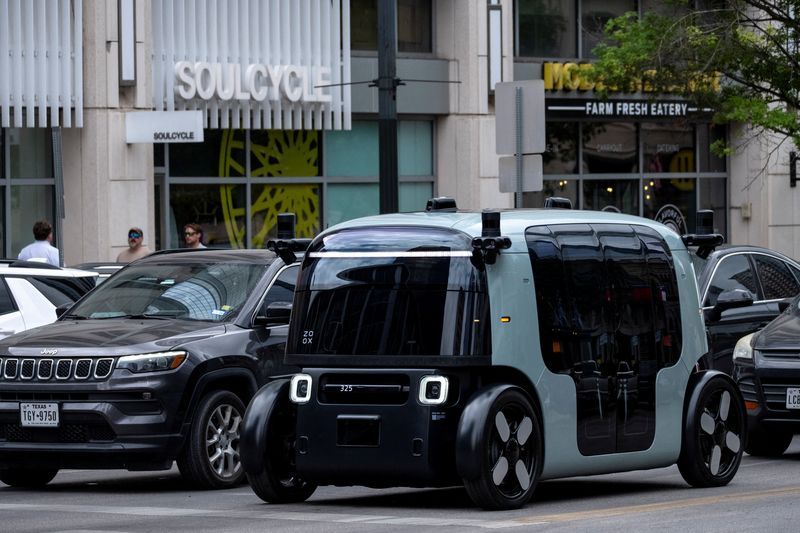
Amazon's autonomous vehicle division Zoox has crossed a significant threshold by launching its first paid robotaxi service in Las Vegas this week, following regulatory clearance from U.S. safety authorities. The move represents a crucial inflection point in the race to commercialise autonomous ride-hailing globally, with implications extending far beyond the Nevada desert as manufacturers worldwide compete to establish market dominance in self-driving transportation.
The Las Vegas rollout follows months of free passenger testing across multiple American cities. Zoox has been operating trial services in Las Vegas, San Francisco, Austin and Miami, gathering real-world data on how autonomous vehicles perform under varied traffic conditions, weather patterns and passenger interactions. This testing phase has been critical to refining the company's operational protocols and safety systems before charging customers for journeys.
Zoox's vehicles represent a distinctive design philosophy compared to competitors. The electric carriages feature two rows of inward-facing seats, creating an unconventional cabin layout that prioritises passenger comfort and interaction. The company has positioned this comfort-focused positioning as a premium offering, pricing its Las Vegas fares in line with "comfort" tier services from traditional ride-hailing platforms, which typically charge 20 to 40 percent above standard rates while providing newer and more spacious vehicles.
The regulatory pathway that enabled this launch deserves particular attention. Zoox became the first fully autonomous ride-hailing operator to receive an exemption from the National Highway Traffic Safety Administration allowing commercial deployment without human safety drivers. This distinction matters significantly because most robotaxi competitors, including Tesla and Waymo in their earlier phases, either relied on conventional vehicle platforms adapted for autonomy or maintained human oversight during initial commercial phases. Zoox's approval validates an approach of engineering autonomous capabilities into purpose-built vehicles from conception.
However, the regulatory approval carries meaningful constraints. The exemption permits Zoox to deploy up to 2,500 vehicles during each of the next two years, creating a defined ceiling on how rapidly the company can scale operations during this critical commercialisation window. Additionally, NHTSA imposed enhanced reporting requirements obligating Zoox to disclose detailed information regarding crashes, emergency responses and any instances of vehicles stopping inappropriately on roadways. These conditions reflect regulators' cautious approach to autonomous vehicle deployment despite recognising Zoox's safety standards as equivalent to conventional vehicles.
Zoox's pricing structure incorporates transparency mechanisms increasingly expected by consumers navigating autonomous services. Fares combine base charges with time and distance calculations optimised for routing efficiency. Critically, the company has committed to preventing surge pricing based on route deviations, meaning passengers will not incur penalties if the autonomous system selects a longer path than initially planned. Airport trips and other destination-specific charges are disclosed upfront, establishing clear expectations before trips commence.
The Las Vegas launch intensifies a competitive environment that has crystallised around autonomous ride-hailing in recent months. Alphabet's Waymo already operates paid driverless services spanning multiple metropolitan areas, leveraging extensive testing accumulated through years of development. Tesla has begun rolling out autonomous ride-hailing capabilities, though with different technological approaches and regulatory frameworks. Each competitor pursues distinct strategies regarding vehicle design, pricing, geographic focus and technology architecture, yet all compete for the same fundamental prize: becoming the dominant autonomous transportation platform in North America and potentially globally.
For Southeast Asian observers, this American competition carries indirect but meaningful implications. The regulatory frameworks, technical standards and market dynamics developing in the United States typically influence how Asian markets eventually approach autonomous vehicle regulation. Malaysian planners monitoring these developments recognise that the decisions made by NHTSA, state regulators and companies like Zoox today will likely inform policies in emerging markets within five to ten years. The success or failure of these American rollouts will provide crucial data regarding consumer acceptance, safety performance, insurance mechanisms and emergency response protocols.
Persistent safety concerns continue shadowing the industry's expansion. Zoox has issued multiple software recalls over the past two years, most recently in July when one vehicle failed to detect heavy smoke at an accident scene, a potentially critical lapse in emergency detection capabilities. These incidents underscore that achieving regulatory approval does not eliminate technical vulnerabilities, and that autonomous systems continue encountering edge cases and exceptional circumstances that designers had not fully anticipated. The expanded Las Vegas deployment will expose Zoox's systems to substantially more diverse real-world scenarios than controlled testing environments could replicate.
The interaction between autonomous vehicles and emergency responders represents another underexplored challenge. Robotaxis must reliably detect emergency scenes, respond to traffic control by first responders, and coordinate with human-driven vehicles and pedestrians during chaotic situations. Zoox's July recall directly addressed this concern, indicating the company recognises these capabilities require continuous refinement. As autonomous vehicle deployments expand across multiple cities, the cumulative demands on emergency response systems and the protocols governing interactions between autonomous and human traffic participants will intensify.
Zoox's commercial launch also signals Amazon's strategic commitment to autonomous mobility as a core business segment. For a company already dominant in e-commerce and cloud computing, robotaxi services represent expansion into urban logistics and passenger transportation. This diversification suggests Amazon executives perceive autonomous ride-hailing as a significant long-term opportunity rather than an experimental venture, justifying continued investment despite the technical complexity and regulatory uncertainty characterising the sector.
The coming months will prove crucial for establishing whether Zoox can deliver consistent, reliable service at commercial scale. Consumer adoption, operational efficiency, accident rates and regulatory compliance during the Las Vegas rollout will substantially influence whether the company maintains momentum toward expanding to other cities and scaling its vehicle fleet. Success here would validate the approach of designing autonomous systems from the ground up within purpose-built vehicles rather than retrofitting existing platforms.

