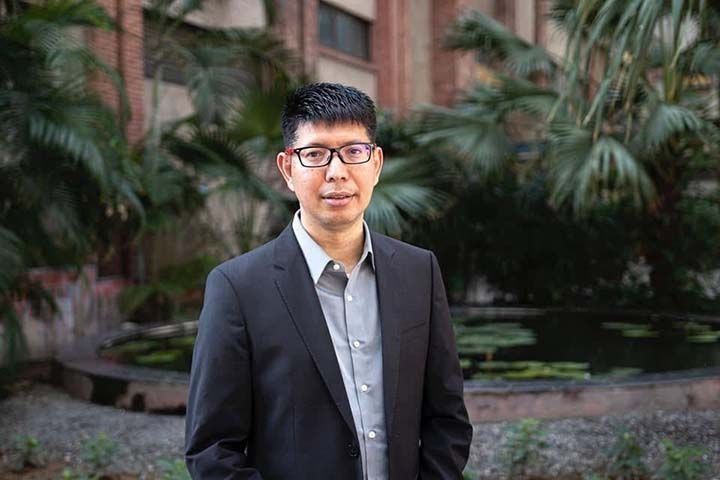
The detention of Min Zin, a prominent American analyst focused on Myanmar affairs, in the Chinese city of Kunming has triggered diplomatic tensions and renewed scrutiny of Beijing's treatment of foreign researchers working on sensitive geopolitical issues in Southeast Asia. The Institute for Strategy and Policy-Myanmar, the think tank he founded, revealed this week that Zin had travelled to Kunming solely to participate in an academic workshop when Chinese authorities apprehended him on June 3. The institute's disclosure, made on June 17, represents the first detailed explanation from those close to the scholar about the circumstances surrounding his arrest, which China's foreign ministry had disclosed days earlier.
Beijing has accused Zin of engaging in espionage activities and posing a threat to national security, allegations that have drawn swift rebuttals from both his institution and the United States government. The think tank issued a forceful statement rejecting what it characterised as "groundless allegations," while simultaneously calling for Zin's unconditional and immediate release. The American State Department has similarly dismissed the espionage claims, with a spokesperson confirming that U.S. consular officers have already visited the detained scholar and that Washington is actively coordinating with Chinese officials to provide appropriate consular support. Despite these interventions, China's foreign ministry has maintained its position, indicating through a statement to news agencies that the case will be handled in accordance with Chinese law, a formulation that typically suggests a lengthy legal process.
The timing of Zin's detention carries particular significance within the context of Myanmar's political turmoil and China's strategic interests in the region. His apprehension occurred roughly three weeks before Myanmar's military leader Min Aung Hlaing, who now holds the title of president, was scheduled to make a state visit to China. This proximity in timing has not gone unnoticed by observers tracking the relationship between Beijing and Naypyidaw, as it raises questions about whether the detention might be connected to broader diplomatic manoeuvres or strategic calculations. China maintains exceptionally close ties with Myanmar's military establishment, having supported the armed forces both diplomatically and through military sales and economic investments since the coup that toppled Aung San Suu Kyi's democratically elected government in February 2021.
The 2021 coup proved to be a defining moment for Myanmar and for Zin's career trajectory. The military takeover sparked immediate and sustained public resistance, with mass demonstrations erupting across the country in the immediate aftermath. What began as peaceful street protests gradually evolved into a complex armed insurgency, as newly organised pro-democracy militia groups joined forces with long-established ethnic armed organisations that had been conducting their own campaigns against central authority for decades. This combination of forces has since posed the most serious military challenge to Myanmar's junta in recent memory, fundamentally reshaping the country's political landscape and creating a humanitarian crisis affecting millions of civilians caught in the crossfire.
Zin's background as both an intellectual and a participant in Myanmar's earlier democracy movement gives his current detention added symbolic weight. He was a student activist during the 1988 pro-democracy uprising, a watershed moment in Myanmar's modern history when the military brutally suppressed mass protests, killing hundreds and arresting thousands. Decades later, he pursued advanced education in political science at the University of California, Berkeley, equipping himself with both academic credentials and international experience. This combination of lived experience during Myanmar's previous struggle for democracy and formal training in policy analysis made him particularly well-suited to founding and leading the Institute for Strategy and Policy-Myanmar.
The Institute for Strategy and Policy-Myanmar was initially established as a domestic research organisation operating within Myanmar itself, but the trajectory of the country following the 2021 coup forced a fundamental reorganisation. In the aftermath of the military takeover, the think tank relocated its operations overseas, a decision that reflected the increasingly difficult operating environment for independent research and commentary on Myanmar's political situation. From its new overseas base, the institute has maintained a research agenda centred on documenting and analysing the ongoing conflict, examining the prospects for political transition, assessing the severe economic deterioration affecting ordinary Burmese citizens, and studying the complex relationship between Myanmar and China, a relationship that has become even more consequential given Beijing's close alignment with the junta.
The detention raises troubling questions about the operating space available to independent researchers and think tanks working on Myanmar and broader Southeast Asian issues. Zin's institute has stressed in its statement that it is vital for academic and research organisations to be able to conduct their work without facing intimidation or threats. This principle extends beyond Zin's individual case and touches on broader concerns about intellectual freedom and the ability of scholars and analysts to engage in rigorous, objective examination of political and strategic questions in the region. The fact that a respected academic engaged in legitimate scholarly activity can be detained on espionage charges highlights the risks faced by those who research sensitive geopolitical topics.
The incident also underscores the growing complexities facing Western scholars and researchers working on contemporary Myanmar issues. Academic institutions across North America and Europe have developed substantial research programmes examining Myanmar's political transition, conflict dynamics, and regional implications, but researchers increasingly must navigate challenging legal and security environments when conducting fieldwork or attending international conferences. The detention of a prominent figure like Zin, despite his credentials and institutional affiliation, sends a signal that researchers working on Myanmar affairs face heightened risks when travelling to China, even for routine academic purposes.
Looking forward, the case will likely test the willingness of Beijing and Washington to maintain working relationships around sensitive regional issues despite underlying tensions. The State Department's continued engagement with Chinese officials suggests that the U.S. government views this as a case requiring diplomatic pressure and negotiation rather than public confrontation, at least in the initial phases. However, the longer Zin remains detained without charges being formally laid or trial proceedings beginning, the more likely it becomes that the case will attract broader attention and advocacy efforts from academic associations and human rights organisations, potentially complicating the diplomatic resolution that both sides might prefer.