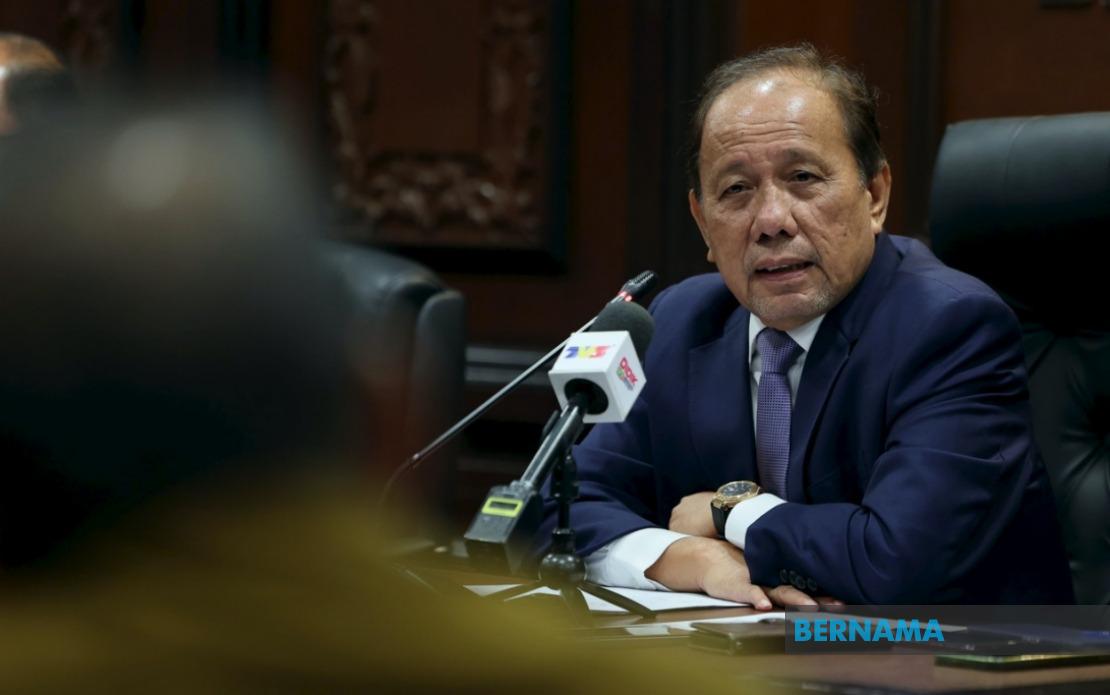
A spotlight has turned on the financial accountability of Negeri Sembilan's former political leadership, with Menteri Besar Datuk Ismail Lasim confirming that only one ex-Pakatan Harapan state assemblyman has completely repaid operational allocations distributed before the state assembly's June 5 dissolution. That figure is Datuk Seri Aminuddin Harun, the former menteri besar under the previous administration, whose swift and complete repayment stands in marked contrast to the partial returns made by his former colleagues.
Ismail disclosed in Seremban on August 27 that while several former PH state representatives, including coordinators from the Paroi and Labu constituencies, have initiated repayment processes since June 30, none besides Aminuddin has settled their outstanding obligations in their entirety. The distinction is significant in Malaysian politics, where questions about the management of public funds often carry symbolic weight and reflect on the integrity of political figures. The menteri besar's observation underscores broader governance concerns about how transitional periods between administrations are managed, particularly when substantial sums must be accounted for rapidly.
The partial refunds that have materialized so far raise questions about resource utilization during the final months before the political transition. Ismail noted that some former assemblymen argue they have already expended portions of their allocations on constituent welfare initiatives and other approved purposes, rendering complete repayment impractical or impossible. This explanation, while plausible, has prompted the state administration to demand documentary evidence. The menteri besar made clear that those whose repayments remain incomplete must provide detailed expenditure records and written justifications to the state government, establishing a formal accountability mechanism.
The administrative complexity underlying these repayments cannot be underestimated. Allocations varied significantly across different state constituencies, meaning no standardized repayment amount applies uniformly across all former assemblymen. The Menteri Besar's Office has undertaken a comprehensive audit of records, comparing the initial sums disbursed to each representative against what has since been returned. This review process is essential not only for establishing accurate figures but also for ensuring consistency and fairness in how outstanding amounts are eventually demanded and settled. Ismail emphasized that individual demand letters, when issued, will reflect these constituency-specific calculations rather than applying a blanket approach.
The completion of this review remains ongoing, with no definitive timeline provided for when formal demands will be issued to defaulting former assemblymen. The state administration's cautious approach suggests recognition that some parties may contest the final figures, particularly if disputes arise over which expenditures qualify as legitimate uses of allocated funds. This institutional delay, while perhaps frustrating to those seeking swift closure, may ultimately protect the state government from protracted disputes that could prove both administratively burdensome and politically contentious.
An important distinction emerged regarding the tenure of former state executive councillors, a category that included Aminuddin. These officials retained their ex-officio status until July 31, granting them continuing entitlement to utilize allocations throughout that month despite the assembly's dissolution on June 5. This provision means that demands for complete repayment technically apply only to funds ostensibly unspent after July ended, a nuance that may have contributed to Aminuddin's apparent ability to settle his accounts comprehensively. The timing of his position's formal conclusion created a somewhat extended window compared to ordinary assemblymen, potentially facilitating full accounting and repayment.
Defense of the earlier spending emerged from Nilai assemblyman J. Arul Kumar, the Negeri Sembilan DAP chairman, who characterized all pre-dissolution disbursements as legitimate public welfare expenditures rather than partisan political activity. Kumar asserted that his party's representatives had forwarded all unspent balances to the Menteri Besar's Office before July 10, accompanied by detailed financial reports itemizing how money was deployed at the constituency level. This account, if accurate and corroborated by documentation, would suggest that at least the DAP contingent operated with reasonable fiscal discipline during the transition period, distinguishing their conduct from any assemblymen whose records may prove less transparent.
The episode reflects peculiar challenges that arise when political administrations change with limited notice or planning. Unlike orderly transitions where new governments assume office on predetermined dates, the sudden dissolution created compressed timeframes for accounting and settlement. The allocation system itself—whereby state representatives receive funds to distribute at their discretion for local development and constituent services—inherently creates tracking complications, particularly when political circumstances force rapid transitions. Without robust documentation from the outset, disputes over expenditure legitimacy become nearly inevitable.
For Malaysian governance more broadly, the Negeri Sembilan situation illustrates persistent questions about how public funds administered through representative channels are ultimately accounted for when political compositions shift. The reliance on individual assemblymen to maintain and produce expenditure records, rather than more centralized tracking mechanisms, creates opportunities for genuine confusion about what occurred and why. Moving forward, state administrations may benefit from implementing stricter real-time accounting protocols that reduce post-transition uncertainty and disputes. The contrast between Aminuddin's complete repayment and others' partial returns suggests that both political will and organizational capacity vary substantially among former leaders, with potential implications for public perceptions of their respective integrity and competence during their final months in office.

