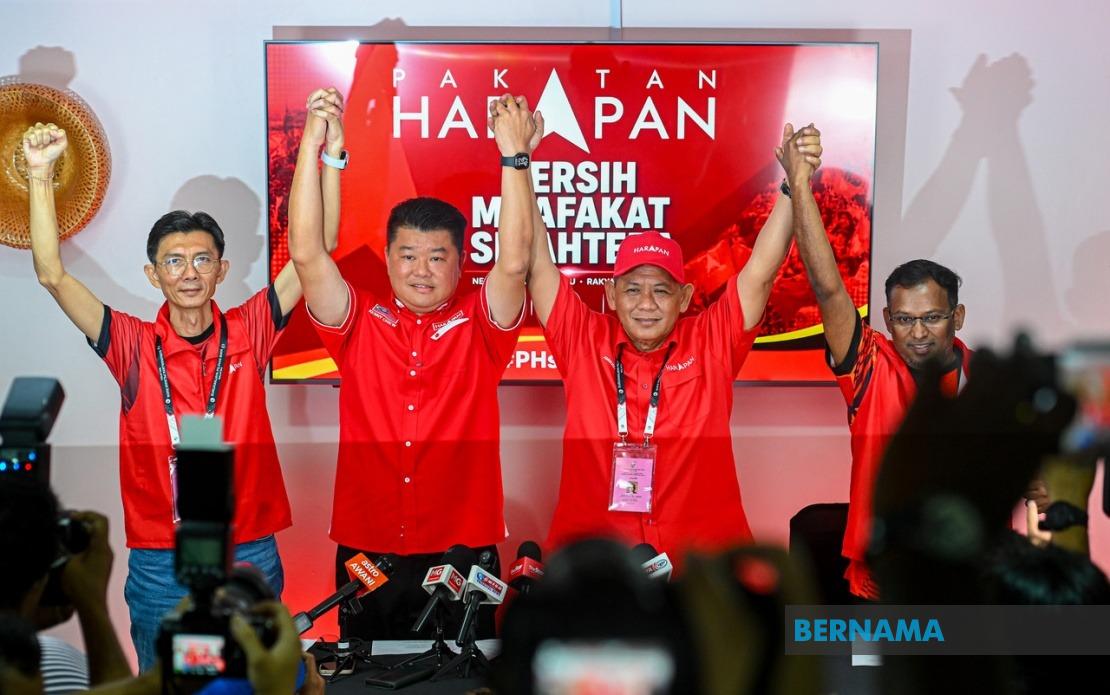
Negeri Sembilan's Pakatan Harapan leadership is projecting unity ahead of the state election, with the coalition's top figure in the state publicly dismissing talk of discord among senior figures and campaign organisations. Datuk Seri Aminuddin Harun, who chairs PH in Negeri Sembilan and leads the Port Dickson PKR division, moved swiftly to address speculation that had circulated on social media regarding potential tensions within the alliance structure.
The menteri besar framed the controversy around the selection of the Chuah incumbent candidate as an internal matter that has been satisfactorily resolved. Datuk Yew Boon Lye's re-nomination for the seat had triggered discussion about the role of Port Dickson PKR deputy division chief Datuk Kenny Chiew Chi Kin, whose own candidacy aspirations appeared to have created friction within party circles. By publicly highlighting Chiew's commitment to the broader coalition effort, Aminuddin sought to position the resolution as evidence of party discipline and renewed focus on collective victory.
The timing of these reassurances carries particular weight given the competitive nature of the electoral contest. Across the five state constituencies nestled within the Port Dickson parliamentary seat—Chuah, Lukut, Sri Tanjung, Bagan Pinang, and Linggi—PH is mounting an ambitious campaign to consolidate representation. In the 2023 state election, Yew secured the Chuah seat with a commanding 6,298-vote majority over Perikatan Nasional candidate Tang Jay Son, establishing a strong baseline for PH's efforts. However, the landscape has shifted somewhat, as the incumbent now faces a challenge from Barisan Nasional's Pau Jeou Ching, indicating that complacency could prove costly.
Aminuddin's emphasis on internal harmony reflects broader strategic calculations in Malaysian coalition politics. When questions emerge about candidate selection and the treatment of ambitious party members, they can quickly metastasise into more serious fractures affecting voter confidence and volunteer mobilisation. By fronting the issue directly at a press conference in Port Dickson, the menteri besar attempted to frame the narrative around party unity and the subordination of individual ambitions to collective objectives. This represents a standard playbook in Malaysian political management, where public acknowledgement and swift resolution are preferred to allowing speculation to fester.
The assertion that opponents deliberately engineered the controversy to damage PH's standing suggests the coalition views itself as operating in a competitive information environment where narratives can significantly influence electoral outcomes. This framing—blaming external actors for amplifying internal matters—simultaneously addresses the original complaint while deflecting responsibility away from party processes themselves. Whether voters accept this characterisation may depend significantly on their existing orientations toward the various coalitions contesting the election.
Chiew's public pledge of support carries symbolic importance beyond mere campaign logistics. As deputy division chief, his endorsement of the ticket underscores that the party's lower and mid-level leadership structures remain operational and committed despite the earlier tensions. This is particularly relevant for volunteer mobilisation and grassroots campaign activities, where deputy-level figures often play crucial coordinating roles. The explicit mention of Chiew's hard work in strengthening the division, despite his exclusion from the candidate slate, seeks to reframe disappointment as honourable sacrifice in service of larger party interests.
Aminuddin himself is competing for the Linggi seat, positioning him directly at the frontline of PH's ambitions in the region. His personal electoral fortunes are therefore intertwined with the broader performance of the five-seat cluster, creating obvious incentives for him to project confidence and unity. Yet this same alignment also gives his public statements particular credibility with party members and supporters who understand the menteri besar's personal stake in successful campaign execution.
The electoral calendar remains compressed, with early voting scheduled for July 28 and general polling on August 1. This narrow window means that any remaining tensions could prove difficult to fully dissipate before voters cast their ballots. The coalition has limited time to convert reassurances about internal harmony into genuine momentum on the ground. Whether campaign volunteers, party members, and ultimately voters find Aminuddin's dismissals convincing will likely become apparent through the response rates to campaign events and the sophistication of ground-level organising across the five constituencies.
The Port Dickson cluster represents a strategic microcosm of broader coalition dynamics in Negeri Sembilan. The handling of this candidate selection matter and its aftermath may offer early signals about PH's organisational health and conflict resolution capabilities as the party enters what promises to be a testing period for coalition governance across Malaysia. The ability to move past internal disagreements without allowing them to fester or metastasise into broader fractures will influence not only results in these five constituencies but potentially perceptions of PH's fitness to govern at state level more broadly.

