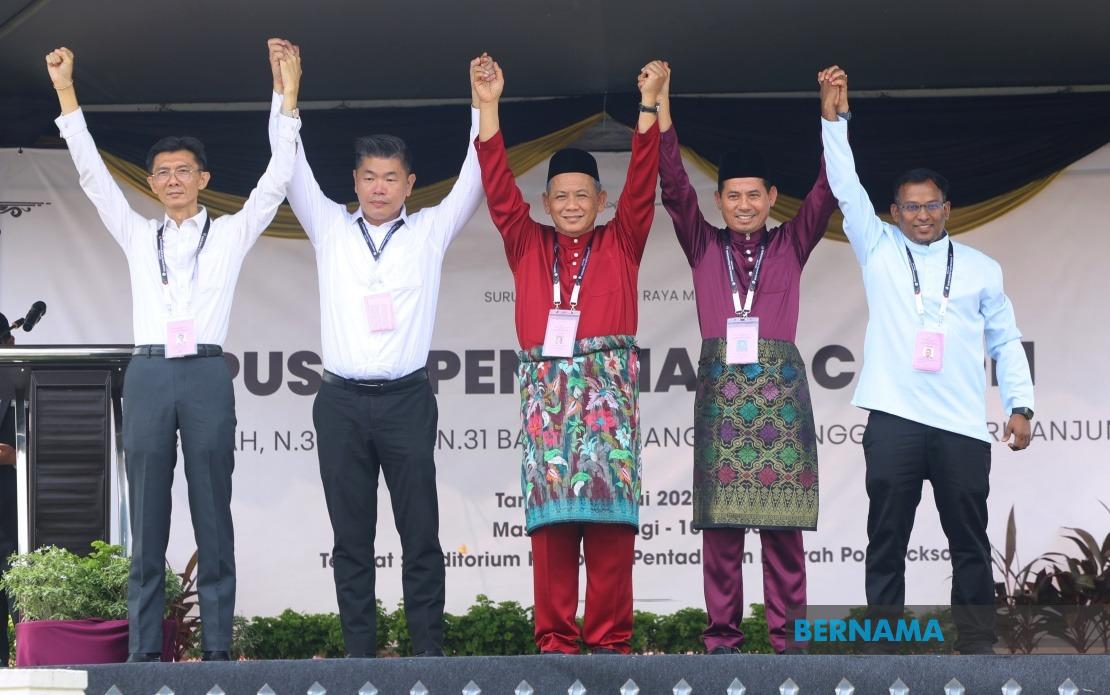
Negeri Sembilan Menteri Besar Datuk Seri Aminuddin Harun is banking on an ambitious infrastructure agenda to challenge deeply entrenched opposition in a traditionally hostile electoral landscape. Speaking on July 18 in Port Dickson after nomination day, he unveiled plans for a strategic port development coupled with a new industrial estate in the Linggi state constituency, initiatives he frames as keystones of broader economic revitalisation for the area. The vision reflects his calculation that voters in this BN stronghold may be receptive to transformative projects that promise tangible job creation and commercial opportunity.
As Negeri Sembilan's Pakatan Harapan chairman, Aminuddin framed the twin proposals as integral components of a comprehensive infrastructure strategy designed to reshape the constituency's economic fortunes. Such development projects, particularly maritime infrastructure and industrial clustering, have long been identified as catalysts for regional growth across Malaysia, suggesting that the PH leadership sees Linggi as a space where transformative investment might resonate with constituents. The emphasis on port facilities is particularly noteworthy given Port Dickson's existing maritime infrastructure, implying that planned enhancements could cement the district's position as a regional trade and logistics hub.
Aminduddin's decision to personally champion this initiative and present it to party leadership underscores how individual state leaders are deploying constituency-specific development pledges as campaign tools. His willingness to absorb the political risk of contesting what is widely recognised as an entrenched BN bastion suggests calculation that a sufficiently compelling economic case might crack conventional voting patterns. This approach mirrors broader PH strategy of focusing on concrete development promises rather than reliance solely on national political narratives, a distinction that may appeal to voters prioritising local economic advancement over federal-level political positioning.
The electoral contest itself presents a formidable challenge to PH's ambitions in the region. Incumbent Datuk Mohd Faizal Ramli represents the continuity and incumbent advantage that BN typically leverages in constituencies considered part of its traditional support base. A third challenger, Datuk Zamri Md Said of Bersatu, complicates the race further by fragmenting the broader opposition vote, a dynamic that historically has benefited BN in Malaysian electoral contests. For Aminuddin, success would require not merely enthusiasm among PH supporters but significant swing voting from those traditionally loyal to BN, a task that necessitates offering something qualitatively different from standard political rhetoric.
The timing of the August 1 polling date and the two-week campaign window means momentum and message discipline will determine outcomes. Aminuddin's explicit appeal for a rational electoral choice and his hopeful framing of development possibilities suggest a campaign strategy rooted in forward-looking economic optimism rather than retrospective criticism of incumbent governance. This positioning may prove strategically advantageous if local concerns centre on economic opportunity and infrastructure gaps rather than on broader governance or political scandals.
Mohd Faizal's own statement acknowledging that BN cannot take Linggi for granted even within a stronghold indicates internal awareness of electoral vulnerability, particularly if anti-incumbency sentiment has accumulated over multiple election cycles. His emphasis on conducting a campaign free from excessive provocation and baseless allegations suggests concern that negative campaigning might energise opposition voters, a particular concern in constituencies where engagement levels traditionally remain moderate. The incumbent's careful framing implies recognition that defending BN's hold on Linggi requires both defensive consolidation of existing support and successful neutralisation of PH's development narrative.
For Malaysian observers and regional analysts, the Linggi contest exemplifies how state-level elections increasingly turn on constituency-specific infrastructure promises rather than broader ideological positioning. The port and industrial estate proposal taps into genuine infrastructure gaps across many Peninsular Malaysian constituencies, where communities perceive themselves as economically marginalised relative to more developed urban centres. Should PH's investment pledge resonate with voters, it could signal broader willingness among constituencies previously considered BN strongholds to engage with alternative political offerings.
The 16th Negeri Sembilan state election encompasses broader competitive dynamics that extend beyond any single constituency. However, Linggi's status as a flagship BN holding makes it symbolically significant; if PH can construct a convincing victory narrative here, it would demonstrate capacity to erode coalition support in previously secure terrain. Conversely, BN retention of Linggi despite direct challenge from a sitting Menteri Besar would reinforce perceptions of institutional entrenchment in state politics. The constituency thus functions as a microcosm of broader Malaysian electoral tensions between establishment continuity and challengers offering developmental alternatives.
Aminduddin's personal stake in this contest, combined with his willingness to advance specific development proposals, reflects evolving Malaysian campaign strategies that increasingly emphasise deliverable infrastructure and economic projects over abstract political messaging. The approach acknowledges voter sophistication in evaluating whether political leaders can genuinely translate electoral mandates into concrete improvements in living standards and economic opportunity. As election day approaches, the credibility of development promises will likely shape voter calculations as substantially as traditional partisan loyalties.

