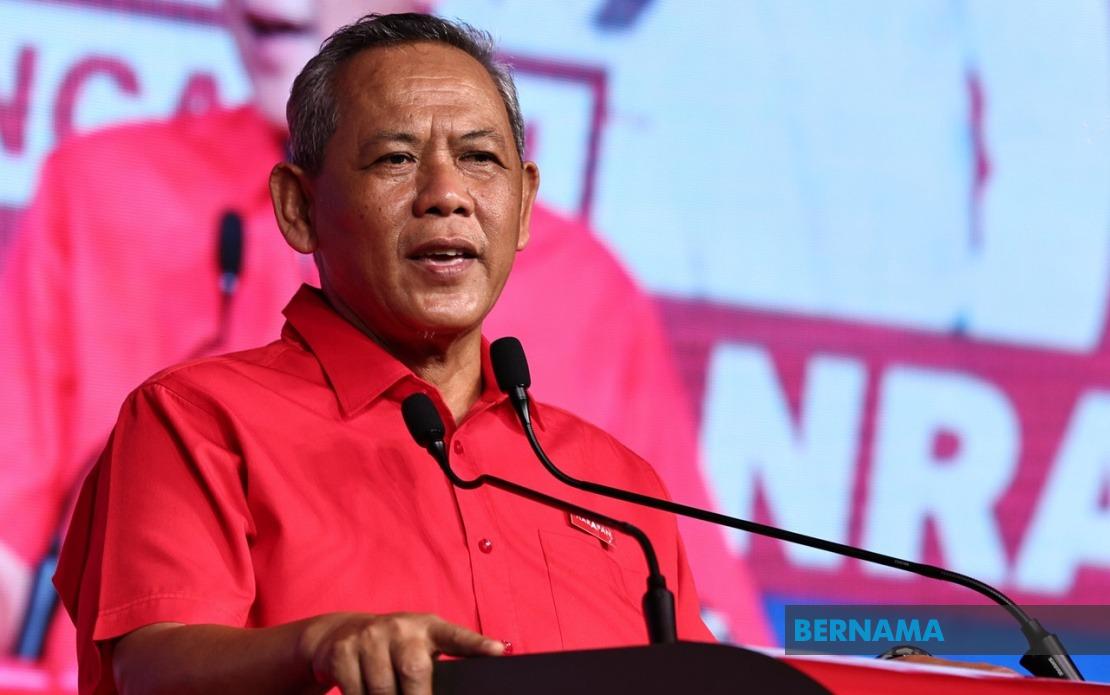
Negeri Sembilan Menteri Besar Datuk Seri Aminuddin Harun has categorically rejected claims that his decision to shift from defending Sikamat to contesting the Linggi state seat in the upcoming election represents a tactical retreat from a difficult political position. Speaking through a Facebook statement issued in Seremban on July 16, the Pakatan Harapan chairman characterised the move as a voluntary strategic choice, asserting that he remains committed to serving the state's residents with the same vigour he has demonstrated across his political career.
The Menteri Besar's clarification comes as speculation mounted within political circles about the motivation behind his departure from Sikamat, a constituency he has represented for four consecutive electoral cycles. By shifting his candidacy to Linggi, where he will face off against incumbent Barisan Nasional assemblyman Datuk Mohd Faizal Ramli, Aminuddin has effectively handed Sikamat to a new standard-bearer, party loyalist Nor Azman Mohamad, in what observers note is a significant recalibration of PH's electoral strategy in the state.
In his statement, Aminuddin emphasised his aspirations for the Linggi constituency, pledging that if voters grant him the mandate to represent them, he intends to redouble his efforts on their behalf. The phrasing reflected a measured confidence in his political prospects, though the timing of the announcement—less than two weeks before nominations—underscores the compressed timeframe within which parties finalised their candidate lists across the peninsula. His invocation of religious language, stating "Insya-Allah, if I am given the mandate and emerge victorious," also signalled deference to the unpredictability inherent in any electoral contest.
Looking back on his tenure in Sikamat, Aminuddin painted a retrospective portrait of incremental political progress, tracing a trajectory from humble beginnings to institutional consolidation. He recalled operating from a modest office situated above a shoplot during the years when PH occupied the opposition benches, a period he characterised as one of constrained resources yet sustained community mobilisation. The narrative he constructed positioned his constituency work during those leaner years as testament to his dedication, implying that his effectiveness as a representative transcended the material advantages that typically accrue to those in government.
The Menteri Besar's reflection on his Sikamat years carries particular significance for Malaysian political observers studying how long-serving representatives navigate transitions. His emphasis on community fundraising and grassroots organising during opposition years suggests an attempt to inoculate his political brand against accusations that he has grown dependent upon state resources or ministerial apparatus. By foregrounding the collaborative spirit with constituents rather than bureaucratic efficiency, Aminuddin articulated a populist vision of representation that attempts to bridge the divide between his present ministerial status and his origins as an organiser.
Aminuddin extended public gratitude to Sikamat's residents for their "unwavering support" throughout his four terms, language that functions simultaneously as appreciation and farewell. This measured tone contrasts with the more assertive rhetoric sometimes deployed by politicians seeking re-election, suggesting either confidence in his Linggi prospects or an acknowledgment that his departure from Sikamat might occasion genuine regret among constituents accustomed to his accessibility. His explicit endorsement of Nor Azman Mohamad as his successor similarly serves multiple functions: it legitimises the transition, signals party unity, and attempts to forestall any narrative that might portray his move as abandonment.
The electoral mathematics underlying Aminuddin's strategic recalibration merit scrutiny. Sikamat, while long associated with the Menteri Besar, may have presented vulnerability in the context of broader state-level dynamics or demographic shifts. Linggi, meanwhile, offers the advantage of a sitting incumbent to potentially displace, suggesting that PH strategists calculated greater pickup potential in that constituency. For Malaysian voters tracking the 16th Negeri Sembilan state election, such tactical shuffling reflects the increasingly sophisticated approaches major parties adopt in allocating their heaviest hitters to maximise seat gains.
The electoral calendar remains compressed, with nominations scheduled for Saturday immediately following the announcement, early voting set for July 28, and general polling day fixed for August 1. This compressed timeline means campaigns must mobilise rapidly, and candidates must quickly establish their presence within new constituencies. Aminuddin's prior experience as Menteri Besar provides name recognition and governing credentials that transcend parochial boundaries, though Linggi voters will necessarily differ in their familiarity with his record compared to Sikamat residents who have observed him across four full electoral cycles.
For the broader Southeast Asian context, Aminuddin's repositioning illustrates broader patterns of electoral consolidation within Malaysia's federal system, where state elections increasingly reflect national political realignments. The Negeri Sembilan contest, while ostensibly a state affair, carries implications for the national political balance given PH's dominance in the state and the potential signalling effects of electoral performance for federal calculations. Aminuddin's confident assertion that his move represents genuine choice rather than defensive manoeuvre will face scrutiny on polling day when Linggi voters render their judgment.
The Menteri Besar's careful articulation of his decision through social media also reflects evolving patterns of political communication in Malaysia, where leaders increasingly bypass traditional media gatekeepers to address constituencies directly. His Facebook statement, issued without accompanying press conference or traditional announcement framework, suggests a measured confidence that does not require the amplification and journalistic legitimacy that formal press engagements traditionally confer. Whether this approach proves effective in shaping voter perception across the Linggi electorate remains an open question as the state election enters its final fortnight.

