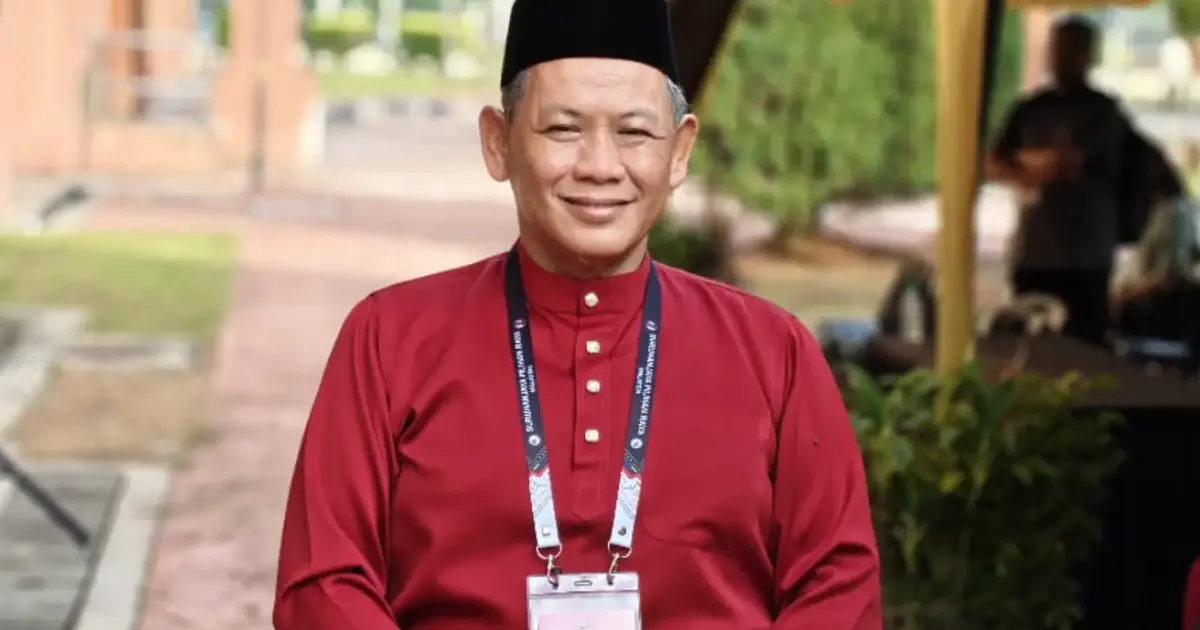
The contest for the Linggi parliamentary seat has evolved into a significant three-cornered battle, with Negeri Sembilan Menteri Besar Aminuddin joining the fray against the incumbent Barisan Nasional member of parliament Faizal Ramli and a candidate fielded by Perikatan Nasional's Bersatu party. The race underscores the intensifying political fragmentation within Malaysia's electoral landscape, particularly in constituencies historically dominated by the ruling coalition's traditional support base among Malay-Muslim voters.
Faizal Ramli, who secured the Linggi seat in the 2023 general election, represents the Barisan Nasional's continued grip over this predominantly Malay-majority constituency. His incumbency advantage is substantial, having already demonstrated electoral appeal to the local electorate in the recent nationwide polls. The BN candidate's presence in the race reflects the coalition's determination to retain one of its traditional bastions in Negeri Sembilan, a state where political dynamics have shifted considerably over recent years.
Aminuddin's entry into this contest carries particular weight given his position as Negeri Sembilan's chief minister. His candidacy signals either an attempt to bolster representation at the federal level or potentially reflects calculations about his political standing within his own coalition. The decision to contest the seat suggests confidence in his ability to mobilise support, yet it also places his executive credentials on the line in a competitive electoral environment.
The emergence of a Bersatu candidate complicates the traditional two-party binary that has characterised Malaysian politics for decades. Perikatan Nasional's decision to field a contender indicates the coalition's strategic interest in Negeri Sembilan and its broader ambitions to erode BN support in constituencies where Malay-Muslim voters form the majority. Bersatu's positioning as an Islamist-oriented, Malay-centric party has proven attractive to certain voter segments, particularly those dissatisfied with BN's performance or seeking alternatives within the Islamic political spectrum.
Linggi's demographic composition—heavily Malay and Muslim—traditionally favours parties emphasising Islamic governance and Malay communal interests. This socioeconomic and religious profile typically translates into reliable support for either UMNO-led coalitions or, increasingly, for Bersatu. The constituency's character means that campaigns will likely emphasise Islamic credentials, development promises for rural Malay communities, and assertions about which coalition better represents Malay-Muslim aspirations.
The three-way contest reflects deeper fissures within Malaysia's Malay-Muslim political universe. Rather than presenting a unified front, the major contenders are now competing for votes within the same demographic constituency. This fragmentation has implications beyond Linggi; it demonstrates how the 2023 election realignment has persisted, with Perikatan Nasional maintaining its challenge to BN's traditional dominance in Malay-majority seats. The absence of a PKR or DAP candidate suggests that opposition unity efforts, if any, have ceded this territory to Malay-centric parties.
For Negeri Sembilan specifically, this race carries significance for state politics. The chief minister's electoral performance could influence his political standing within the state administration and his coalition partners' assessment of his viability as a state leader. A strong showing would validate his leadership, while a disappointing result might prompt questions about his electoral appeal or whether his executive role translates into grassroots support.
The Linggi contest also reflects broader questions about BN's electoral resilience. Despite controlling the federal government, the coalition faces sustained pressure from Bersatu in Malay-majority constituencies. Faizal Ramli's 2023 victory demonstrated BN's continuing capacity to win in such seats, but the emergence of competition from both a sitting chief minister and Bersatu suggests that consolidation cannot be assumed. The stakes extend beyond a single parliamentary seat; the result will be read as an indicator of either BN's recovery or its continued vulnerability in its traditional support base.
The campaign dynamics in Linggi will likely revolve around development records, religious credentials, and claims about defending Malay-Muslim interests. Aminuddin will presumably emphasise his administrative achievements as chief minister, Faizal Ramli his parliamentary record and BN's federal government role, and the Bersatu candidate the party's positioning as an uncompromising voice for Malay-Muslim concerns. Each candidate will attempt to portray competitors as inadequate guardians of communal interests.
Regional context matters too. Negeri Sembilan has experienced political volatility in recent years, with shifting state-federal dynamics and questions about governance performance. How the Linggi race unfolds may influence voter sentiment across the state more broadly, affecting calculations about other constituencies and state-level positions. The three-way battle thus transcends the immediate contest, carrying implications for the state's broader political trajectory and the viability of various coalitions within Negeri Sembilan's complex political ecosystem.

